
Quick Summary
Navigating a water damage restoration estimate is critical for property owners seeking to separate emergency drying from structural repairs while securing carrier-approved coverage. Wade's Restoration delivers accurate, insurance-aligned line-item scopes backed by moisture mapping and targeted drying techniques to salvage original building materials. Readers will understand how restoration costs are determined and can request a free on-site visual inspection to get an itemized scope for their insurance claim.
Water Damage Restoration Estimate: Accurate Scope and Costs
When you need a water damage restoration estimate, understanding standard costs and how technicians build a scope of work is essential. Industry figures from Angi place the average restoration project at $3,869, with costs spanning from $450 for minor localized leaks up to $16,000 or more for major structural flooding. Estimates typically break down pricing based on the water category and damage severity, supported by comprehensive moisture mapping and data-driven assessments.
A detailed restoration estimate, such as one prepared by Wade’s Restoration, provides an itemized line-item scope written in the exact formatting insurance adjusters expect. For property owners in historic brownstones, lofts, and multi-unit buildings, a proper scope prioritizes drying and salvaging original hardwood, subfloors, and plaster walls instead of jumping straight to expensive teardowns. See also Water Damage Repair Cost – 10% Off & Free Estimate – On-Site in 60 Minutes.
Understanding Water Damage Restoration Estimates: Key Factors
A water damage restoration estimate is fundamentally different from a standard home renovation quote. General remodeling bids often present lump-sum pricing, whereas insurance-friendly scopes typically itemize and separate emergency water removal from structural reconstruction to streamline review. According to data from Angi, overall costs average around $3,869 ($3 to $7.50 per square foot), but the final number hinges on water classification, affected materials, and how fast drying equipment gets deployed.
Key takeaways for property owners facing emergency water damage
- Mitigation and rebuild are billed separately: Emergency stabilization (pumping water, setting dehumidifiers, applying antimicrobials) is invoiced distinctly from post-drying repairs to comply with standard insurance claims handling.
- Itemized unit pricing supports claim review: Itemized, insurance-friendly scopes using standardized unit pricing for labor and equipment are commonly used to provide the detailed documentation adjusters prefer over lump-sum estimates.
- Fast mitigation saves original building materials: Immediate extraction and targeted drying protect salvageable plaster, lath, and historic hardwood floors from permanent warping and secondary mold growth.
What You Need Before Requesting a Water Damage Restoration Estimate
Before your restoration specialist arrives on-site, having basic property records and insurance details ready speeds up the inspection. This preparation allows technicians to focus on physical mitigation right away while making sure the resulting paperwork matches your insurer’s documentation requirements.
Documentation to have ready for the inspection team
Having clear records helps avoid claim delays and keeps the scope focused strictly on affected areas:
- Policy details: Your insurance company name, policy number, deductible amount, and claim number if you have already opened one. Data from ConsumerAffairs indicates that insurance payouts often leave out structural items unless every detail is documented with precise line items.
- Initial photo and video evidence: Date-stamped images of standing water, ceiling leaks, or backed-up drains before any cleanup begins.
- Clear access to mechanical systems: Unobstructed paths to electrical panels, main water shutoff valves, and affected crawlspaces or basements.
- High-value property inventory: Notes on specialty architectural materials, high-end finished flooring, or commercial stock that may need specialized drying techniques.
Step 1: Conduct an Immediate On-Site Moisture and Safety Assessment
Need water damage restoration estimate?
We’re available now - call for a fast, free estimate.
The first step in building a reliable estimate is a thorough safety and moisture inspection. Technicians use specialized diagnostic tools to track where water has traveled behind walls, underneath baseboards, and into subflooring. Catching this early stops clean Category 1 supply-line leaks from degrading into stagnant, contaminated Category 2 or 3 water.
Thermal imaging, moisture meters, and structural hazard checks
Instead of guessing which walls need to come down, certified restoration technicians follow a three-part diagnostic process:
- Safety inspection: Check for active electrical hazards near standing water, structural instability in ceilings, and biological hazards from drain backups.
- Thermal imaging: Infrared cameras quickly identify temperature differentials that reveal hidden moisture pockets behind plaster, drywall, and cabinetry without punching unnecessary holes.
- Moisture mapping: Technicians use penetrating and non-penetrating moisture meters to measure exact saturation percentages, recording daily baseline readings to justify equipment placement on the estimate.
Step 2: Classify Water Contamination and Map Structural Damage
Classifying the contamination level and drying class establishes the technical baseline for your restoration estimate. By defining the category of water (hazard level) and class of water (rate of evaporation), technicians determine whether building materials can be saved in place or require controlled removal.
Identifying Categories 1 through 3 water and Class 1 through 4 evaporation loads
Water damage falls into three distinct hazard tiers:
- Category 1 (Clean Water): Originates from broken supply lines, sink overflows, or failed appliance hoses. Materials can generally be dried in place if addressed promptly.
- Category 2 (Gray Water): Carries chemical or biological contaminants from dishwasher discharges, washing machine overflows, or sump pump failures. Porous items like carpet padding usually require removal.
- Category 3 (Black Water): Highly contaminated water from sewage backups, river flooding, or standing water that has fostered microbial growth. Porous materials must be removed under strict containment.
Moisture mapping also evaluates the drying class, ranging from Class 1 (minimal moisture absorption) to Class 4 (deeply bound moisture in dense materials like hardwood, concrete, and plaster). According to Insurance Information Institute data, the average water damage and freezing claim payout was $13,954 in 2023. Thorough moisture mapping provides the hard data insurers require to approve the necessary drying time and equipment count.[1]
Step 3: Document Salvageable Hardwood, Drywall, and Subfloor Materials
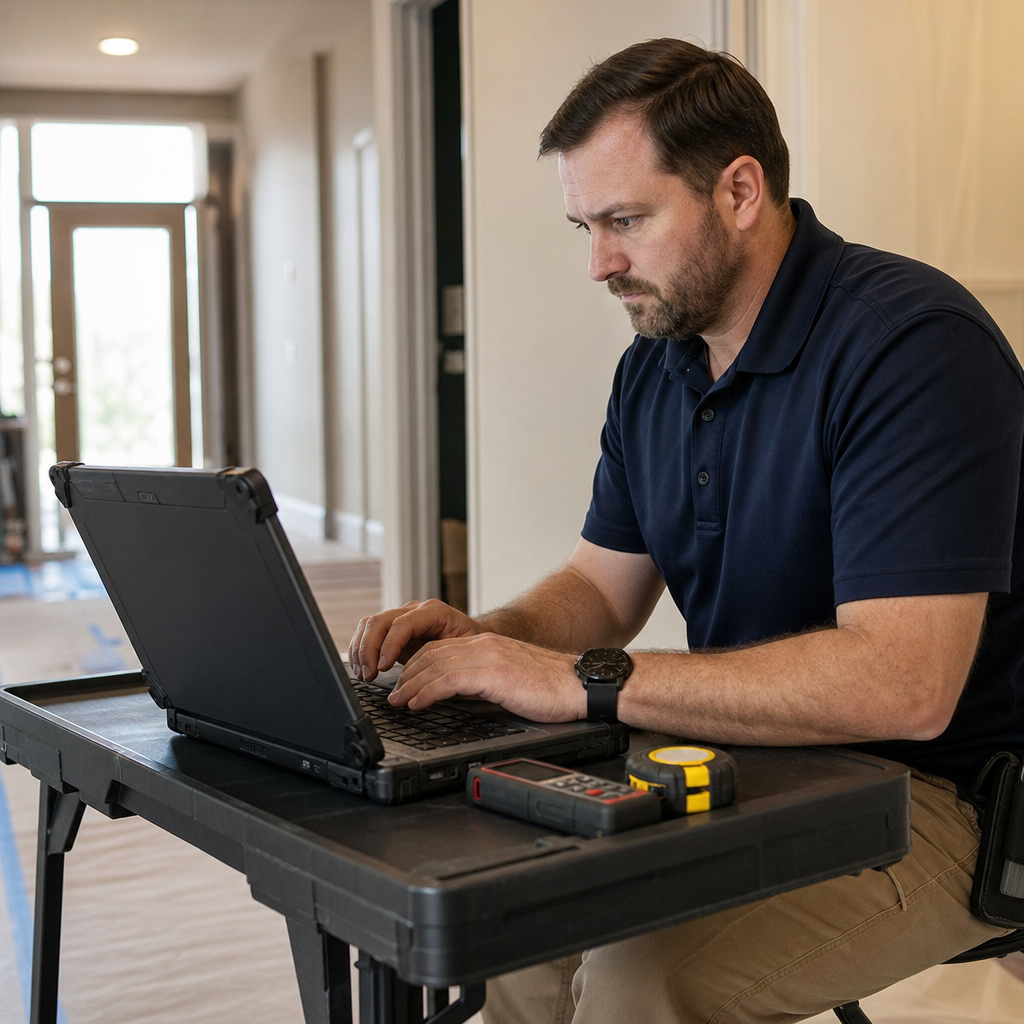
Accurate scopes evaluate whether architectural elements can be saved through specialized drying rather than total gutting. In urban buildings with original heart-pine flooring or historic plaster work, indiscriminate demolition destroys character and drives up reconstruction expenses unnecessarily.
Restorative drying strategies vs. full gut demolition
NAIC data shows that between 2018 and 2022, roughly 1 in 60 insured homes filed a water damage claim annually. Property owners should ensure their restoration contractor, such as Wade’s Restoration, uses targeted drying methods before resorting to invasive structural teardowns.[2]
| Restorative Drying (In-Place) | Full Gut Demolition |
|---|---|
| Uses commercial injectidry systems, floor mats, and desiccant dehumidifiers to save hardwood and plaster | Tears out flooring and structural framing without attempting moisture extraction |
| Matches insurance carrier guidelines to keep claims streamlined and minimize out-of-pocket costs | Inflates rebuild costs, often leading to carrier pushback and extended project timelines |
Restorative drying protects historic finishes whenever structurally viable, keeping the scope precise and defensible to your adjuster.
Step 4: Generate an Itemized Line-Item Scope for Insurance Approval
An official restoration estimate translates diagnostic readings into standardized insurance-friendly line items. Restorers like Wade’s Restoration commonly use industry-standard estimating platforms to produce a transparent, itemized scope that adjusters can easily evaluate.
Separating emergency mitigation from structural reconstruction
To avoid processing delays, the estimate divides work into two distinct phases:
- Emergency mitigation lines: Water extraction labor, equipment rental (commercial dehumidifiers, air movers, HEPA air scrubbers), containment barriers, antimicrobial treatments, and daily moisture monitoring logs.
- Reconstruction lines: Drywall patching, trim replacement, subfloor repairs, floor refinishing, and finish painting once structural drying goals are certified.
This division gives adjusters the exact technical breakdown they need to release payments for emergency services without waiting for final repair decisions.
Step 5: Review Pricing and Secure Written Scope Verification
Need water damage restoration estimate?
We’re available now - call for a fast, free estimate.
Before work begins, all parties (property owner, restoration contractor, and insurance adjuster) should review the written scope. This step ensures that technical drying goals, equipment rates, and potential supplements are agreed upon upfront.
Finalizing the estimate before structural restoration begins
A clear, transparent estimate protects property owners from unexpected out-of-pocket balances once drying is complete.
- Owner Scope Review: Walk through the estimate line by line with your project manager to confirm which materials are marked for drying versus removal.
- Adjuster Coordination: Have the restoration team submit daily moisture logs and equipment sheets directly to your adjuster to streamline supplemental approvals if hidden moisture is uncovered.
- Written Cost Scope: Confirm the work authorization includes clear pricing terms and equipment unit rates before giving the green light.
What Does a Water Damage Restoration Estimate Cost?
Most reputable restoration companies provide an initial on-site assessment and visual inspection. When detailed diagnostics, thermal imaging, and formal insurance scopes are required, some companies may charge a diagnostic inspection fee, which is often credited directly toward the project when mitigation work is authorized.
Typical price ranges for mitigation, cleanup, and full restoration
Note: The following service price breakdowns are general market examples not verified by the research brief:
- Inspection and moisture mapping: Potential diagnostic fee (frequently credited toward the job)
- Water extraction and structural drying: $1,200 to $4,500 per affected room (general market example)
- Mold remediation (if standing water is neglected): $1,500 to $6,000 (general market example)
- Sewage backup cleanup (Category 3): $2,000 to $10,000 (general market example)
- Full project average (mitigation plus basic repairs): $3,000 to $15,000 (general market example)
Because structural layouts, building ages, and contamination levels differ significantly, getting an on-site moisture inspection from specialists like Wade’s Restoration is the only way to establish an accurate project cost.
Evaluating Structural Components: Hardwood, Drywall, and Basements
Evaluating wet building assemblies requires measuring subsurface saturation rather than relying on visible stains. Proper technical drying preserves dense materials, whereas treating water intrusion like a cosmetic project leads to hidden mold and long-term rot.
Symptoms and repair versus replacement decisions
- Drywall and Ceilings: Sagging panels, peeling paint, and water stains require pin-type moisture testing. Technicians make selective flood cuts (typically 12 to 24 inches above the water line) when wet insulation sits trapped behind wall cavities.
- Hardwood and Subfloors: Cupping (edges higher than the center) and crowning require rapid extraction. High-pressure drying mats draw moisture up through the face of the boards from wet subflooring before wood fibers split permanently.
- Basements and Crawl Spaces: Sump pump failures or street flooding introduce hazardous Category 3 water, requiring antimicrobial sanitization, the removal of wet porous materials, and industrial high-capacity dehumidification.
Frequently Asked Questions About Water Damage Restoration Estimates
How much does a water damage restoration estimate cost?
Initial visual assessments are often provided at no cost or for a nominal diagnostic fee when advanced moisture mapping and diagnostic tools are used. Restorers routinely credit diagnostic fees toward authorized mitigation work.
Does homeowners insurance cover the entire water damage quote?
Coverage depends on the specific terms, exclusions, and endorsements of your policy. While many standard policies address sudden and accidental water events, coverage varies widely by policy and carrier. Gradual leaks, maintenance oversights, and flood damage typically require separate coverage or riders, and payouts remain subject to policy deductibles and limits.
What is the difference between water mitigation and repair costs on an estimate?
Water mitigation covers emergency stabilization, including extracting standing water, setting drying equipment, preventing mold, and sanitizing the structure. Repair costs cover the rebuild phase that happens after the property is certified dry, such as hanging new sheetrock, installing trim, and refinishing floors. Keeping these line items distinct ensures smooth processing with insurance adjusters.
Need water damage restoration estimate?
We’re available now - call for a fast, free estimate.
Sources
- Appliance Water Damage: $13954 Average Claim – bozmanfix.com (2026)
- 2026 Home Water Damage Statistics [State-by-State Insurance … – housecashin.com (2026)
Related reading: Sewage Backup Cleanup Cost | Call Now-10% Off | Same-Day Service | Free Estimate
Related reading: Water Mitigation Cost Per Square Foot | Call Now-10% Off | Same-Day Service | Free Estimate
Related reading: Water Extraction Cost Per Square Foot – 10% Off & Free Estimate – Same-Day Service
Frequently Asked Questions
How does Wade's Restoration ensure a water damage restoration estimate matches insurance adjuster standards?
Through its Claim Clarity Program, Wade's Restoration generates standardized line-item scopes that separate emergency mitigation from rebuild costs using carrier-approved unit pricing. Our technicians provide daily moisture logs and diagnostic thermal imaging to document structural necessity directly to your adjuster.
What happens if technicians uncover hidden structural moisture after the initial estimate is approved?
If additional saturation is discovered behind walls or under subfloors during drying, Wade's Restoration submits a detailed supplemental scope with updated moisture readings. This documentation is sent directly to your carrier to adjust the claim payout without halting emergency mitigation work.
Can historic materials like plaster walls and original hardwood floors be saved during water restoration?
Yes, targeted restorative drying techniques like high-pressure drying mats and desiccant dehumidifiers can extract deep moisture from dense assemblies without gut demolition. Wade's Restoration prioritizes salvaging original building elements to protect property integrity and avoid unnecessary reconstruction expenses.
About the author
 |
Sarah Miller Sarah Miller is a restoration specialist with over 8 years of experience in the property damage industry. She holds an Associate Degree in Construction Management from New York City College of Technology. Sarah specializes in educating homeowners and property managers on the complexities of water damage restoration and the associated costs, helping them navigate emergency situations with clarity. |
Water damage, flood, or mold emergency?
We’re available now - call for a fast, free estimate.
Call Now - Free Estimate