
Quick Summary
The average water mitigation cost per square foot ranges from $3.00 to $7.50 depending on water contamination categories, structural depth, and spatial volume. Specialists at Wade's Restoration highlight how advanced structural drying and accurate upfront scoping salvage valuable building materials like hardwood and drywall to avoid inflated reconstruction bills. Readers will understand key pricing factors across clean, gray, and black water emergencies while knowing how to schedule a free visual inspection for a transparent line-item estimate.
Water Mitigation Cost Per Square Foot – Complete Pricing Guide
The average water mitigation cost per square foot typically runs between $3.00 and $7.50. For a standard residential room or commercial space, that covers initial extraction, moisture mapping, and structural drying. Where your project lands on that scale depends largely on the cleanliness of the water, how deeply it penetrated building materials, and the physical layout of the space.
Ripping out salvageable drywall and hardwood unnecessarily inflates your final bill. As specialists at Wade’s Restoration point out, using targeted structural drying systems allows technicians to save original building materials instead of sending them to a landfill, keeping both cleanup timelines and expenses under control. See also Water Damage Repair Cost – 10% Off & Free Estimate – On-Site in 60 Minutes.
Average Water Mitigation Cost Per Square Foot and Immediate Pricing Factors
When standing water enters a property, mitigation focuses on stabilizing the environment before mold, rot, or structural weakening can take hold. Basic water extraction and drying costs fall into clear brackets based on the source of the water:
- Clean water (Category 1): Typically averages around $3.50 per square foot. This involves water from broken supply lines, leaking faucets, or rainwater that has not mixed with contaminants.
- Gray water (Category 2): Averages around $5.25 per square foot. This includes discharge from washing machines, dishwashers, or sump pump overflows containing detergents or minor biological load.
- Black water (Category 3): Averages around $7.50 per square foot. This involves sewage backups, river flooding, or standing water that has sat long enough to support microbial growth. It requires specialized containment, personal protective equipment, and antimicrobial sanitization.
Key Cost Realities: Square Footage vs. Cubic Footage
Flat square-foot estimates only tell part of the story. In older properties, prewar brownstones, and industrial loft conversions, standard floor-area formulas often fall short. High 12-foot ceilings, dense plaster-and-lath walls, and thick multi-layered subfloors create a massive volume of air and hidden structural cavities that must be dried.
Technicians do not simply dry the floor surface; they manage the psychrometric balance of the entire room. A 500-square-foot room with 12-foot ceilings holds 6,000 cubic feet of air, requiring significantly more dehumidifier capacity and air mover placement than a modern apartment with 8-foot ceilings covering the same floor footprint.
What Does Water Mitigation Cost Per Square Foot?
Need water mitigation cost per square foot?
We’re available now - call for a fast, free estimate.
Mitigation pricing reflects labor, equipment runtime, and hazardous disposal requirements before any rebuild or reconstruction begins.
Mitigation Pricing by Service and Contamination Level
The table below outlines how water classification directly influences the labor, safety precautions, and disposal requirements during emergency mitigation:
| Service Scope | Category 1 (Clean) | Category 2 (Gray) | Category 3 (Black) |
|---|---|---|---|
| Typical Cost / Sq Ft | Around $3.50 | Around $5.25 | Around $7.50 |
| Antimicrobial Treatment | Optional / Light | Standard Application | Deep Disinfection and Washdown |
| Porous Material Disposal | Rarely necessary | Carpet pad and soft goods removed | Full teardown of affected porous items |
| Containment Barriers | Not required | Limited | Full negative air pressure and plastic barriers |
Clean, Gray, and Black Water Cost Discrepancies
The contamination category determines the safety protocol and the amount of labor required per square foot:
- Category 1 (Clean Water): Originates from sanitary sources like a burst copper supply pipe or an overflowing sink. When addressed promptly, materials like subflooring, baseboards, and framing can usually be dried in place without removal.
- Category 2 (Gray Water): Carries physical, chemical, or biological contaminants. Porous items such as saturated carpet padding usually require disposal, while structural framing and hard surfaces receive targeted sanitizing washdowns before drying.
- Category 3 (Black Water): Highly unsanitary water from sewage backups or ground flooding. Highly porous structural elements like drywall, insulation, and saturated particle board must be safely removed and disposed of. Crews must establish containment zones to prevent airborne pathogens from reaching unaffected areas of the building.
Mitigation Costs by Building Component: Hardwood, Drywall, and Basements
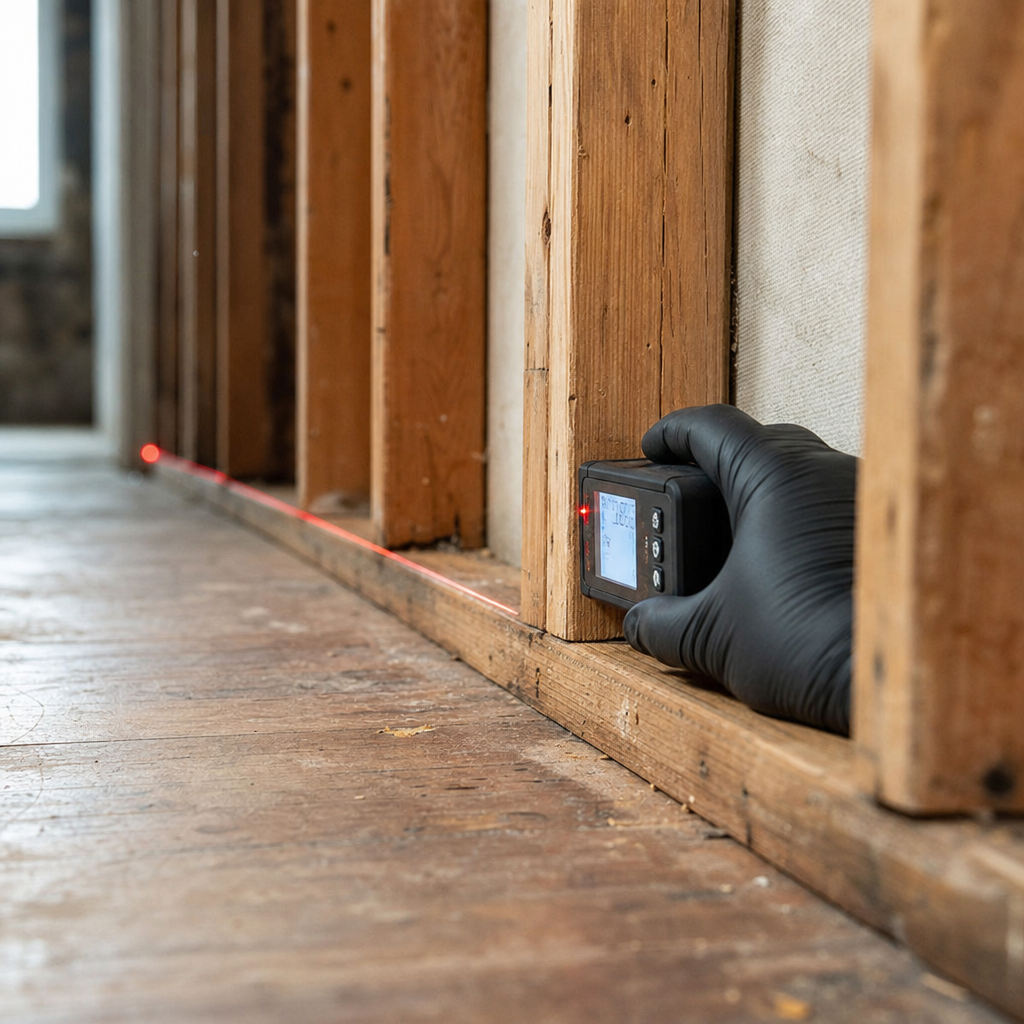
Different materials absorb moisture at different rates. Preserving original finishes demands specialized drying setups rather than sledgehammer demolition. Overall mitigation costs remain within the standard $3.00 to $7.50 per square foot range depending on the water category and level of structural drying required.
| Building Component | Typical Mitigation Range | Salvage vs. Replacement Impact |
|---|---|---|
| Hardwood Flooring | $3.00 – $7.50 / sq. ft. | Negative-pressure mats extract water through grain, saving expensive plank replacement |
| Drywall & Plaster Cavities | $3.00 – $7.50 / sq. ft. | Cavity injection drying saves historic plaster and prevents unnecessary tear-outs |
| Basements & Slabs | $3.00 – $7.50 / sq. ft. | Heavy extraction and high-capacity dehumidification pull deep moisture from concrete |
Hardwood and Subfloor Salvage vs. Tear-Out
Traditional contractors often want to rip up buckled or cupped hardwood floors immediately. However, according to Wade’s Restoration, solid hardwood can frequently be saved using negative-pressure floor mat systems. These mats seal directly against the floorboards, drawing moisture up through the wood pores and out of the subfloor underneath. This approach keeps the original wood intact and saves property owners from unnecessary material and refinishing expenses.
Drywall, Ceilings, and Cavity Drying
Water follows gravity, running down wall cavities and pooling on top of ceiling drywall or between floor joists. Rather than cutting large flood cuts across every wall, technicians can use thermal imaging cameras to locate exact moisture pockets. Small, unobtrusive holes drilled behind baseboards allow warm, dry air to be pumped directly into the stud cavities, drying the interior structure while leaving the wall surface intact.
Basement Water Mitigation and Sump Failures
Basement cleanup costs depend heavily on the depth of the water and the porosity of the foundation walls. Concrete and cinder block hold moisture deep within their pores. If water entered through a failed sump pump or foundation seepage, mitigation teams must combine submersible extraction pumps with desiccant or LGR (Low-Grain Refrigerant) dehumidifiers to draw bound moisture out of the masonry slab.
Water Mitigation vs. Restoration: Understanding the Cost Difference
Need water mitigation cost per square foot?
We’re available now - call for a fast, free estimate.
Property owners often mix up mitigation and restoration, but professionals treat them as two distinct phases.
Water mitigation is the emergency phase. It focuses on stopping the source of water, extracting standing liquid, removing unsalvageable debris, and thoroughly drying the structural envelope. It stops further damage in its tracks.
Water restoration (or rebuild) begins only after the property reaches verified dry standards. This phase covers the physical reconstruction: hanging new drywall, painting, laying new flooring, reinstalling trim, and rebuilding damaged cabinetry.
Phase 1: Emergency Water Extraction and Drying
Crews use truck-mounted or portable extraction units, set up containment, apply EPA-registered antimicrobials, and run commercial air movers and dehumidifiers. Fast extraction minimizes the need for reconstruction later.
Phase 2: Structural Reconstruction and Rebuild
Reconstruction costs depend entirely on the specific finishes and structural elements involved. Matching custom millwork, replacing hardwood, or rehanging plaster in historic buildings quickly drives rebuild costs above basic dry-out expenses. The more materials your mitigation team can safely dry in place during Phase 1, the lower your Phase 2 rebuild costs will be.
Documentation and Moisture Tracking
Proper tracking and industry-standard documentation ensure that the mitigation process is thoroughly recorded from start to finish.
The Role of Line-Item Moisture Logs
Detailed, line-item records follow industry-standard pricing formats to document drying progress. A thorough mitigation team records:
- Daily psychrometric moisture readings (measuring grains per pound and relative humidity).
- Moisture meter readings on structural framing, subflooring, and drywall.
- Detailed photographic logs of equipment placement and affected areas before, during, and after drying.
- Verification that materials reached baseline dry standards before equipment is removed.
Immediate steps to manage water damage:
- Shut off the main water valve immediately to stop the flow.
- Take clear photos and video of all standing water and damaged belongings before anything is moved.
- Call an emergency mitigation specialist such as Wade’s Restoration who provides detailed moisture mapping.
Frequently Asked Questions About Water Mitigation
How much does water mitigation cost per square foot?
Total water mitigation costs typically range between $3.00 and $7.50 per square foot. Clean water averages around $3.50 per square foot, gray water averages around $5.25 per square foot, and black water averages around $7.50 per square foot depending on the contamination level and drying requirements.[2]
Can hardwood floors be saved after water damage?
In many cases, yes. If mitigation begins promptly before wood fibers permanently buckle, technicians can attach negative-pressure drying mats directly to the floor. These mats pull moisture up through the subfloor and planking, allowing the wood to flatten back down as it reaches standard moisture levels.
How does the contamination level affect mitigation pricing?
Water mitigation pricing rises with the level of contamination. Clean water requires standard extraction and drying, gray water requires additional sanitizing washdowns and disposal of select porous items, and black water requires full containment, specialized personal protective equipment, deep disinfection, and extensive removal of contaminated materials.[1]
Need water mitigation cost per square foot?
We’re available now - call for a fast, free estimate.
Sources
- Water Damage House Repair Costs in 2026 – ibuyer.com (2026)
- How Much Does Water Damage Restoration Cost? – Bob Vila – bobvila.com
Related reading: Sewage Backup Cleanup Cost | Call Now-10% Off | Same-Day Service | Free Estimate
Related reading: Water Extraction Cost Per Square Foot – 10% Off & Free Estimate – Same-Day Service
Frequently Asked Questions
Does homeowners insurance cover water mitigation costs per square foot?
Most standard property insurance policies cover water mitigation when damage is sudden and accidental, such as a burst pipe. Wade's Restoration provides line-item psychrometric logs and detailed moisture mapping to help property owners submit accurate documentation for insurance reimbursement.
How long does the structural water mitigation process typically take?
Professional structural drying usually takes between three and five days, depending on spatial volume and material saturation. Wade's Restoration takes daily psychrometric and moisture meter readings to ensure structural elements meet verified dry standards before removing equipment.
How can property owners get an accurate square-foot estimate for water mitigation?
An accurate estimate requires assessing water category, moisture depth, room volume, and structural porosity using thermal imaging. Property owners can schedule a free visual inspection with Wade's Restoration to receive a transparent, line-item estimate before emergency drying begins.
About the author
 |
Sarah Miller Sarah Miller is a restoration specialist with over 8 years of experience in the property damage industry. She holds an Associate Degree in Construction Management from New York City College of Technology. Sarah specializes in educating homeowners and property managers on the complexities of water damage restoration and the associated costs, helping them navigate emergency situations with clarity. |
Water damage, flood, or mold emergency?
We’re available now - call for a fast, free estimate.
Call Now - Free Estimate