
Quick Summary
Residential sewage backup cleanup costs typically range between $2,000 and $10,000 depending on black water volume, structural saturation depth, and Category-3 biohazard containment requirements. Wade's Restoration minimizes out-of-pocket expenses through rapid emergency extraction, preservation-focused structural bio-salvage, and direct insurance claim navigation. Property owners facing a drain emergency can call for 24/7 dispatch to secure an immediate on-site visual inspection and a transparent, line-item cost assessment.
Sewage Backup Cleanup Cost – Fair Pricing & Fast Action
If you are dealing with a drain emergency right now, a standard professional sewage backup cleanup cost typically ranges from $2,000 to $10,000, with most residential jobs averaging around $5,000. Certified technicians from Wade’s Restoration extract wastewater immediately and sanitize the affected rooms. Raw sewage is classified as Category-3 black water. It contains harmful bacteria, parasites, and viruses that can quickly seep into subfloors, framing, and historic plaster if left standing for even a few hours.
Standard homeowners insurance policies generally exclude drain backups unless you carry an optional sewer backup rider (which often costs between $50 and $250 annually). Working directly with insurance adjusters helps ensure every detail is documented accurately. Requesting an emergency crew allows property owners to receive an on-site visual inspection with a clear, itemized estimate before work begins. See also Water Damage Repair Cost – 10% Off & Free Estimate – On-Site in 60 Minutes.
Emergency Sewage Backup Cleanup: Immediate Costs and What to Expect
The total cost to clean up an emergency sewer backup usually lands between $2,000 and $10,000. For severe spills that migrate across multiple levels or soak deeply behind finished walls, expenses can rise. Because wastewater carries serious biological pathogens, extracting it quickly stops moisture from rotting load-bearing timbers, ruining historic architectural details, and sparking toxic mold growth.
Key Takeaways for Property Owners Facing Sewage Disasters
Under IICRC S500 standards, any sewage intrusion is classified as Category 3 (black water). This classification requires containment, specialized antimicrobial treatment, and strict disposal protocols rather than standard water extraction. Standard building insurance usually requires an explicit endorsement rider to cover municipal sewer line backups. The Hanover reports that adding this coverage typically adds $50 to $250 per year to a property policy.[1]
When assessing the local water damage restoration cost in Williamsburg, simple square-foot pricing models often break down. Structural bio-salvage focuses on saving structural materials whenever safe to do so, neutralizing biological risks while providing clear, line-item pricing upfront.
What Does Sewage Backup Cleanup Cost?
Need sewage backup cleanup cost?
We’re available now - call for a fast, free estimate.
What Does Sewage Backup Cleanup Cost? in brief: Professional sewage cleanup generally runs between $2,000 and $10,000, with $5,000 being the average across typical residential backups. Final invoices depend on the volume of black water, the square footage affected, how deep moisture penetrated into structural elements, and local disposal requirements. A published estimate places contaminated water cleanup at about $7.50 per square foot.
Minor, contained basement spills might only run between $1,800 and $4,500, but wide-scale contamination that reaches wall framing or porous subflooring will naturally cost more. Data from the Insurance Information Institute indicates that the average water damage and freezing claim was $13,954 from 2018 to 2022, illustrating how quickly structural repair bills multiply when drying and decontamination are delayed.
Standard Cost Table Across Restoration Services
| Service Phase | Typical Cost Range | Key Scope Line Items |
|---|---|---|
| On-Site Bio-Mapping & Inspection | $0 – $350 | Moisture mapping, thermal imaging, contamination containment plan |
| Category-3 Emergency Extraction | $1,200 – $3,000 | Truck-mounted extraction, HEPA air filtration, antimicrobial wash |
| Targeted Structural Bio-Salvage | $1,500 – $4,200 | Cavity injection drying, framing decontamination, saving original wood |
| Complete Mitigation & Biohazard Sanitization | $3,500 – $10,000+ | Full containment barriers, contaminated porous material disposal, HVAC sanitization |
Key Factors That Shift Raw Sewage Cleanup Invoices
While a published estimate places contaminated water cleanup at about $7.50 per square foot, standard formulas frequently fail in older urban buildings. In historic brownstones and industrial loft conversions, original joists and salvageable hardwood floors require technical capability to dry and disinfect properly. Using targeted decontamination and controlled micro-drying can significantly reduce overall project expenses compared to a complete demolition and rebuild.
Municipal records highlight the wide variability in drain emergencies. For instance, municipal reports from cities like Baltimore show that clearing and relieving a single residential basement drain backup averages more than $2,200 before secondary damage repairs even start. According to Wade’s Restoration, your total sewage damage repair cost in Williamsburg depends heavily on water depth, biological spread, and how much porous building material absorbed the waste. Because an online calculator cannot measure hidden moisture pockets, getting an accurate flood cleanup cost requires an immediate on-site inspection.
The Demolition Penalty: Basement, Hardwood Floors, and Structural Bio-Salvage
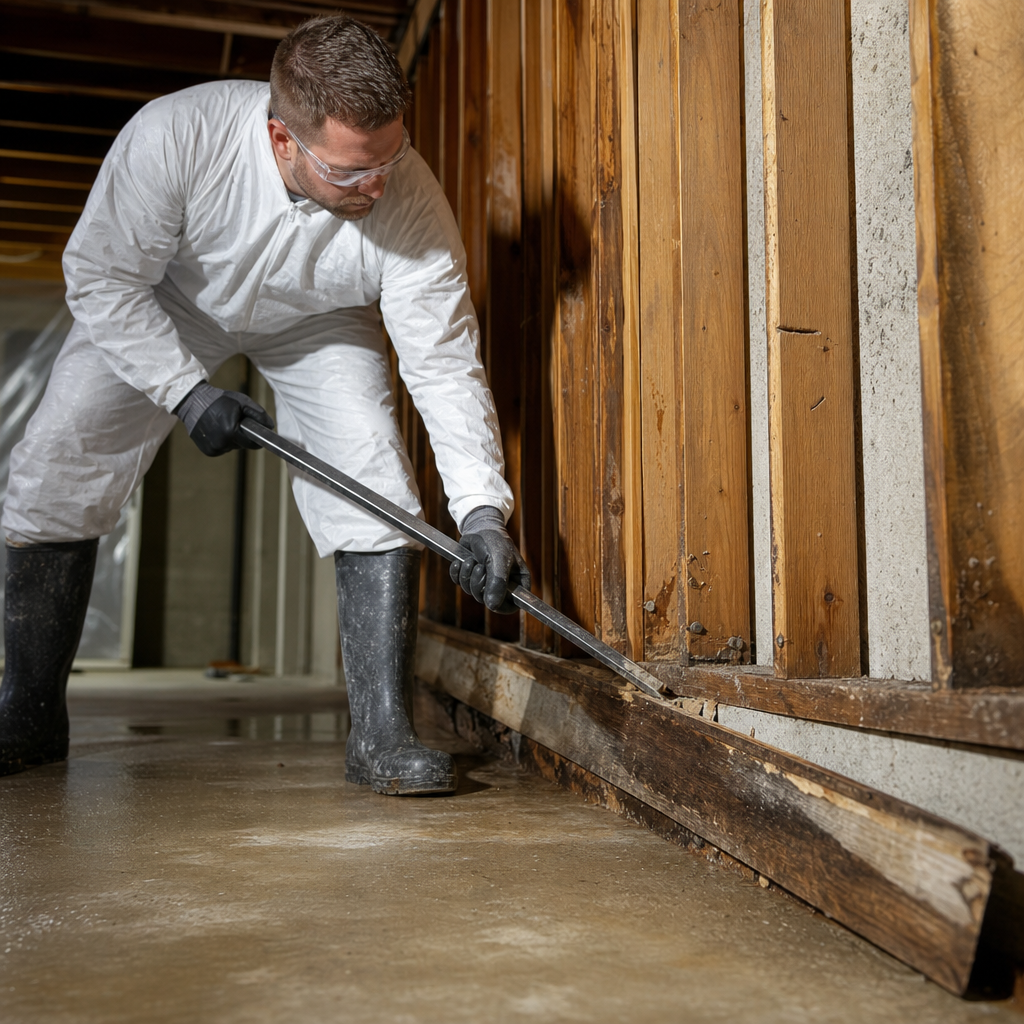
The demolition penalty occurs when restoration crews gut historic framing, subfloors, and plaster walls that could have been saved, needlessly inflating the rebuild cost. By following IICRC S500 bio-salvage protocols, technicians like those at Wade’s Restoration clean, dry, and preserve original building elements instead of automatically tearing them out.
Why Generic Square-Footage Calculators Fail Historic Urban Buildings
Standard cost calculators assume modern stick-built construction with easily replaceable drywall and plywood subfloors. They do not account for the old-growth joists, thick masonry, and delicate plaster found throughout Brooklyn walk-ups. Industry data shows that approximately 1 in 60 insured homes files a water damage claim annually. In multi-unit buildings, sewage dwell time and saturation depth matter far more than raw square footage, making flat-rate linear pricing unrealistic for complex properties.
Targeted Structural Bio-Salvage vs. Unnecessary Gut-and-Replace Tactics
A preservation-focused approach applies hospital-grade disinfectants and directed heat drying systems to rescue solid structural assets. In one documented plumbing claim, an unmanaged finished-basement backup escalated to $42,600 in emergency mitigation and over $300,000 in total insurance losses across five policies due to uncoordinated structural tear-outs.
Subfloor, Joists, and Drywall: Repair vs. Replace Decision Rules
Determining whether materials must be discarded or can be disinfected rests on practical physical standards:
- Concrete basement slabs: Extract standing black water, treat thoroughly with EPA-registered biocides, and run industrial dehumidifiers without altering the slab.
- Subflooring and joists: Sanitize in place if black water exposure was under 24 hours and wood moisture levels can be safely brought below 16%.
- Drywall and insulation: Cut cleanly 12 to 24 inches above the visible water line to eliminate wicked moisture and stop hidden mold growth.
Keeping your water damage restoration costs under control requires an honest initial assessment. Prioritizing structural bio-salvage protects your home’s historic character while keeping out-of-pocket restoration expenses manageable.
Does Property Insurance Cover Raw Sewage Cleanup Costs?
Need sewage backup cleanup cost?
We’re available now - call for a fast, free estimate.
Standard property policies generally exclude municipal sewer and external drain backups unless you explicitly added an optional water backup endorsement. Without this rider, sewage cleanup and biohazard mitigation expenses must be paid out of pocket, since municipal utilities rarely accept liability for private property backups.
Standard Homeowners Policies vs. Water Backup Endorsements
Industry claims data indicates that an average sewer backup incident creates $10,000 to $12,000 in physical damage. While standard policies usually cover sudden internal pipe bursts, backups from city mains or shared exterior drains require endorsement riders. Deciding how to handle your deductible and scope of repair starts with getting wastewater out immediately, rather than waiting days for a claims adjuster to arrive.
How Direct Carrier Documentation Prevents Claim Denials
To prevent claim delays or denied line items, clear communication with adjusters using standard industry billing codes (such as Xactimate) is critical. Rather than broad estimates that invite pushback, documenting every stage of work includes:
- Moisture Mapping: Infrared thermography and calibrated moisture probe readings that clearly show the extent of water penetration.
- Line-Item Scoping: Clear division between Category-3 biohazard extraction, sanitization, and structural drying to prevent adjuster disputes.
- Direct Adjuster Communication: Providing daily atmospheric logs, photo documentation, and moisture charts straight to your insurance company.
Whether you consult Wade’s Restoration for help understanding flood cleanup cost factors in Williamsburg or want straight answers about emergency water extraction pricing, proper documentation protects your coverage. If you have questions about your property, an on-site visual inspection provides a clear line-item estimate.
Frequently Asked Questions About Sewage Cleanup in Williamsburg
Local cleanup costs for localized basement spills typically range between $1,800 and $4,500, depending on access and whether the building is a historic brownstone, a converted loft, or a modern apartment. Prompt extraction and targeted drying protect architectural features and keep total repair bills reasonable.
How much does sewage cleanup cost in Williamsburg and Brooklyn?
Residential sewage cleanup typically falls between $2,000 and $10,000, averaging roughly $5,000. A published estimate places contaminated water cleanup at about $7.50 per square foot. Applying targeted structural drying to historic building materials keeps overall water damage restoration costs significantly lower than a full gut job, whereas delaying cleanup allows structural damage and mold to escalate costs.
How fast can an emergency extraction crew arrive on-site?
Emergency response speed is critical during a sewage backup. Rapid water extraction stops contaminated moisture from soaking deeper into subfloors, sill plates, and framing timbers.
Why is DIY raw sewage cleanup hazardous?
Category-3 black water contains dangerous bacteria, viruses, and parasites. Effective cleanup requires hospital-grade disinfectants, personal protective equipment (PPE), and industrial HEPA air filtration to ensure the air and surfaces are safe.
What certifications should a reputable sewage remediation crew hold?
Technicians should hold active IICRC S500 certifications in water damage restoration and applied microbial remediation. Working with certified technicians such as Wade’s Restoration ensures transparent pricing and proper insurance documentation.
Need sewage backup cleanup cost?
We’re available now - call for a fast, free estimate.
Sources
- Water Backup and Sewer Coverage Cost in 2026: What $50-$250 a … – realcostreport.com (2026)
Frequently Asked Questions
How does Wade's Restoration prevent insurance claim disputes over sewage cleanup costs?
Wade's Restoration navigates claims directly by providing adjusters with standardized Xactimate line items, infrared moisture mapping, and daily atmospheric drying logs. This detailed Category-3 biohazard documentation validates necessary containment, extraction, and sanitization protocols to prevent coverage denials under your policy's sewer backup endorsement.
Can hardwood floors and structural subflooring be saved after a raw sewage backup?
Yes, through targeted structural bio-salvage, solid wood framing and subfloors exposed to black water for less than 24 hours can often be decontaminated rather than demolished. Wade's Restoration applies EPA-registered antimicrobial treatments and directed cavity drying to bring moisture below 16%, avoiding expensive gut-and-replace rebuild costs.
How quickly can Wade's Restoration respond to an emergency sewage backup?
Wade's Restoration provides a rapid 45-minute on-site response with 24/7 emergency dispatch to immediately contain Category-3 black water. Calling right away secures a free on-site visual inspection and an upfront, line-item cost assessment before mitigation begins.
About the author
 |
Sarah Miller Sarah Miller is a restoration specialist with over 8 years of experience in the property damage industry. She holds an Associate Degree in Construction Management from New York City College of Technology. Sarah specializes in educating homeowners and property managers on the complexities of water damage restoration and the associated costs, helping them navigate emergency situations with clarity. |
Water damage, flood, or mold emergency?
We’re available now - call for a fast, free estimate.
Call Now - Free Estimate