
Quick Summary
Emergency flood cleanup cost typically ranges from $1,200 to upwards of $12,500, with rapid intervention during the first 24 to 48 hours being critical to prevent costly structural rebuilds and mold growth. Wade's Restoration minimizes expenses and prevents insurance claim denials by deploying advanced structural drying that salvages materials in place alongside carrier-compliant documentation. Readers will gain a clear breakdown of restoration pricing variables and can contact Wade's Restoration for 24/7 live emergency dispatch and a free visual inspection with a no-obligation scope of work.
Emergency Flood Cleanup Cost: Cut Your Repair Bills
Most emergency water damage restoration jobs range between $1,200 and $6,378, with the national average landing around $3,000. However, final costs can climb rapidly depending on the category of water, how deep it soaked into your building materials, and how fast an extraction crew gets on site. According to the Insurance Information Institute, the average property water damage claim reached $13,954 between 2018 and 2022. A significant portion of that expense comes from delayed response times.[1]
When water enters a property, specialized structural drying equipment can pull moisture out of dense materials in place, saving original architectural elements while keeping out-of-pocket expenses down. Wade’s Restoration provides 24/7 emergency dispatch across Williamsburg and surrounding Brooklyn neighborhoods, arriving with commercial extraction gear and full moisture-mapping tools to protect both your property and your insurance claim. See also Water Damage Repair Cost – 10% Off & Free Estimate – On-Site in 60 Minutes.
Emergency Flood Cleanup Cost Overview: Key Numbers and Rapid Action
Quick Summary: Category 3 flood water cleanup typically costs about $7.00 to $7.50 per square foot. Immediate action is needed, and the first 24 to 48 hours are critical to stop structural damage and mold growth before expensive repairs become unavoidable.[2]
What You Need to Know in the First 60 Minutes
Standing water causes damage quickly. Data shows that 1 inch of water in a typical home can cause up to $25,000 in damage. Water wicks up drywall, creeps beneath baseboards, and seeps into subfloors almost immediately.[3]
If you manage a retail space or restaurant along busy corridors like Bedford Avenue, every hour of standing water translates directly to lost revenue and customer downtime. For residential brownstone owners, trapped water threatens original subfloors and decorative plaster moldings. Fast containment and water extraction by Wade’s Restoration prevent materials from swelling and delaminating, keeping the scope of work limited to drying rather than full-scale reconstruction.
What Does Emergency Flood Cleanup Cost?
Need emergency flood cleanup cost?
We’re available now - call for a fast, free estimate.
Total emergency flood cleanup costs depend on three main variables: the volume of water, the category of contamination, and the specific building materials affected. Removing clean water from an open floor plan costs significantly less than decontaminating a basement flooded with sewage or drying complex multi-layered assemblies in a prewar apartment.
Typical Service Price Ranges
Certified emergency water extraction technicians generally bill labor at rates between $75 and $150 per hour, depending on the equipment required and whether hazardous containment is involved. Below is a breakdown of standard mitigation line items:
| Restoration Service | Estimated Cost Range |
|---|---|
| Moisture Assessment & Thermal Imaging | $150 – $500 |
| Standard Water Extraction & Drying (Per Room) | $1,200 – $4,500 |
| Flooded Basement Cleanup & Pumping | $1,500 – $8,000 |
| Sewage Backup & Category 3 Sanitization | $2,000 – $10,000 |
| Mold Remediation (if drying is delayed) | $1,500 – $6,000 |
| Full Water Damage Restoration (Mitigation + Repairs) | $3,000 – $12,500+ |
Cost Per Square Foot Breakdown
Cleanup costs depend heavily on the type and contamination level of the water intrusion. Category 3 flood water cleanup typically costs about $7.00 to $7.50 per square foot due to the personal protective equipment (PPE), biohazard containment, negative air machines, and strict disposal protocols required.
How Building Components Affect Flood Repair and Replacement Costs
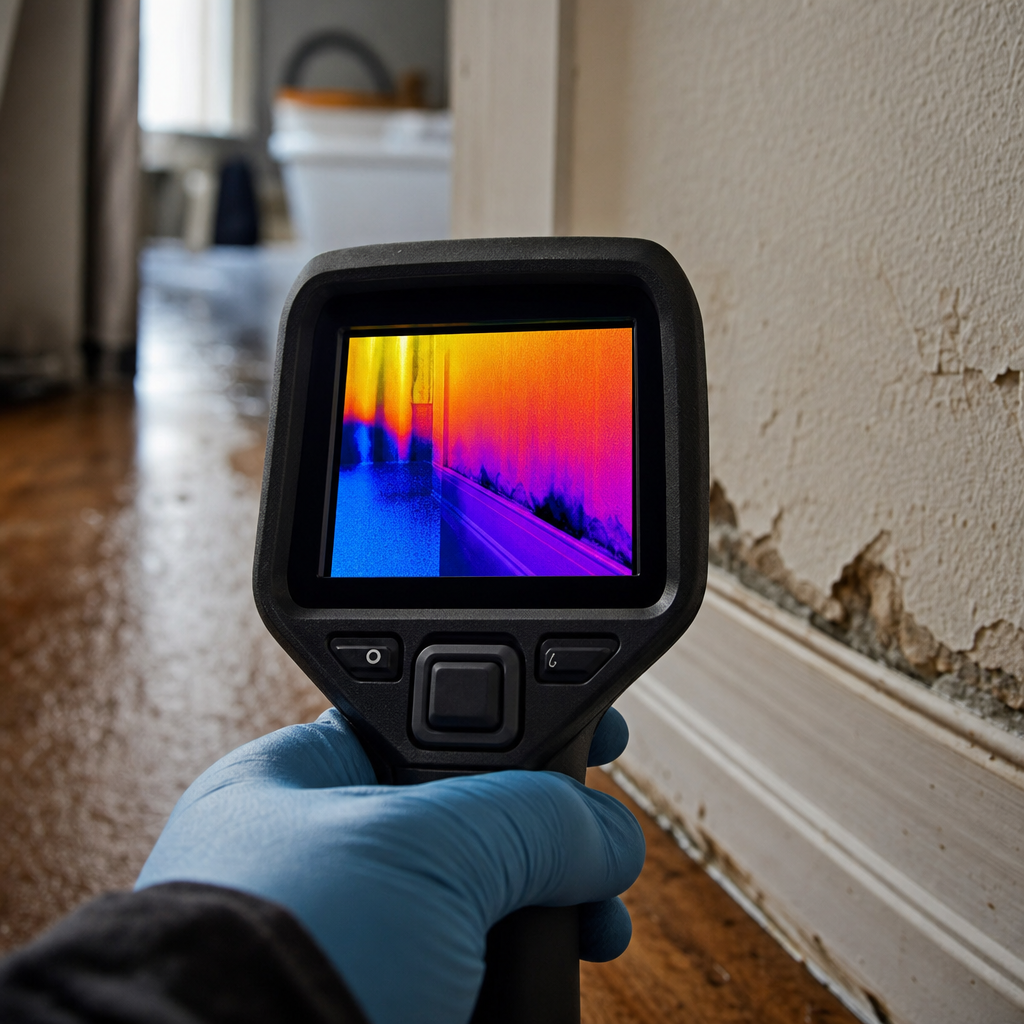
Urban architecture in Brooklyn presents unique structural challenges. Historic brownstones, industrial loft conversions, and new residential mid-rises all respond differently to moisture. How a contractor handles these assemblies determines overall project costs and whether materials can be saved.
| Feature | Standard Contractor Approach | Targeted Structural Drying | DIY / Delayed Air Drying |
|---|---|---|---|
| Hardwood & Subflooring | Full rip-out and replacement | Floor mat drying systems save original wood | Cupping, crowning, and subfloor rot |
| Plaster & Drywall | Complete gut down to bare studs | Precision flood cuts and cavity injection | Hidden mold colonies behind baseboards |
| Total Project Expense | High out-of-pocket rebuild bills | Controlled mitigation and minor touch-ups | Massive delayed remediation costs |
| Operational Downtime | Weeks to months of construction | 3 to 5 days of active drying | Indefinite property disruption |
Hardwood and Subflooring: Salvage vs. Tear-Out
Solid oak, maple, or historic pine floors swell when exposed to water, causing boards to cup along the edges. With high-powered negative-pressure drying mats and industrial desiccant dehumidifiers used by Wade’s Restoration, water can be drawn directly out of the wood fibers and underlying joists, allowing the floor to settle back flat in place.
Drywall, Plaster, and Insulation Moisture Traps
Plaster on wood lath holds up far better to water than modern drywall, provided it is dried quickly from both sides. For modern drywall, running precision “flood cuts” two feet above the moisture line allows technicians to remove wet fiberglass insulation and dry the wall cavities without tearing down entire rooms. This targeted method keeps structural remediation costs low while ensuring studs are completely dry before closed walls are resealed.
Basements, Crawl Spaces, and Mechanical Systems
Basements in garden apartments and commercial properties house expensive utility systems, including boilers, water heaters, electrical panels, and inventory. Standing water can rust mechanical components, destroy ductwork insulation, and compromise foundational sill plates. Pumping water out immediately protects high-dollar equipment and stops moisture from migrating upward into the first-floor framing.
Key Factors That Drive Up Emergency Water Extraction Pricing
Need emergency flood cleanup cost?
We’re available now - call for a fast, free estimate.
Understanding what influences restoration pricing helps property owners make informed decisions during an emergency.
Water Contamination Category
Clean water from a supply line failure is straightforward to dry. But if that water is left sitting for more than 24 to 48 hours, bacterial growth turns it into Category 2 or Category 3 black water. At that point, technicians must set up plastic containment barriers, install HEPA air scrubbers, and dispose of porous items, which drives up labor and disposal costs significantly.
Response Time and Structural Saturation Depth
Immediate action is needed, and the first 24 to 48 hours are critical. If water penetrates deep into building framing, drying takes longer, requiring extra commercial air movers and higher electric utility usage.
Secondary Mold Growth and Biohazard Sanitization
Mold spores can colonize damp building materials within 24 to 48 hours. Once mold takes hold, standard water extraction transitions into formal mold remediation, which requires specialized protocols, containment chambers, and clearance testing.
Navigating Insurance Coverage and Avoiding Claim Denials
Dealing with property insurance during a flood crisis is stressful. Adjusters require precise, itemized data before approving payouts, and simple documentation mistakes can result in delayed or denied claims.
Homeowners Policies vs. Flood Insurance Policies
Standard homeowners insurance usually does not cover flood damage, and separate flood insurance is generally required to cover damage caused by flooding.
The Importance of Carrier-Grade Moisture Documentation
Insurance adjusters rarely approve vague, lump-sum estimates. To get your claim settled fairly, your restoration team must provide:
- Thermal imaging and psychrometric readings showing moisture levels at initial arrival.
- Daily drying logs tracking relative humidity, temperature, and moisture content in affected studs and floors.
- Itemized scopes of work written in standard carrier billing formats (such as Xactimate).
- Detailed photographic evidence of damaged items before removal or disposal.
Why Single-Source Restoration Simplifies the Claim Process
Hiring one team to handle water extraction, structural drying, and final repairs eliminates finger-pointing between separate mitigation crews and general contractors. Wade’s Restoration manages the entire workflow from initial emergency dispatch through insurance coordination, ensuring your documentation meets carrier standards from day one.
Frequently Asked Questions About Emergency Flood Cleanup
How much does emergency flood cleanup cost per square foot?
Category 3 flood water cleanup typically costs about $7.00 to $7.50 per square foot due to required safety gear, antimicrobial sanitization, and specialized waste handling.
Does homeowners insurance cover emergency flood damage restoration?
Standard homeowners insurance usually does not cover flood damage, and separate flood insurance is generally required.
What factors increase the cost of emergency water extraction?
The main factors include the category of water, total square footage, how long the water has been standing, and whether specialized structural drying systems are needed to salvage hardwood floors and plaster. Delays that lead to secondary mold growth also add significant containment and remediation fees.
How quickly do restoration professionals need to respond after a flood?
Immediate action is needed, and the first 24 to 48 hours are critical to mitigate damage and prevent mold growth.
What is the average cost to clean up a flooded basement?
Basement cleanup typically ranges from $1,500 to $8,000. Minor clean-water flooding on concrete floors sits at the lower end, while deep water involving finished walls, carpet, furnaces, or sewer backups sits at the higher end of the scale.
Are there additional fees for 24/7 or after-hours emergency restoration services?
Emergency restoration companies like Wade’s Restoration maintain 24/7 on-call dispatch teams. While after-hours or holiday dispatches may have higher base labor rates ($100 to $200 per hour), reputable services provide clear visual assessments and written scopes of work before starting mitigation to keep billing transparent.
Need emergency flood cleanup cost?
We’re available now - call for a fast, free estimate.
Sources
- Water Leak Detection and Property Insurance Statistics (2026) – rapideyeinspections.com (2026)
- Restoration Cost Statistics (2026) – RapidEye – rapideyeinspections.com (2026)
- Water Damage Restoration Cost: 2026 Pricing Guide – pushleads.com (2026)
Related reading: Water Mitigation Cost Per Square Foot | Call Now-10% Off | Same-Day Service | Free Estimate
Related reading: Sewage Backup Cleanup Cost | Call Now-10% Off | Same-Day Service | Free Estimate
Related reading: Water Extraction Cost Per Square Foot – 10% Off & Free Estimate – Same-Day Service
Frequently Asked Questions
Can emergency flood cleanup costs be billed directly to my insurance carrier?
Yes, certified restoration providers can submit documentation directly to your insurance company using carrier-approved platforms like Xactimate. Wade's Restoration manages claims coordination and supplies daily psychrometric logs to protect your claim and minimize out-of-pocket expenses.
How long does targeted structural drying take to restore flooded materials?
Active structural drying typically takes 3 to 5 days using commercial desiccant dehumidifiers and specialty floor mat systems. Wade's Restoration utilizes this non-invasive approach to salvage hardwood flooring and historic plaster, substantially cutting demolition and rebuild costs.
What is included in an initial emergency flood cleanup inspection?
An initial inspection includes thermal imaging and moisture-depth mapping to pinpoint hidden water pockets in walls, subfloors, and mechanical areas. Wade's Restoration provides 24/7 live dispatch with a free visual inspection and no-obligation scope of work so you receive transparent pricing upfront.
About the author
 |
David Thorne David Thorne is a certified restoration professional with over 12 years of experience in the property damage industry. Holding a degree in Construction Management from the New York Institute of Technology, he specializes in structural drying and mold remediation. David’s extensive background in managing both residential and commercial losses ensures practical, actionable advice for property owners navigating unexpected disasters. |
Water damage, flood, or mold emergency?
We’re available now - call for a fast, free estimate.
Call Now - Free Estimate