
Free visual inspection and a written scope of work before any mitigation begins - photos, moisture readings, and drying logs go in your claim file
The scope we write is the scope we bill. Anything new gets shown to you, in writing, before we touch it.
 Before
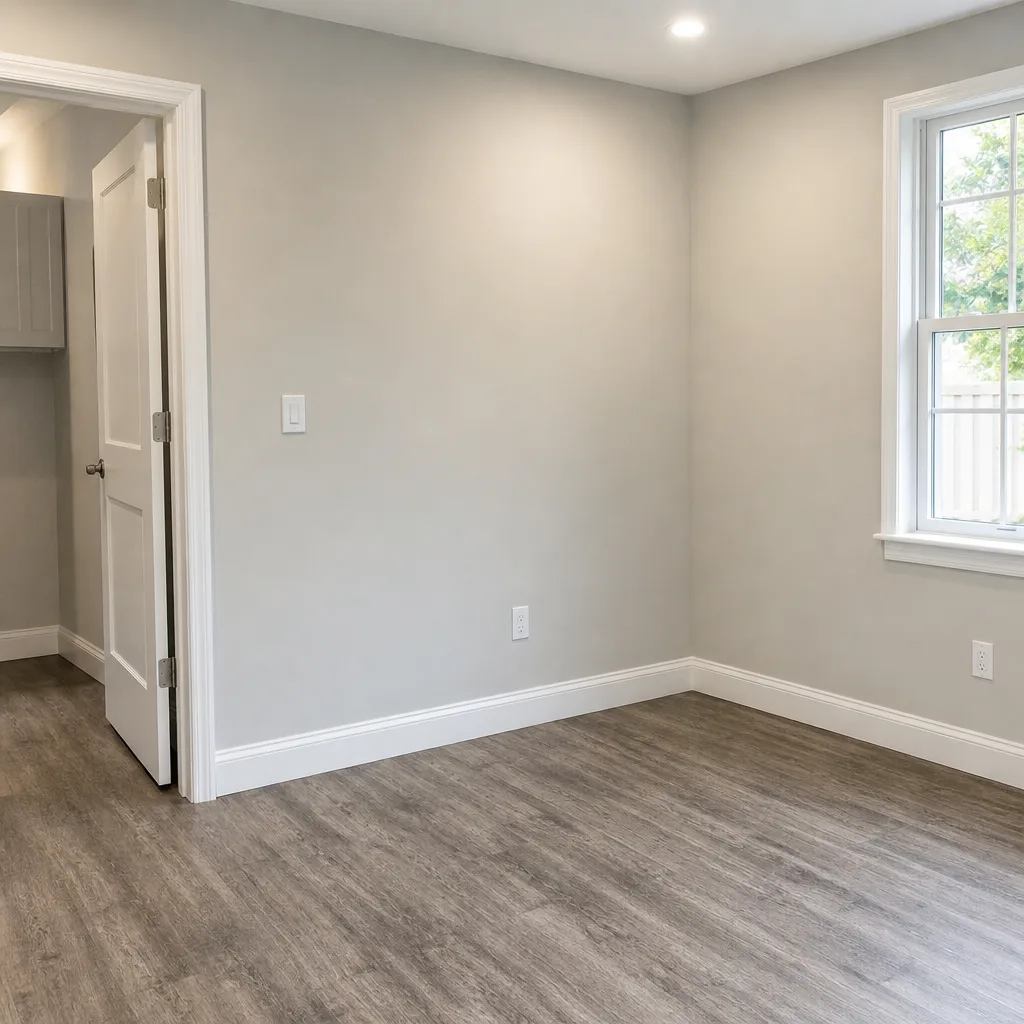 After
After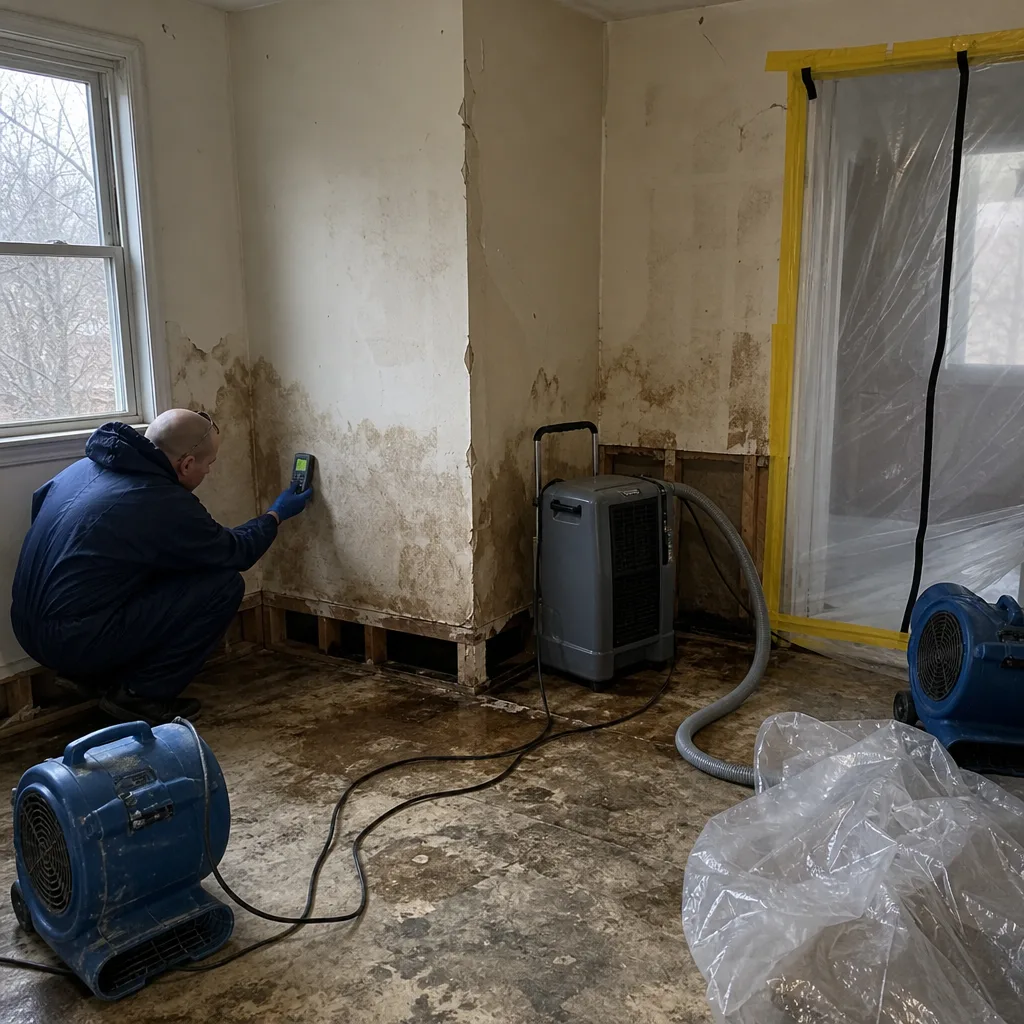 Before
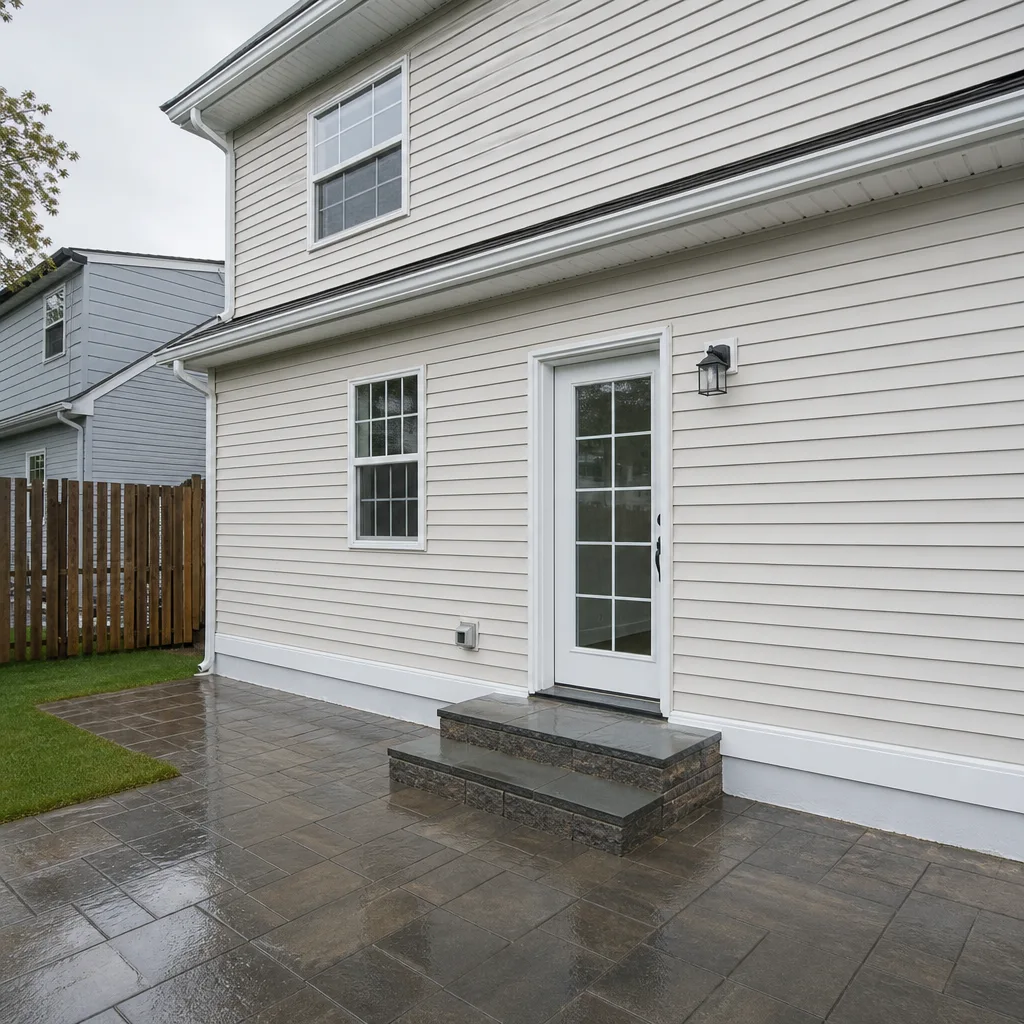 After
After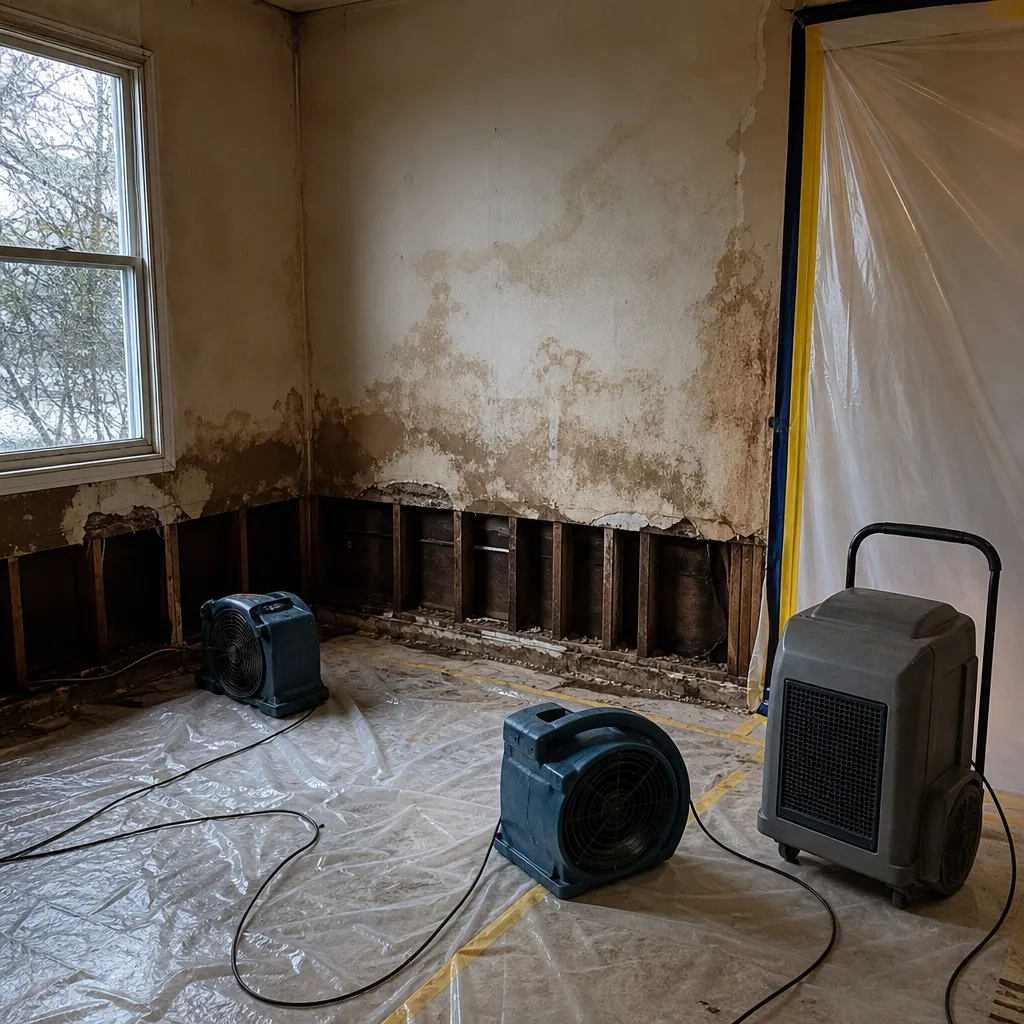 Before
 After
After24/7 Emergency Water Damage Restoration in West New York
Water damage restoration in West New York typically costs between $1,800 and $5,400 for a standard multi-room Category 1 clean-water loss, with sewage-contaminated Category 3 jobs running $4,200 to $9,000 depending on how many stacked units are affected. We answer live around the clock, and crews are on the road to West New York within the hour. Call (363) 666-2319 the moment you see water where it shouldn’t be. The first 60 minutes determine whether you’re looking at drying or demolition, and in pre-war brick buildings along Bergenline Avenue, water travels through plaster-and-lath walls faster than most people think possible.
Understanding Water Damage Restoration Severity in West New York Properties
West New York’s housing stock doesn’t behave like suburban sheetrock houses. We’re dealing with four-to-six-story brick walk-ups built between roughly 1910 and 1960, original plaster-and-lath wall assemblies, and cast-iron drain stacks that have been corroding for 70 to 100 years. When water moves through these buildings, it migrates vertically through shared wall cavities, not horizontally across a single unit’s floor.
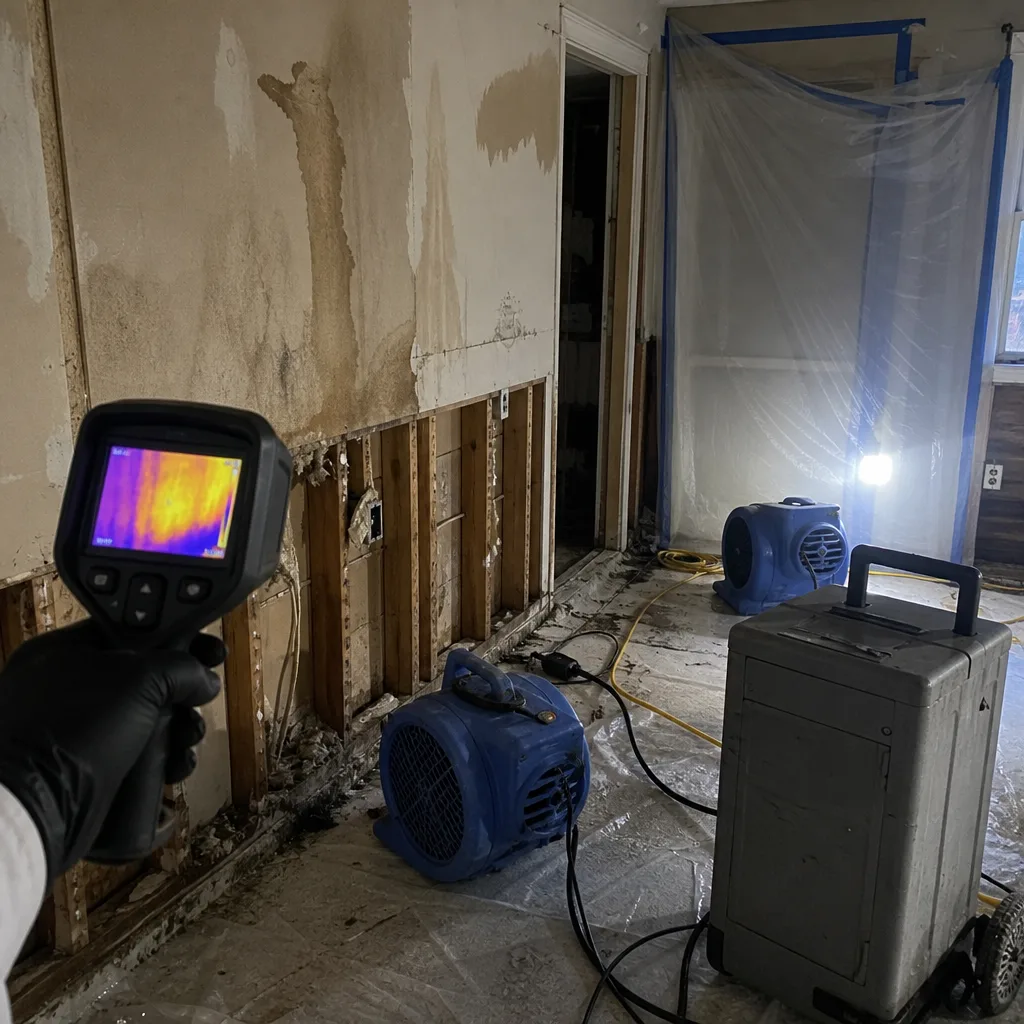
Severity starts with the water’s classification. Category 1 is clean supply water, a burst pipe or failed supply line. Category 2 carries contaminants, things like dishwasher discharge or washing machine overflow. Category 3 is grossly contaminated, sewage backing up through a cracked cast-iron stack or Hudson River storm surge forcing its way into a below-grade garage. In West New York’s older buildings, a Category 1 event can effectively become Category 3 within hours because the water passes through decades of accumulated material inside original wall cavities. Moisture mapping with thermal imaging and penetrating meters tells us what you can’t see, and in these stacked multi-unit properties, we routinely find wet zones two floors below the visible source. The building’s age and shared assemblies make severity assessment a different animal entirely from single-family suburban work.
Why West New York Property Owners Choose Wade’s Restoration
- Wade answers his own phone. Not an answering service, not a call center. A real person who owns the company and can have extraction running inside the hour.
- IICRC-certified crews. WRT and ASD certified, which matters when the job involves sewage contamination or structural drying across shared party walls.
- Free visual inspection. No charge to show up, assess the damage, and give you a straight answer about what you’re actually facing.
- Direct insurance billing. We document everything from hour one and deal with your adjuster ourselves, so you’re not stuck relaying information between two sides.
- One team from extraction to reconstruction. The same crew that pulls the water also handles the rebuild, no hand-offs, no gaps, no excuses.
- 90-Day Done Right Promise. It’s in writing on every restoration contract. If it’s not done right, Wade makes it right.
Our Water Damage Restoration Process
Inspection & Assessment
We arrive with thermal imaging cameras and penetrating moisture meters. In West New York’s stacked brick buildings, we map moisture across all affected units, not just the one with visible water. We classify the water category and determine whether structural drying is possible or demolition is required.
Extraction & Stabilization
We pull standing water using truck-mounted extraction units and portable equipment. In older buildings with original cast-iron stacks, we identify the failure point immediately. If water is still moving from a broken stack, we stop the uncontrolled flow before we start drying.
Drying & Dehumidification
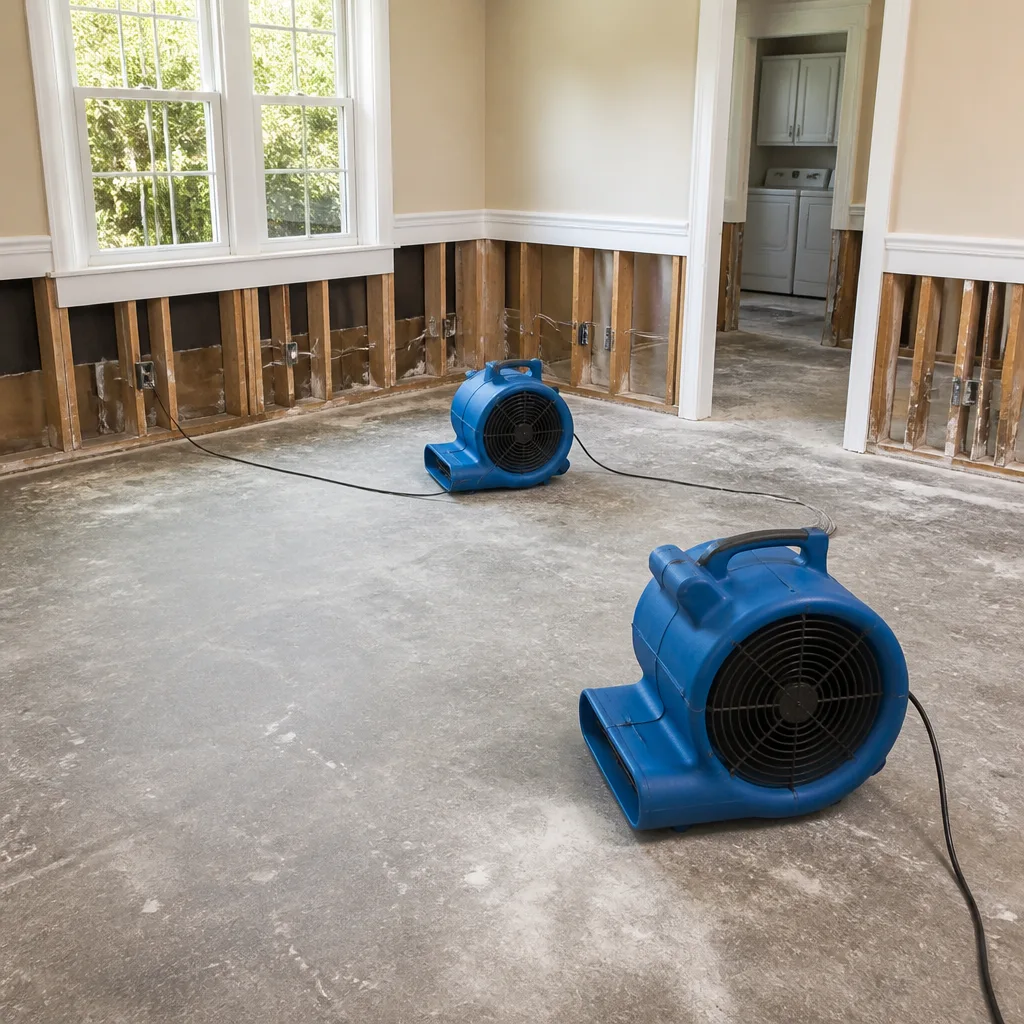
Professional-grade air movers from Dri-Eaz and Phoenix go into every affected space. We run daily moisture readings and adjust equipment placement until all affected materials reach their drying goals. In shared wall assemblies, we use injectidry systems to dry inside sealed cavities without tearing out every surface.
Cleaning & Sanitization
For Category 2 and 3 water, cleaning and sanitization are mandatory, using antimicrobials rated for the specific contaminant. We clean, sanitize, and decontaminate before rebuilding.
Specialty Treatment for Structural Drying
Older West New York buildings frequently have plaster walls that can salvage if treated correctly, and we use drying chambers and desiccant dehumidifiers in tight, humid spaces. Hardwood floors in pre-war units usually get a floor-drying system rather than removal.
Repairs & Restoration
Wade’s team handles the entire reconstruction. Drywall, plaster, trim, flooring, paint, whatever it takes to put your unit back to pre-loss condition. One crew, one contract, one person accountable.
Need Emergency Water Damage Restoration in West New York Now?
Crews minutes away, answering live 24 hours a day. The sooner we start, the less it costs.
Working With Your Insurance Company
The minute we walk in, we’re building a file for your carrier. Photos of every room, moisture readings logged daily, a written scope of work with line items that an adjuster can read without a decoder ring. Wade deals with the adjuster directly, so you’re never the middleman between your insurance and the restoration crew. We speak the same language carriers expect, IICRC standards, documented drying logs, and industry-standard estimating software. If you’ve got a second opinion from another company, we’ll honor our free second opinion offer on any written estimate, because we’re confident in what we document. In multi-unit West New York losses, where three or four separate policy holders are involved, this documentation discipline keeps every claim moving without you having to chase anyone.
What We Provide Your Insurer
- Thorough documentation of the loss
- Photos of all damage, room by room
- Moisture readings and drying logs
- A detailed, line-item scope of work
- Direct coordination with your carrier
Built for West New York’s Loss Calendar
West New York gets hit from three directions depending on the season. January and February bring deep freezes that burst supply lines in unheated vestibules and exterior wall cavities, especially in pre-war walk-ups where pipes run through uninsulated brick. We see frozen and split galvanized and copper lines behind kitchen cabinets on the building’s north face every single winter. Spring comes with heavy rain events that saturate the Palisades grade and send surface water downhill toward lower residential streets, where basement seepage in older buildings with original foundation walls is common. Summer thunderstorms can drop two inches of rain in an hour, overwhelming old roof drains and flashing on flat-roofed tenements. Then there’s the standing threat no inland town deals with: nor’easters and the Hudson River itself. The Port Imperial waterfront corridor below the Palisades bluff remains exposed to storm surge that flooded the same streets in 2012 during Hurricane Sandy. When you combine an aging building stock with storm surge, the loss calendar is full year round, no downtime, no slow season.
Water Damage Restoration Across West New York’s Neighborhoods
In the dense upland grid around Bergenline Avenue, we’re typically handling vertical water migration through four-to-six-story brick walk-ups. A third-floor pipe burst becomes a second-floor ceiling collapse becomes a first-floor wall cavity full of water, all from one source, all within hours. The response here is containment first, because the water doesn’t respect unit lines. Down toward Boulevard East and the Palisades bluff, pre-war co-op buildings with original radiators and old supply risers account for a steady stream of winter freeze losses. The Port Imperial corridor is a different world entirely. Below-grade parking garages and mechanical rooms in those newer concrete towers hold water after storm surge and take longer to dry because of limited access and complex HVAC systems. We also spend time in the blocks west of Park Avenue where smaller two-family homes and row houses sit on sloped lots that channel runoff straight into basement doorwells during heavy rain. Different building stock, different failure modes, same requirement: get water out fast and dry the structure properly. For property owners anywhere in West New York, that means one call to (363) 666-2319, and Wade heads out.
Specialized Water Damage Restoration Services We Offer in West New York
Emergency Water Extraction
Standing water in a West New York apartment or home needs to come out within the first hour, not the next day. Our extraction crews bring truck-mounted and portable extraction equipment sized for tight urban access, because hallways in pre-war walk-ups are narrow and stairwells are steep. We’ll get the bulk water out and set up containment before it migrates any further.
Structural Drying & Dehumidification
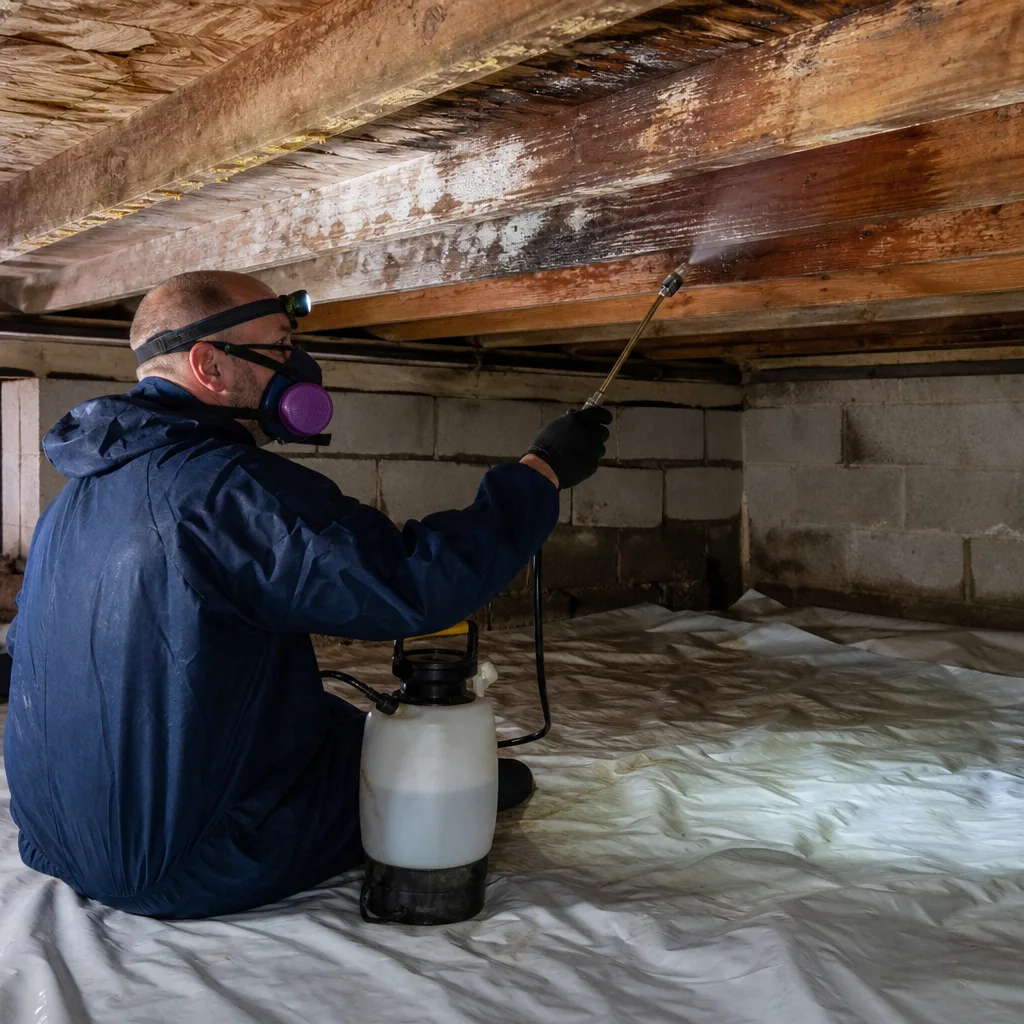
Drying a 1920s plaster-and-lath wall assembly is not the same as drying modern drywall. Plaster holds moisture differently, and original hardwood floors in these buildings can often be saved with floor-mat drying systems rather than pulled. We run daily moisture readings, adjust equipment placement based on the data, and hand you the complete log at the end of the job. Almost nobody in this trade does that.
Flood Cleanup
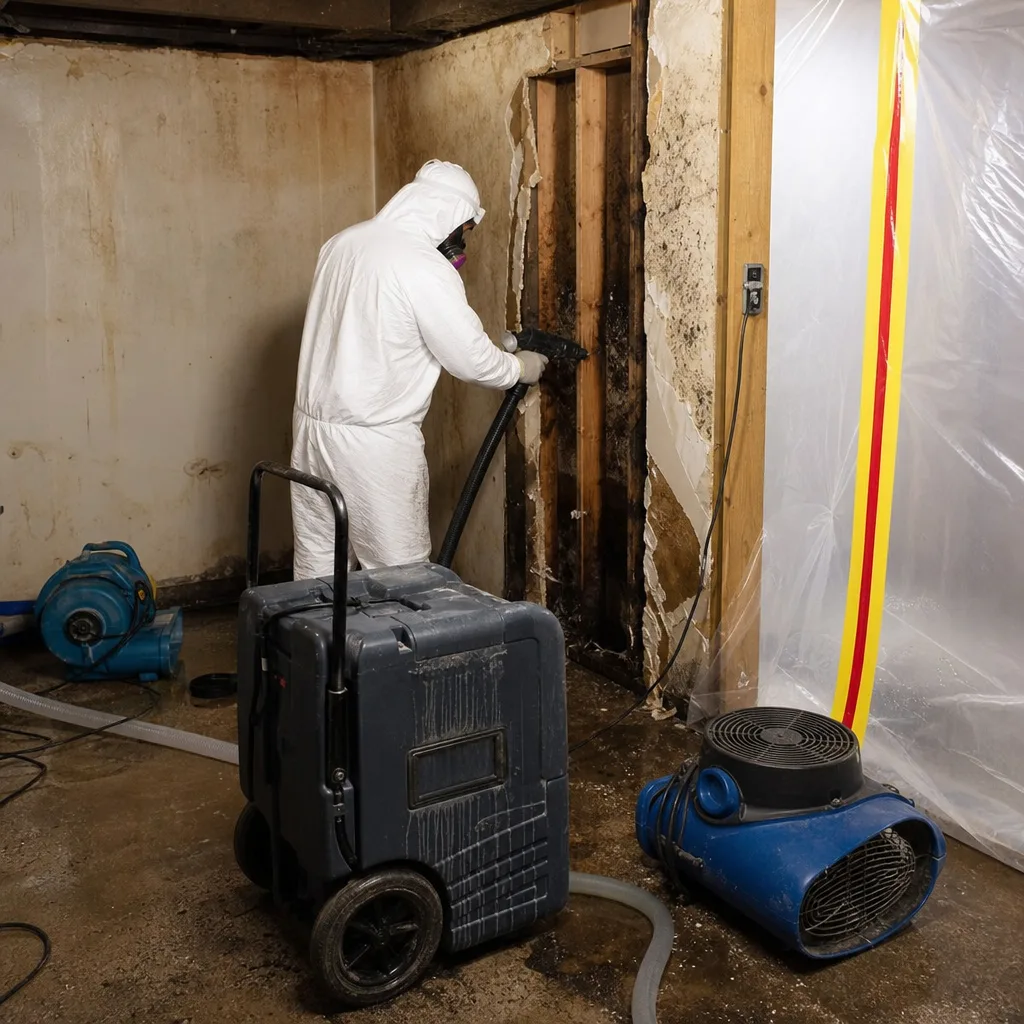
Whether it’s Hudson River storm surge in a Port Imperial garage or rain-driven seepage in a Boulevard East basement, floodwater in West New York carries contaminants from the street, from sewer systems, from the river itself. We treat every flood job as potentially contaminated, which means proper PPE, containment, sanitization, and disposal protocols before drying begins.
Burst Pipe Restoration
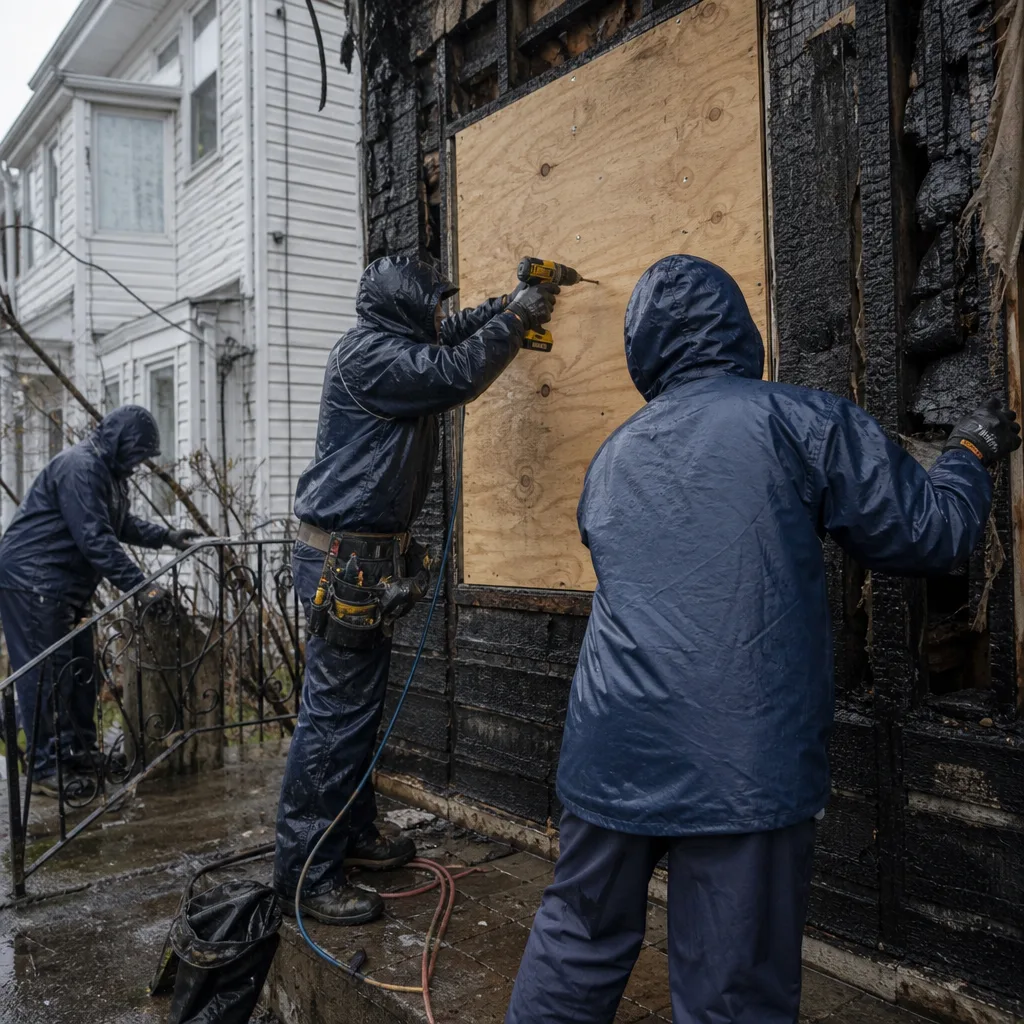
When a supply line lets go in a West New York apartment building, the damage is rarely confined to one unit. Our crews identify the failure point, stop the flow, extract, and then map moisture across adjacent units and shared wall cavities. In older buildings with original plumbing, we can tell you whether the remaining system is worth salvaging or if a full repipe is safer.
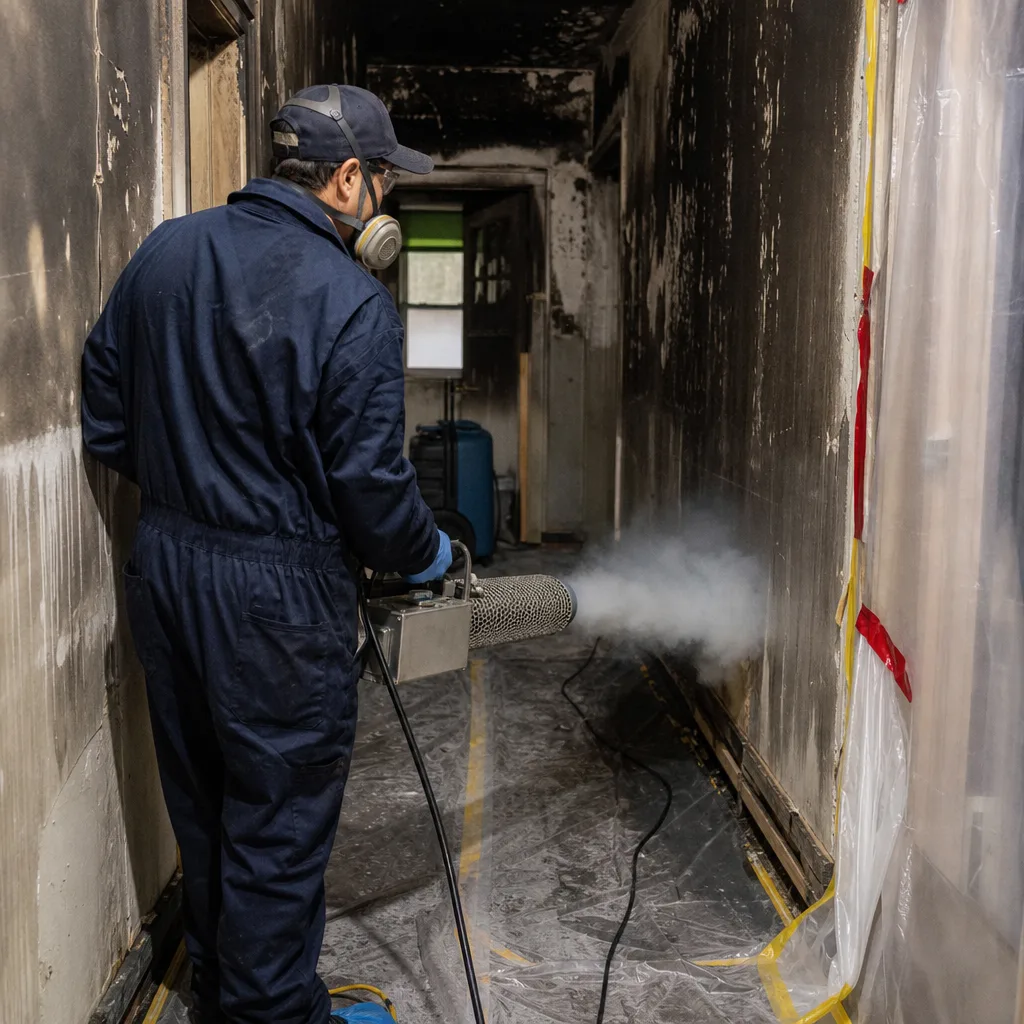
Basement Water Removal
Basements in West New York’s older housing stock take water from foundation seepage, storm runoff, and, in the waterfront corridor, storm surge through below-grade garage entrances. We pump, extract, dehumidify, and then document everything for your insurer.
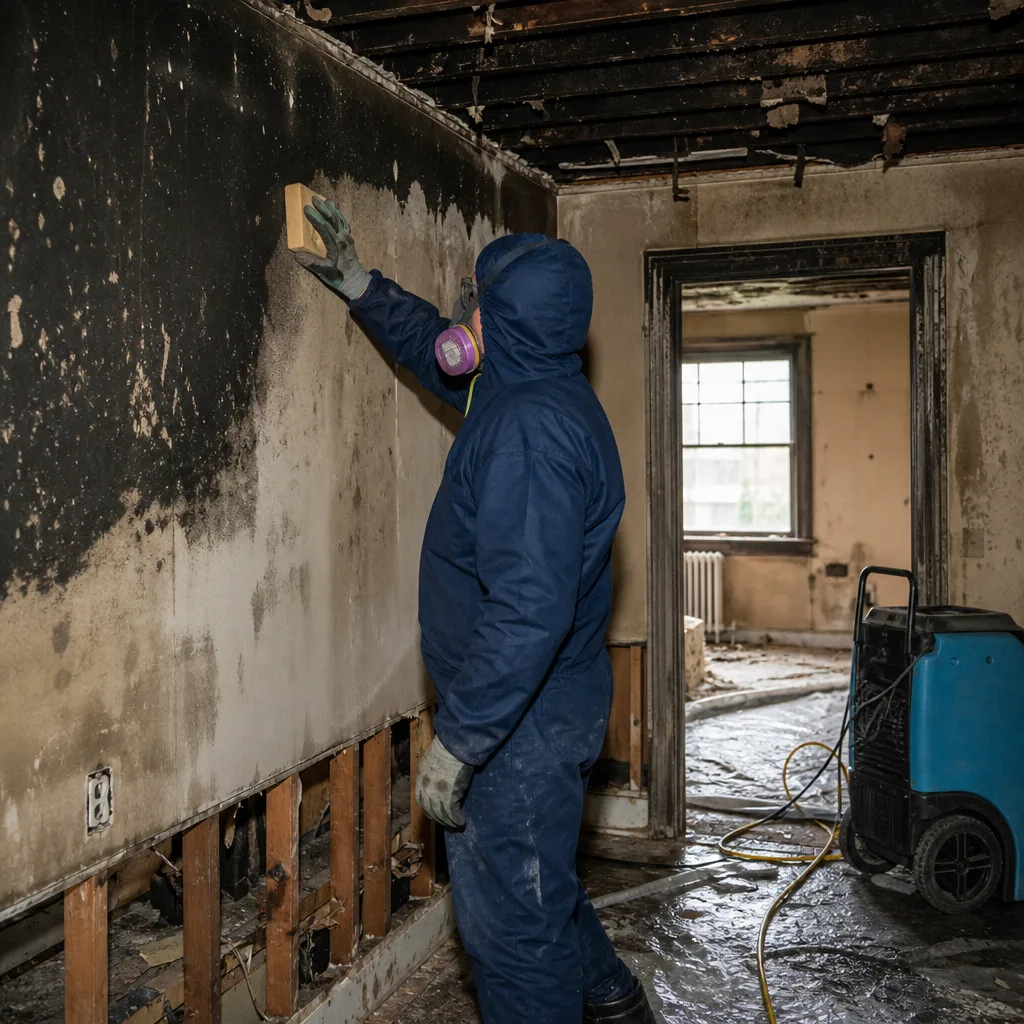
What happens when you call
- 1
A real person answersNo phone trees - you reach a local pro.
- 2
You get an upfront price rangeHonest numbers before anyone is dispatched.
- 3
A background-checked tech heads outLicensed & insured, dispatched right away.
- 4
You approve before work beginsNothing starts until you say go.
Water Damage Restoration Costs in West New York, NJ
A straightforward Category 1 water loss from a burst supply line in a single West New York apartment typically runs $1,800 to $4,200 when caught early and dried properly. Sewage contamination from a cracked cast-iron stack, the kind of thing we see routinely in the pre-war buildings off Bergenline Avenue, pushes the job into the $4,200 to $9,000 range because it involves containment, demolition of affected drywall and plaster, sanitization, and reconstruction across multiple units. Storm surge flooding in Port Imperial below-grade garages lands higher, often $5,000 to $12,000, due to the complexity of drying large concrete spaces and the electrical and mechanical systems involved. What moves the price more than anything is time. Water left for three days costs exponentially more than water addressed in three hours. Insurance covers most Category 1 and 2 losses, and we bill directly. For an exact number, call (363) 666-2319 for a free visual inspection and a written scope of work before anything starts.
We Also Serve Cities Near West New York
Wade’s Restoration covers West New York and the surrounding Hudson County communities, including Water Damage Restoration in Jersey City, Hoboken, Weehawken, and Union City. Same live answer, same 45-minute response commitment, same owner-operated accountability.
Serving West New York, NJ - Our Local Coverage Area
We’re based in the West New York area and know this community well. Use the map below to see our service coverage - if you’re nearby, we can almost certainly help.
West New York Water Damage Restoration Questions, Answered
How does water damage restoration in West New York’s older brick buildings differ from newer construction?
Older brick buildings in West New York have plaster-and-lath wall assemblies that hold and transfer moisture differently than modern drywall, plus original cast-iron drain stacks that are decades past their service life. Water moves vertically through shared wall cavities, so restoration requires moisture mapping across multiple units rather than treating just the visible source. We dry with injectidry systems and floor mats designed for dense materials, and we document every reading daily.
Why is storm surge flooding in West New York’s waterfront condos more difficult to dry than typical rain intrusion?
Storm surge water is contaminated and enters below-grade spaces like parking garages and mechanical rooms that have limited access, thick concrete walls, and complex HVAC systems. These spaces don’t dry passively. They require desiccant dehumidifiers, containment, and sometimes weeks of controlled drying, plus electrical and mechanical system assessment. If your Port Imperial building took on surge water, call (363) 666-2319 immediately.
What does ‘vertical drying’ mean for a water damage job in a West New York walk-up?
Vertical drying means treating water that has moved up and down through a building’s structure, through shared wall cavities, ceiling joists, and floor assemblies, rather than just drying the room where the water landed. In a four-story West New York walk-up, a leak on the third floor can wet the second floor ceiling and the first floor wall cavity. We set drying goals for every affected assembly, not just the visible surface.
How do you handle tenant notification and insurance for water damage affecting multiple units in a West New York apartment building?
We coordinate with the property manager to get access to all affected units under a single authorization, and we follow NJ landlord-tenant law for tenant notification. Each unit’s damage is documented separately with its own photos and moisture readings, so each policy holder’s insurance claim can be filed independently. We deal with adjusters directly across all affected units, so you’re not passing paperwork between tenants and carriers.
Can you repair water damage without removing the original plaster walls in a 1920s West New York building?
Sometimes, yes. If the plaster is structurally sound and the water was Category 1 and caught early, we can often dry the wall cavity using injectidry systems without full demolition. If the water was sewage-contaminated or the plaster has lost its key to the lath, removal is the only safe option. We’ll tell you straight either way. Call (363) 666-2319 and we’ll take a look.
How fast can you actually get to West New York for a water emergency?
Wade’s crews are on the road to West New York within the hour, day or night, including weekends and holidays. A live person answers the phone 24/7, and Wade himself often picks up. The faster water is extracted, the less structure you lose and the lower the final cost.
Do you work directly with my insurance company, or do I have to handle the claim myself?
We work directly with your carrier. From hour-one documentation through final drying logs and a line-item scope of work, we build the file your adjuster needs. Wade speaks to adjusters himself, so you’re never the messenger between two sides. We bill insurance directly for covered losses.
What should I do in the first 30 minutes after discovering water damage in my West New York home or building?
Call (363) 666-2319 first. Do not enter standing water if electrical outlets or appliances are submerged. If it’s safe, shut off the water at the nearest valve or the building main. Move small items out of the water. Do not use a shop vac on sewage or surge water. Then wait for us. We’ll walk you through everything else when we get there.
In West New York’s pre-war brick tenements, a single cracked cast-iron drain stack can send Category 3 water through shared walls into four to six stacked units at once. That’s not a rarity here, it’s the standard call. We know these buildings, the original plumbing, the plaster walls, the shared party-line assemblies, and the property managers who need to know what’s happening on every floor. If you’re dealing with water damage in West New York, call (363) 666-2319 now. Wade answers, and he’ll be there himself.
Written by Wade Ferris, Owner at Wade’s Restoration, serving West New York with water damage restoration since 2007.