
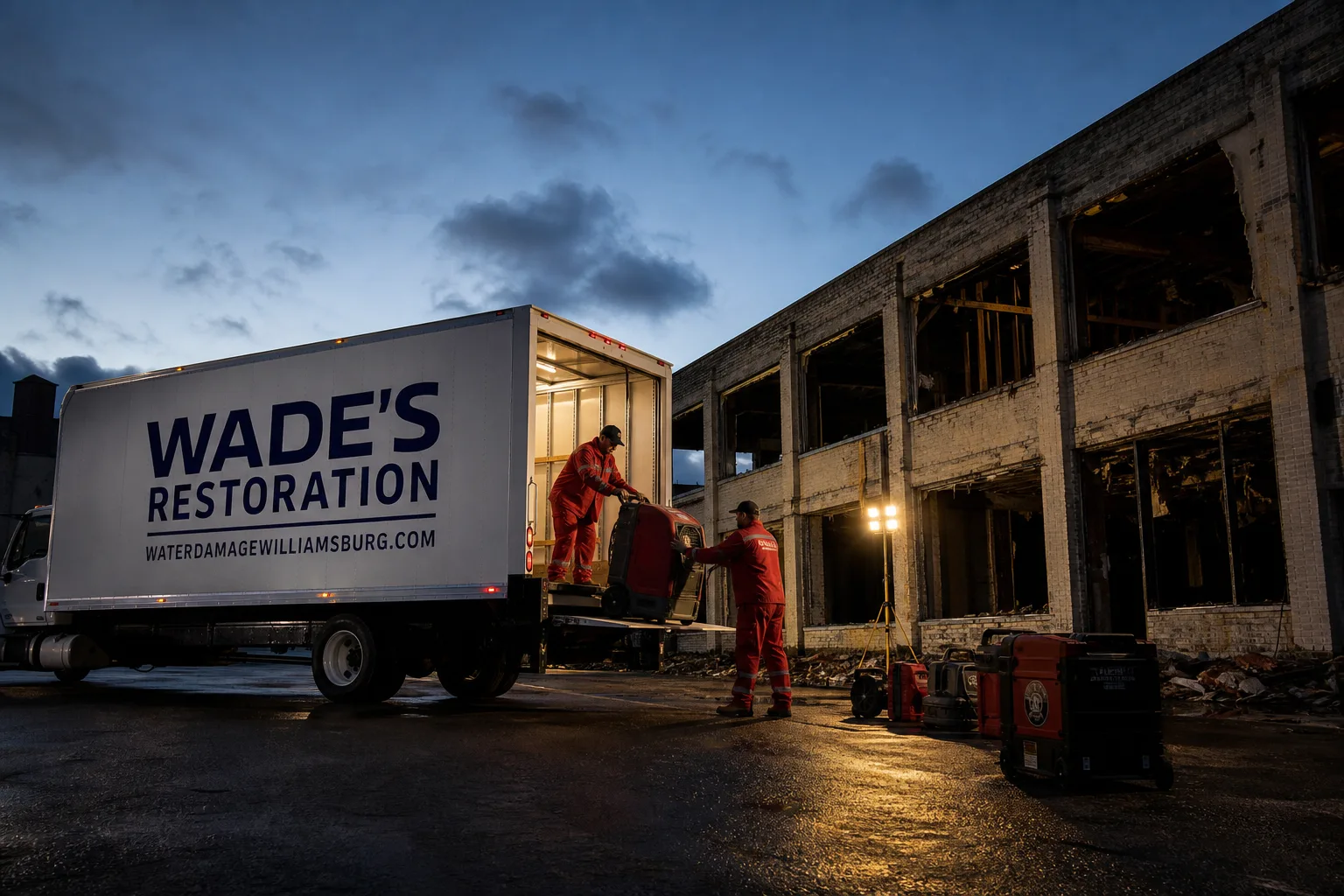
Free visual inspection and a written scope of work before any mitigation begins - photos, moisture readings, and drying logs go in your claim file
The scope we write is the scope we bill. Anything new gets shown to you, in writing, before we touch it.
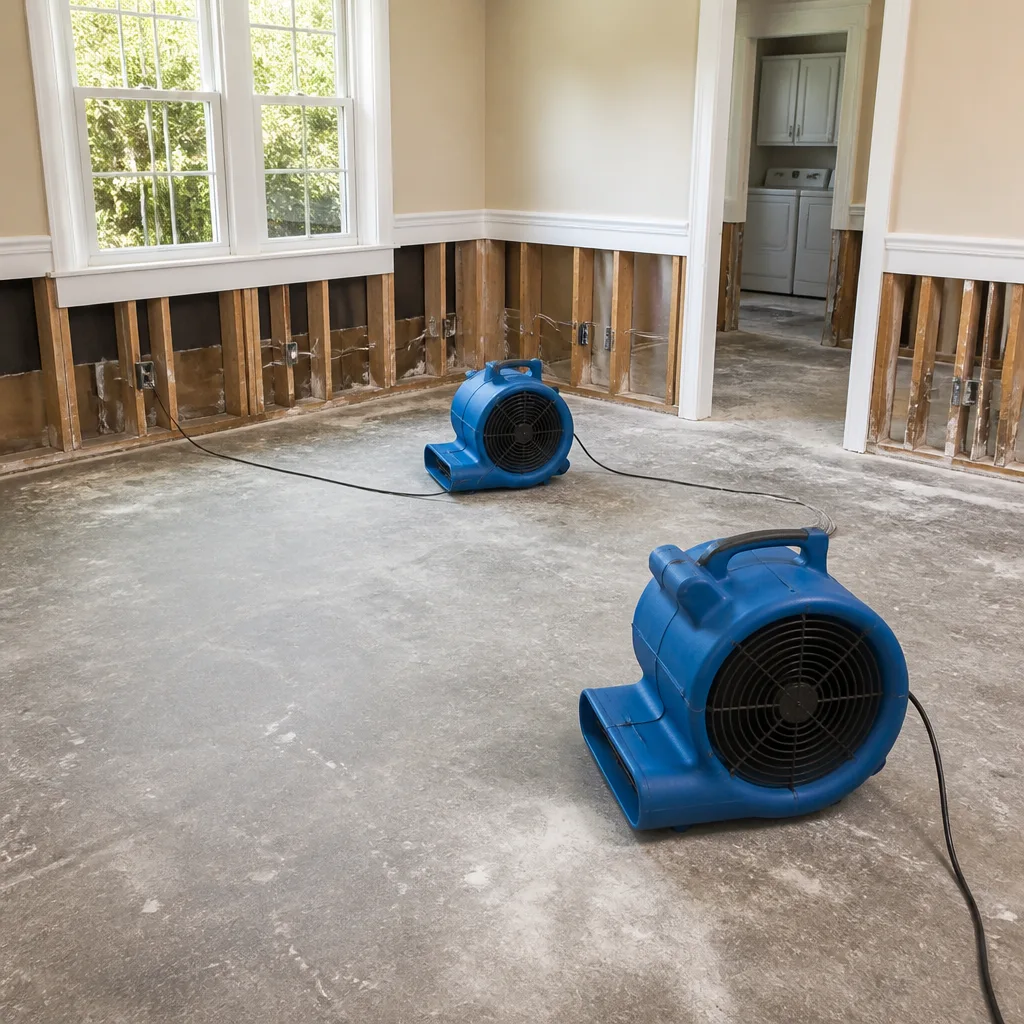
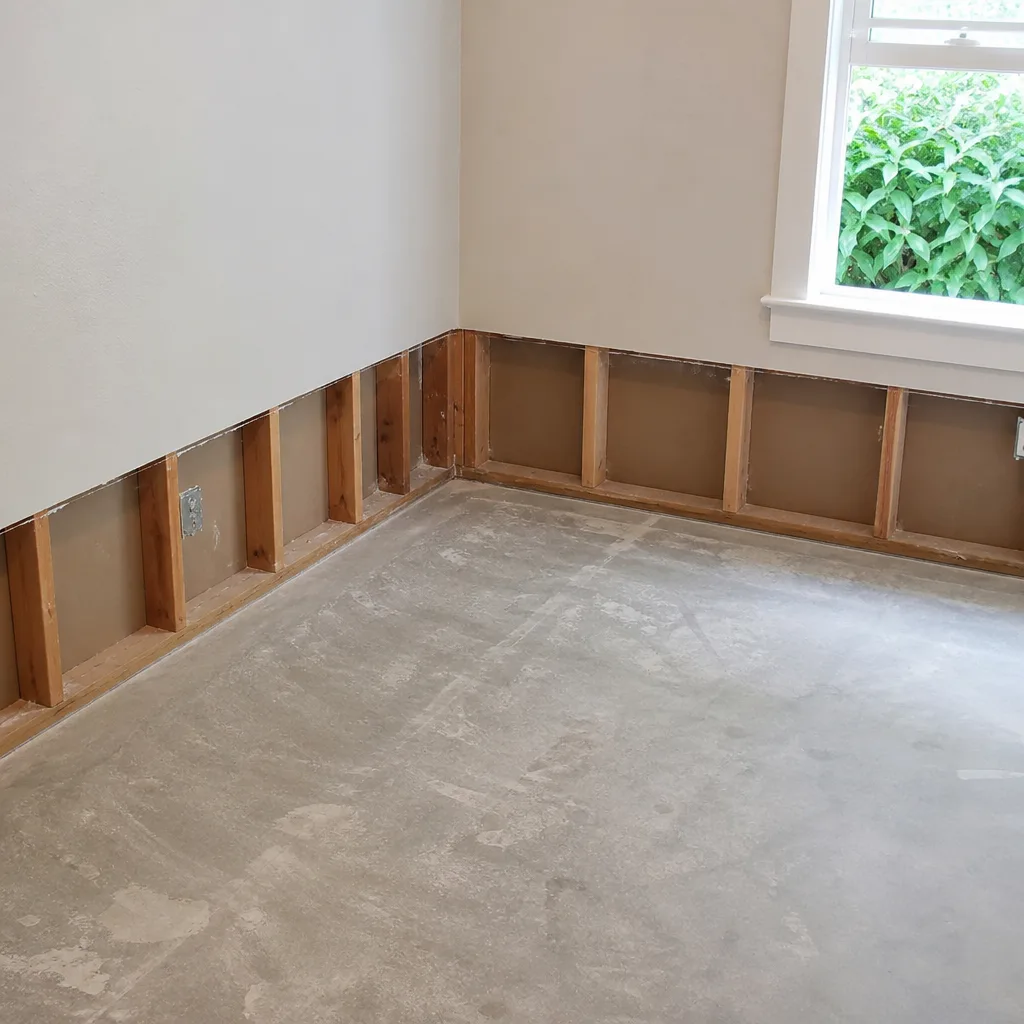
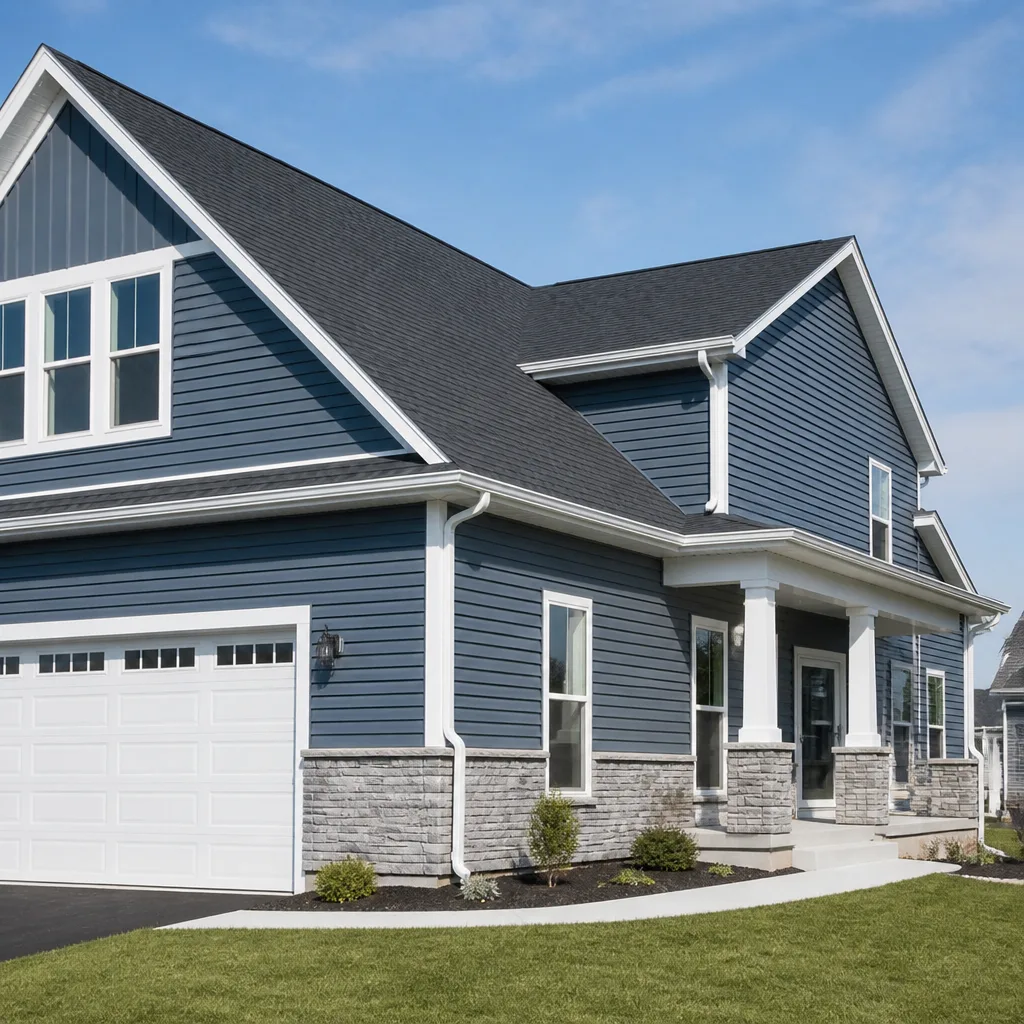
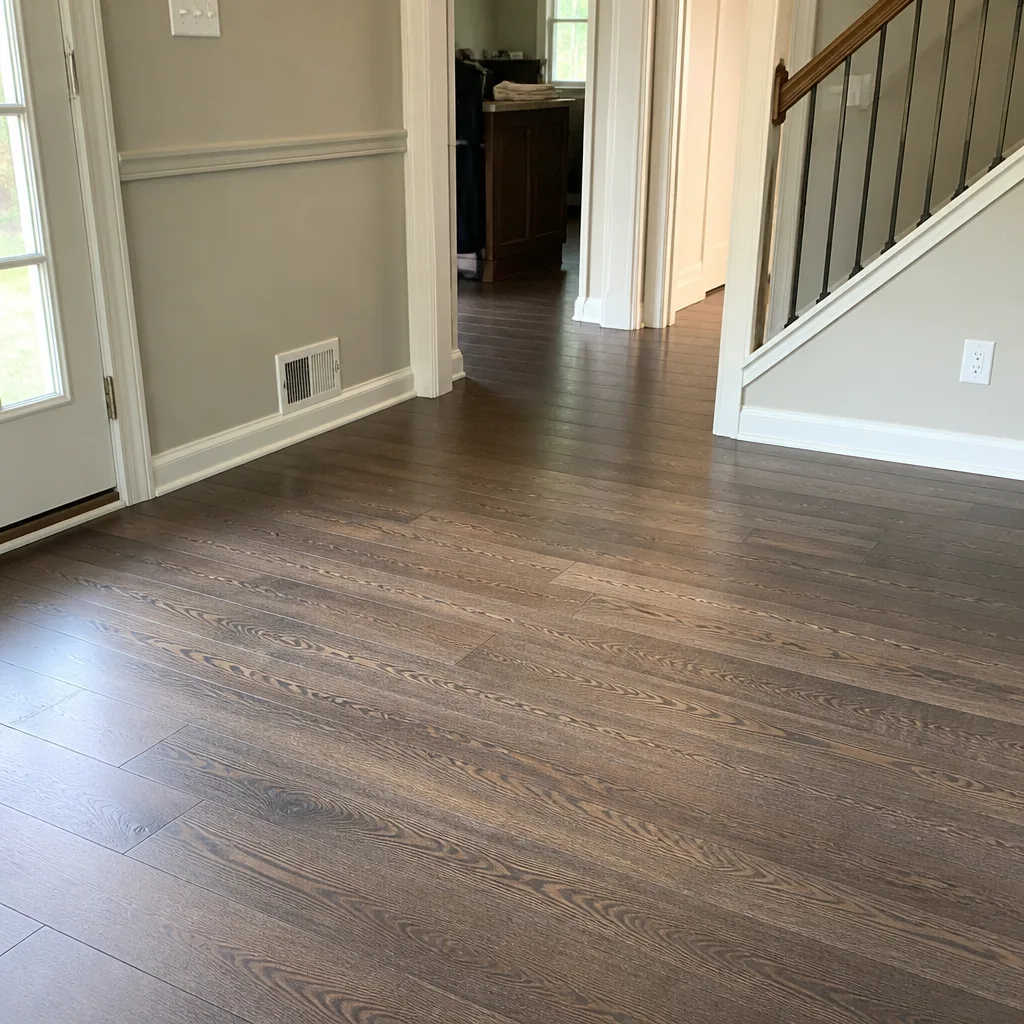
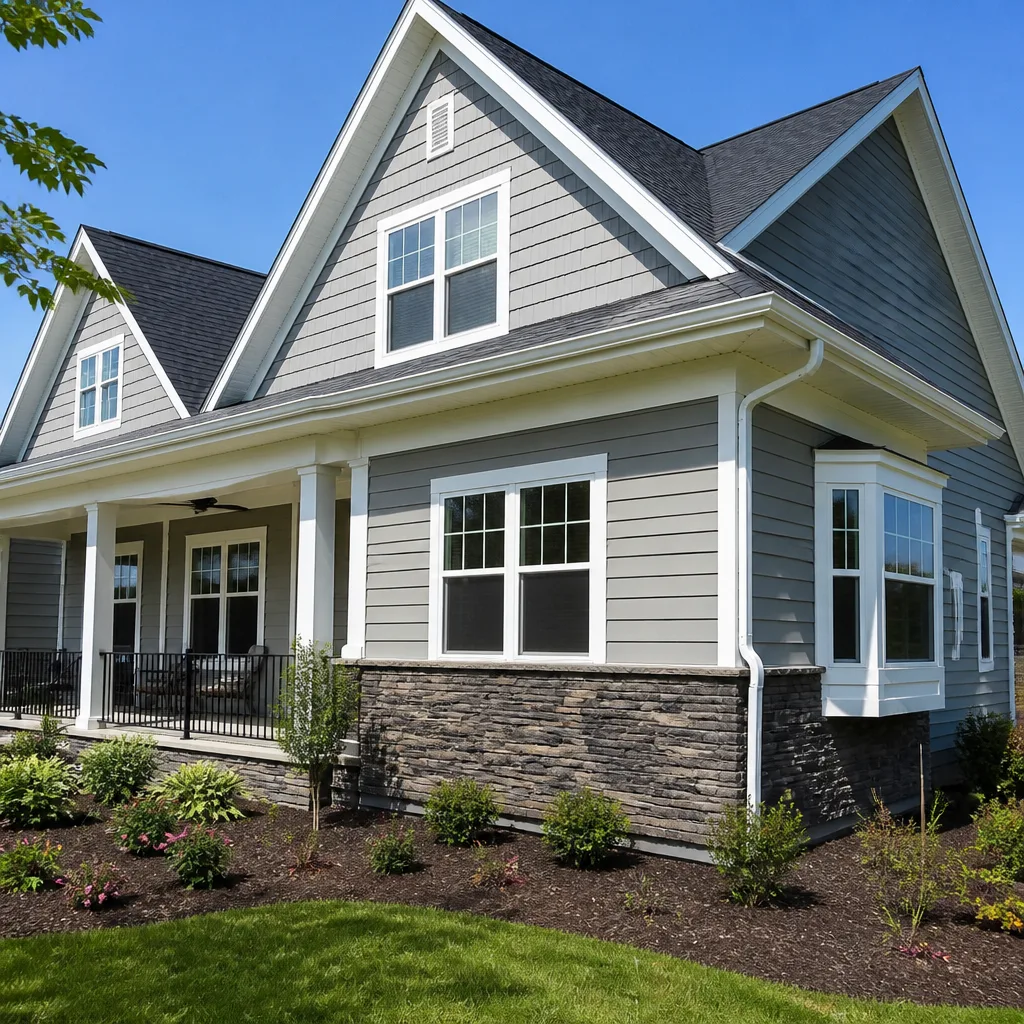
 Before
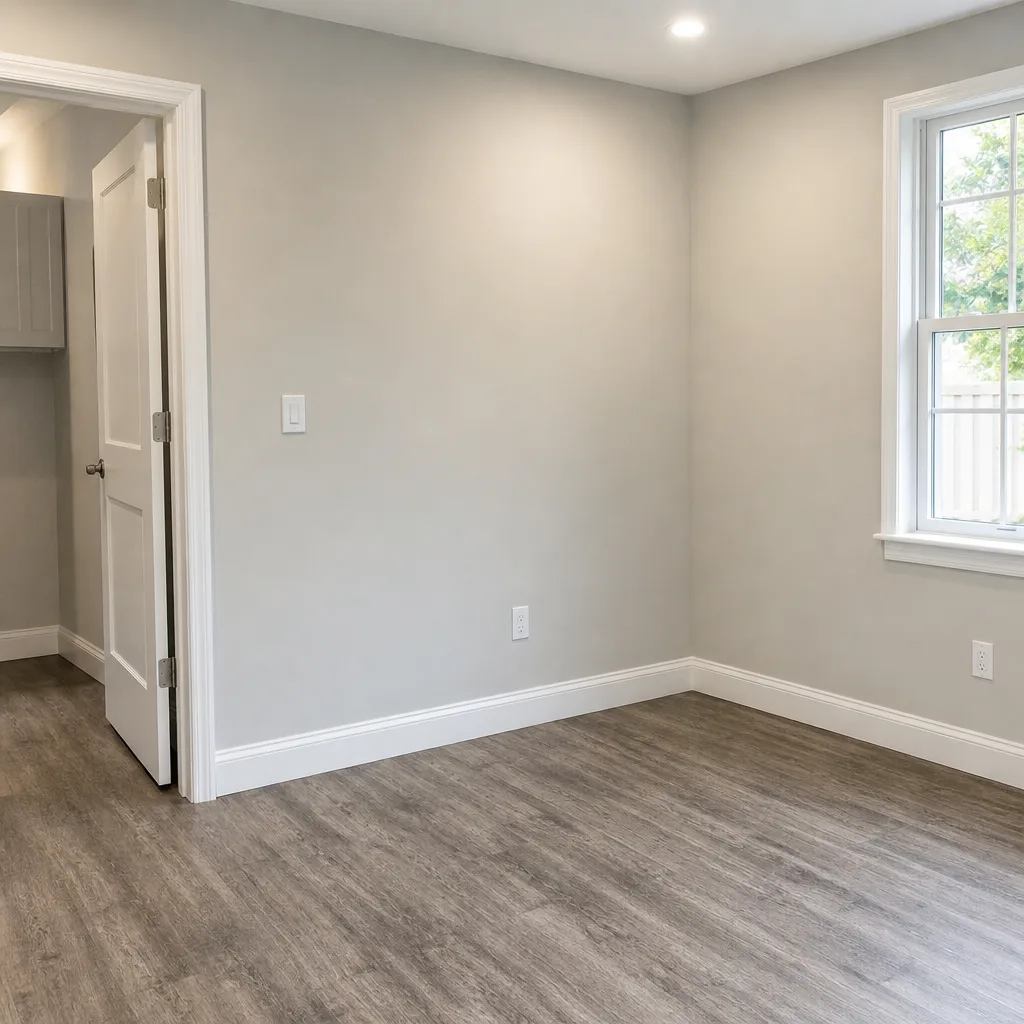 After
After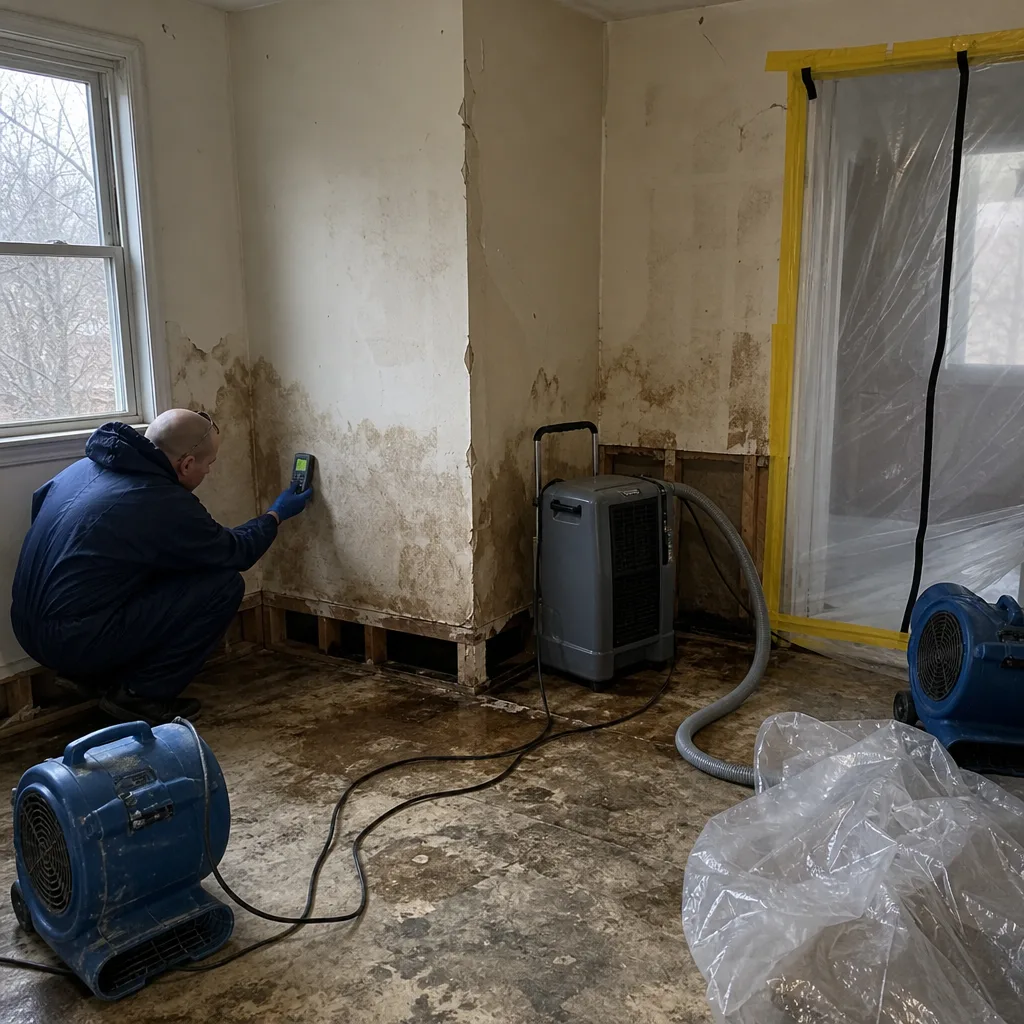 Before
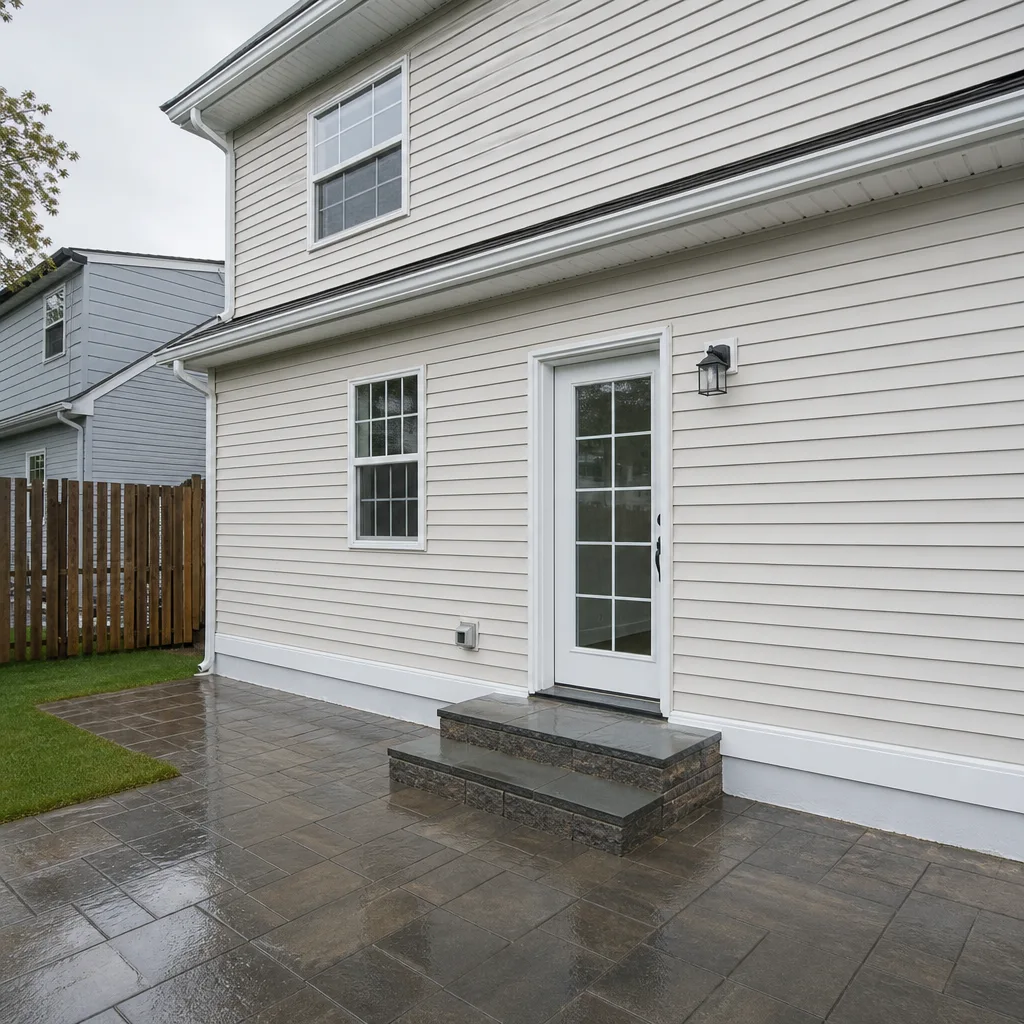 After
After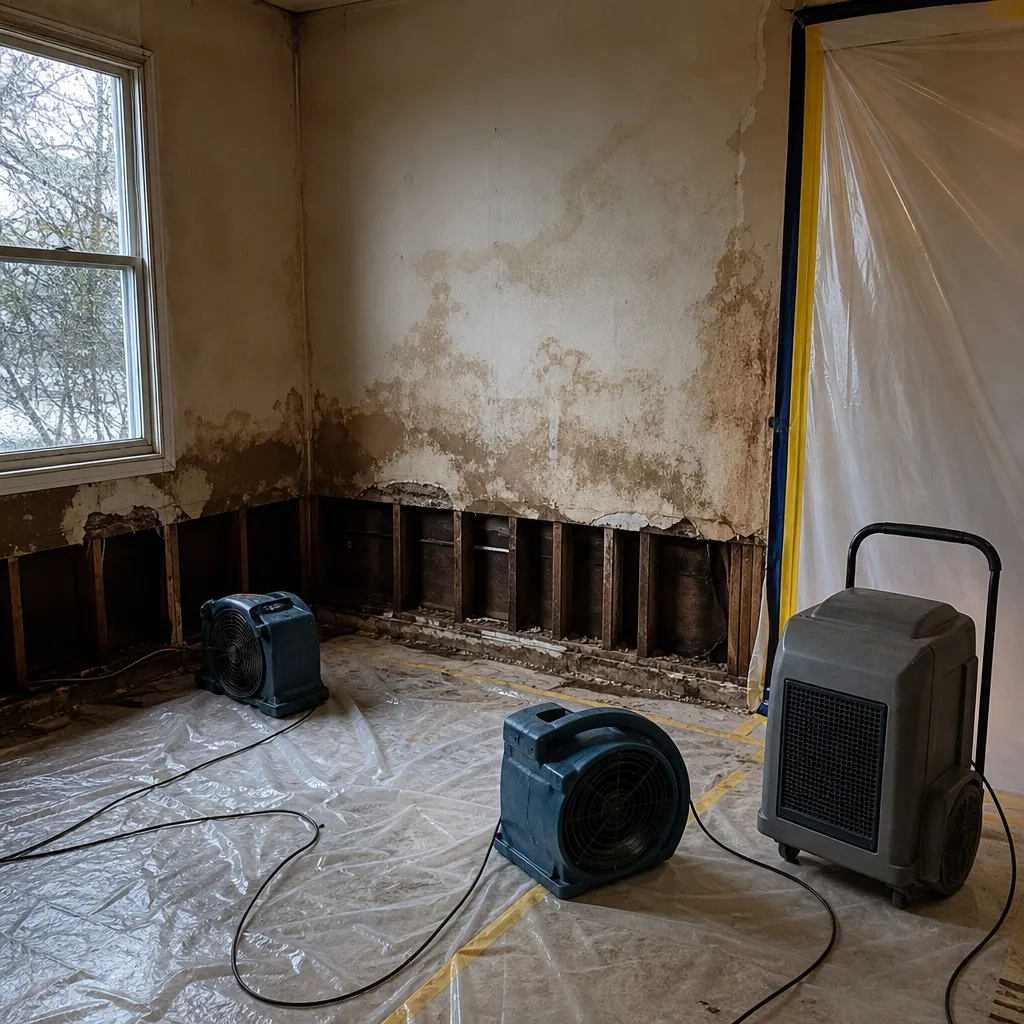 Before
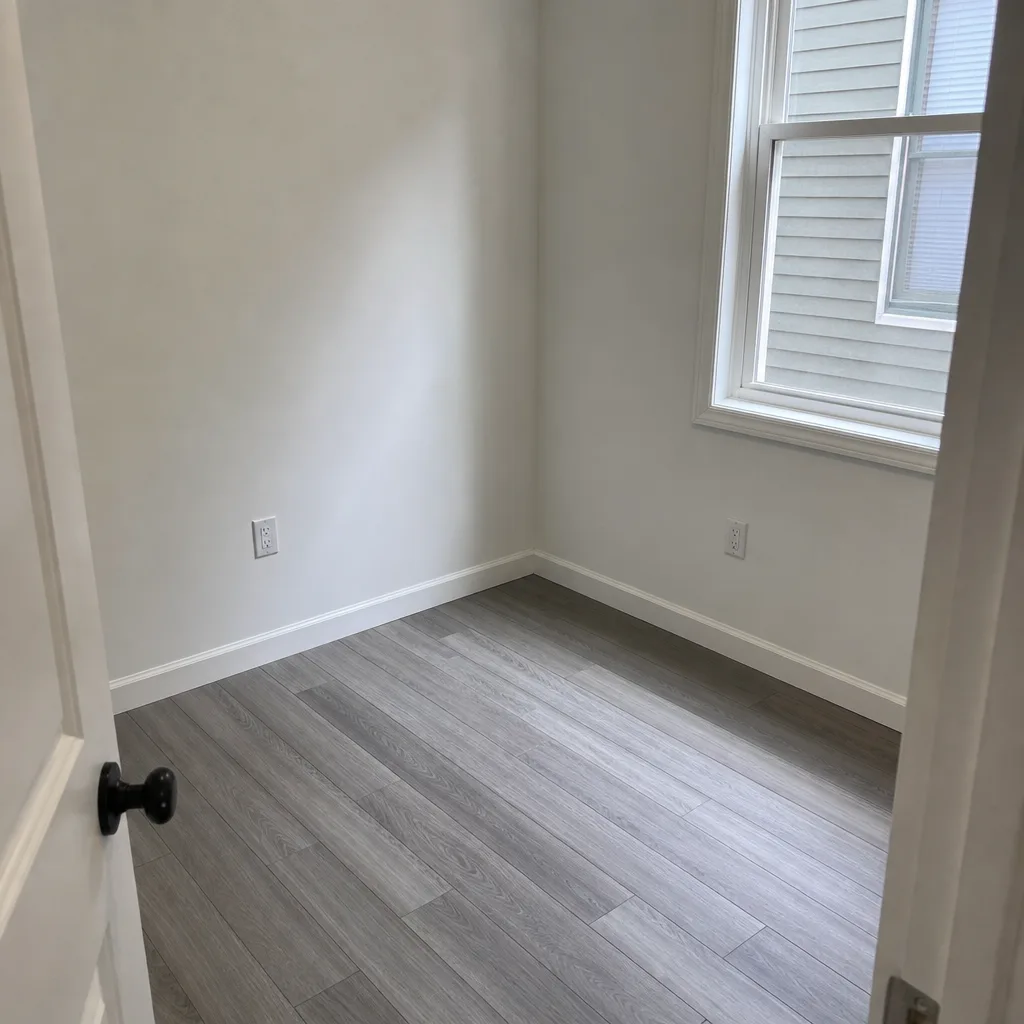 After
After24/7 Emergency Water Damage Restoration in Union City
Water damage restoration in Union City comes down to one thing: speed. The faster water gets pulled out and drying starts, the less damage spreads through these pre-war brick buildings where a single leak can drop through three floors before dawn. We answer live 24 hours a day, and Wade himself takes calls. If you’re standing in water right now, call (363) 666-2319 and we’ll have extraction running inside the hour. The first sixty minutes determine whether you’re looking at a cleanup or a full gut-and-rebuild, especially in a Union City tenement where shared walls and stacked units mean every minute of delay gets expensive.
Key Takeaways
- Live answer 24/7, extraction typically running within the hour anywhere in Union City
- Free visual inspection, no trip charge inside the county
- One crew handles everything from water extraction through reconstruction
- Moisture readings logged daily and handed to you at the end of the job
- Direct coordination with your insurance adjuster, photo documented from hour one
Understanding Water Damage Restoration Severity in Union City Properties
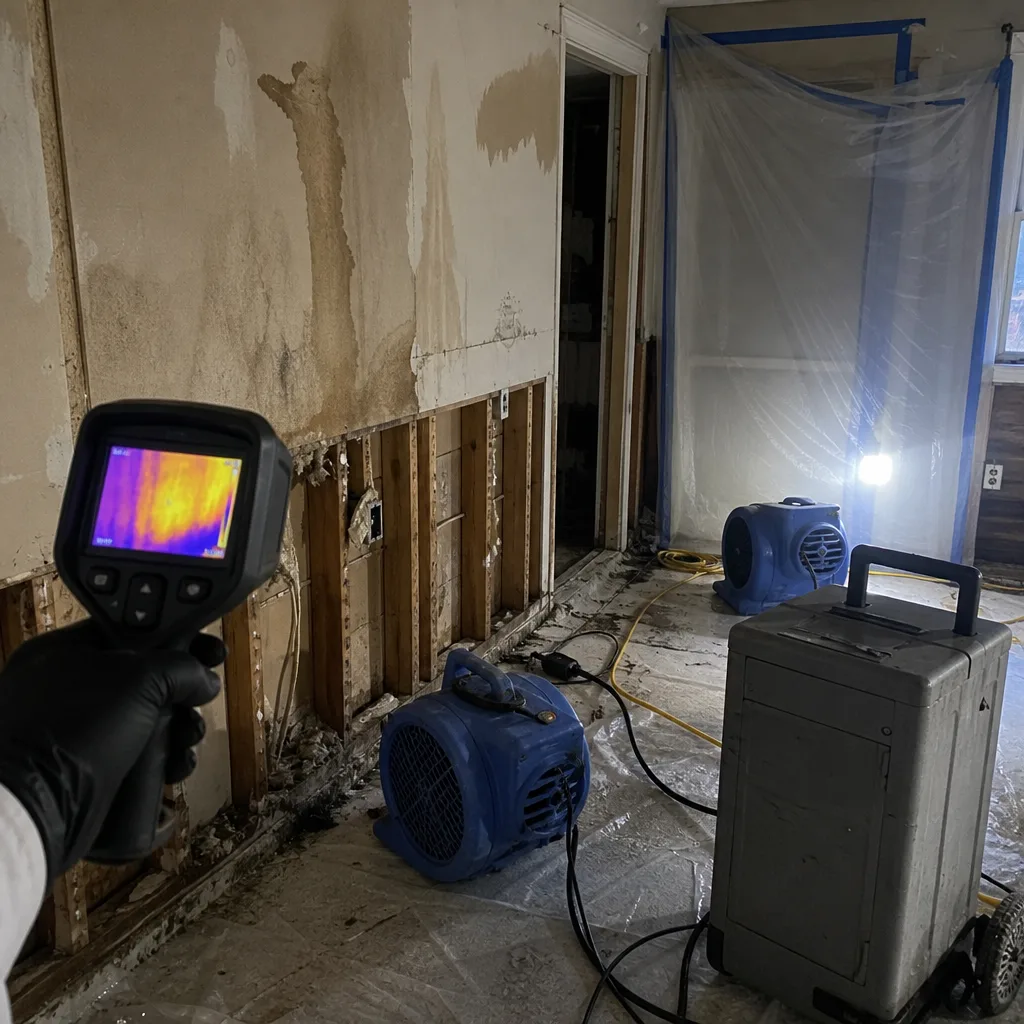
Water damage is categorized by the source, and the distinction matters in Union City. Category 1 is clean water from a burst supply line or failed appliance hose. Category 2, gray water, carries detergent, soil, or other contaminants. Category 3 is black water: sewage, river flood water, or anything that’s been sitting long enough to grow bacteria. In Union City’s housing stock, the source usually tells you which category you’re dealing with before anyone opens a wall. That shared vertical plumbing chase running through five units? When a 1920s galvanized riser finally fails on the fourth floor, everything below drops into Category 2 or 3 territory fast. Moisture mapping with thermal imaging and hygrometers lets us see exactly how far water traveled through floor assemblies and lath-and-plaster walls. Structural drying means running Injectidry mats, Dri-Eaz air movers, and Phoenix dehumidifiers until wood and plaster hit pre-loss moisture content. Guessing isn’t drying. Documentation is the difference between a job that’s actually done and a job that grows mold you can’t see yet.
Why Union City Property Owners Choose Wade’s Restoration
- 45-minute response commitment – Wade heads out the moment you call, not a call center routing a contractor from across the county.
- 24/7 live answer – You get a person, often Wade himself, never a voicemail tree at 3 a.m.
- IICRC-certified crews – WRT for water damage restoration, FSRT for fire and smoke, AMRT for applied microbial remediation. The initials mean the work follows industry standards, not guesses.
- Free visual inspection – No trip charge inside the county, and $40 off any repair over $200 means the first look doesn’t cost you a cent.
- Direct insurance billing – We deal with your adjuster and send documentation straight to your carrier so you’re not relaying calls back and forth.
- One team from extraction to reconstruction – The same crew that pulls the water out is the crew that puts your walls back together. Nobody gets to blame another contractor.
Our Water Damage Restoration Process
1. Inspection & Assessment
We walk the full loss area with thermal imaging and moisture meters, tracing water migration through walls, floors, and the shared chases that connect Union City units. You get a written scope of work before anything gets torn out.
2. Extraction & Stabilization
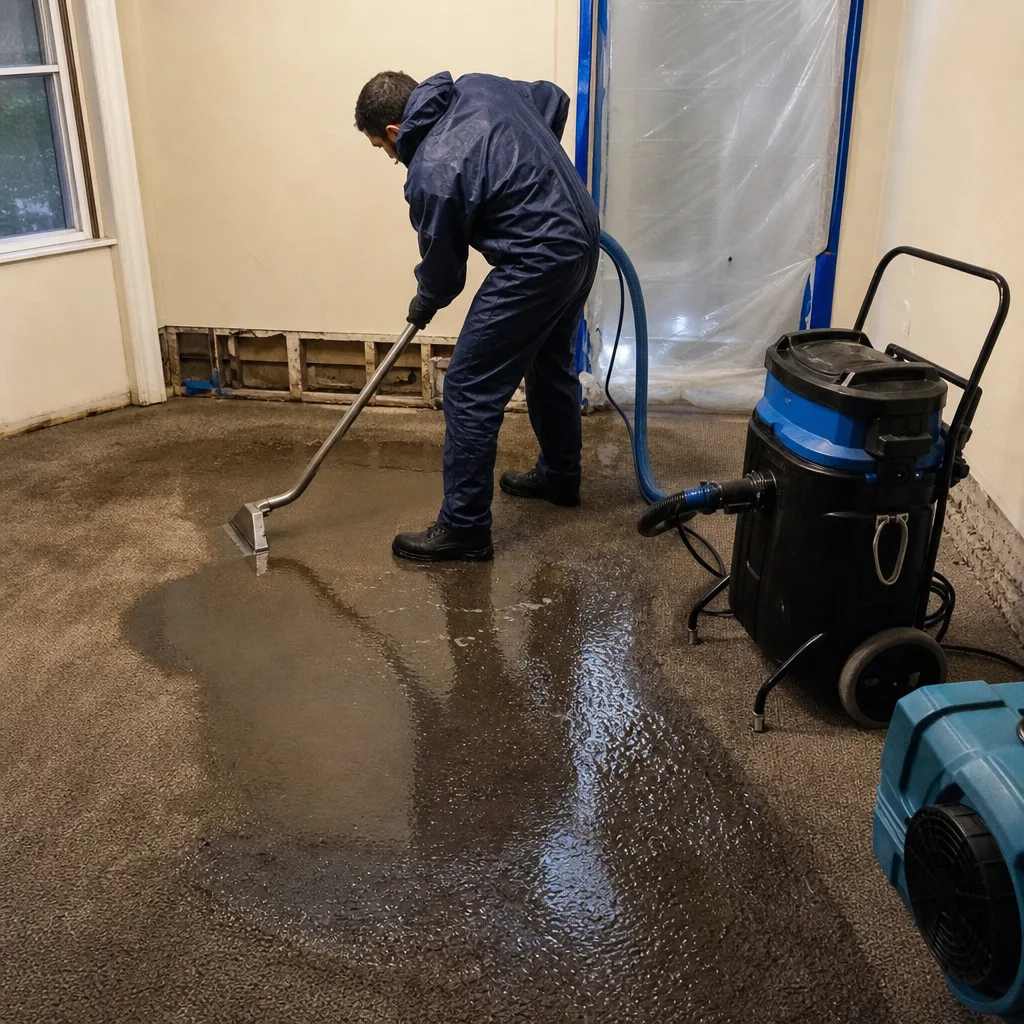
High-volume extraction units pull standing water out fast. In a tenement, this means coordinating access across multiple floors and shutting off shared supply lines before more water feeds the mess.
3. Drying & Dehumidification
Air movers, dehumidifiers, and Injectidry mat systems go in where the water actually is, not just where it was visible. We take moisture readings every single day and log them so you can watch the number drop to dry standard.
4. Cleaning & Sanitization
Category 2 or 3 water means antimicrobial treatment and HEPA air scrubbing. Contaminated drywall, plaster, and insulation get cut out and bagged for disposal, not dried in place.
5. Specialty Treatment for Union City Materials
Pre-1940s plaster, original hardwood, and masonry walls need specific drying approaches. We assess for lead and asbestos before disturbing anything, protecting tenants and avoiding stop-work orders.
6. Repairs & Restoration
From replacing drywall to refinishing floors to rebuilding stairwells, the same crew finishes what it started. The 90-Day Done Right Promise applies to the whole job, in writing.
Need Emergency Water Damage Restoration in Union City Now?
Crews minutes away, answering live 24 hours a day. The sooner we start, the less it costs.
Working With Your Insurance Company
The insurance conversation goes easier when documentation starts in the first hour. We photograph everything, floor by floor, before and after extraction. Moisture logs show exactly when each area hit dry standard. A line-item scope of work written in terms adjusters recognize means fewer disputes and faster approvals. We talk to your adjuster directly so you’re not stuck in the middle translating between what the plumber said and what the carrier wants. It’s one reason property owners in Union City’s multi-unit buildings call us when the claim spans three floors and four policies.
What We Provide Your Insurer
- Thorough documentation of the loss
- Photos of all damage, room by room
- Moisture readings and drying logs
- A detailed, line-item scope of work
- Direct coordination with your carrier
Built for Union City’s Loss Calendar
Union City gets hit differently depending on the month. January and February are the worst: freeze-thaw cycles on the Palisades escarpment tear open those flat tar-and-gravel roofs that cover most pre-war walk-ups. Ponding water freezes, expands, splits the membrane seam, and every melt sends water down through the ceilings of the apartments below. Late winter and early spring bring the galvanized riser failures, the original supply lines that finally let go after a century of pressure. Summer means thunderstorm flash flooding that overwhelms the city’s aging drains and sends water into basement units and ground-floor storefronts along Bergenline Avenue. Nor’easters in the fall bring driving rain through old mortar joints and window frames. The pattern is predictable if you’ve been doing Water Damage Restoration here long enough to know the buildings.
Water Damage Restoration Across Union City’s Neighborhoods
Working around Union City means knowing your buildings. Up near Kennedy Boulevard and 43rd Street, the six-story walk-ups have those shared plumbing chases where a fifth-floor pipe failure drops into four apartments simultaneously. We plan access differently there, coordinating with multiple doorbells and landlords who don’t always live in the building. The blocks around New York Avenue and 19th Street pack townhouses tightly enough that our drying plan has to account for humidity trapped between shared walls, where airflow from outside is a rumor. Down toward Palisade Avenue and the 30s, the basement units flood regularly when the sewer lines back up during heavy rains, and we carry pump capacity sized for real volume. Across from Washington Park, older apartments have original plaster and hardwood worth saving, so we favor drying over demolition wherever the moisture readings say it’s possible. Each block of Union City has its own building DNA, and the work changes block to block.
Specialized Water Damage Restoration Services We Offer in Union City
Emergency Water Extraction
Standing water gets sucked out fast with truck-mounted and portable extraction units. In a Union City tenement, the priority is stopping the water at the source, whether that means cutting a supply line in a shared chase or tarping a torn roof seam before the next rain.
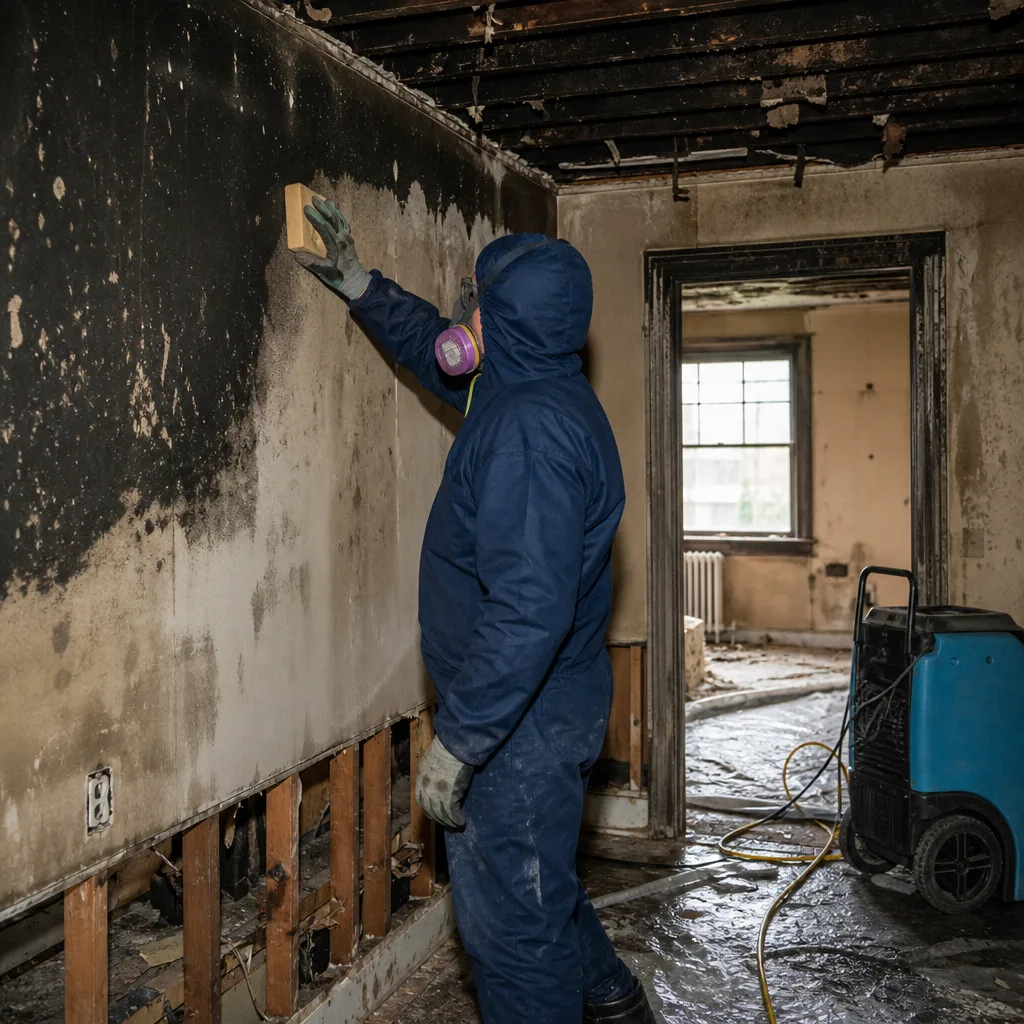
Structural Drying & Dehumidification
Drying in Union City’s narrow urban canyons requires more equipment than a suburban basement job. Adjacent buildings block airflow, humidity holds longer, and pre-war plaster soaks up water like a sponge. We run Injectidry mat systems in walls and ceilings, Dri-Eaz air movers for airflow, and Phoenix dehumidifiers sized for the space, taking daily moisture readings until dry standard is confirmed.
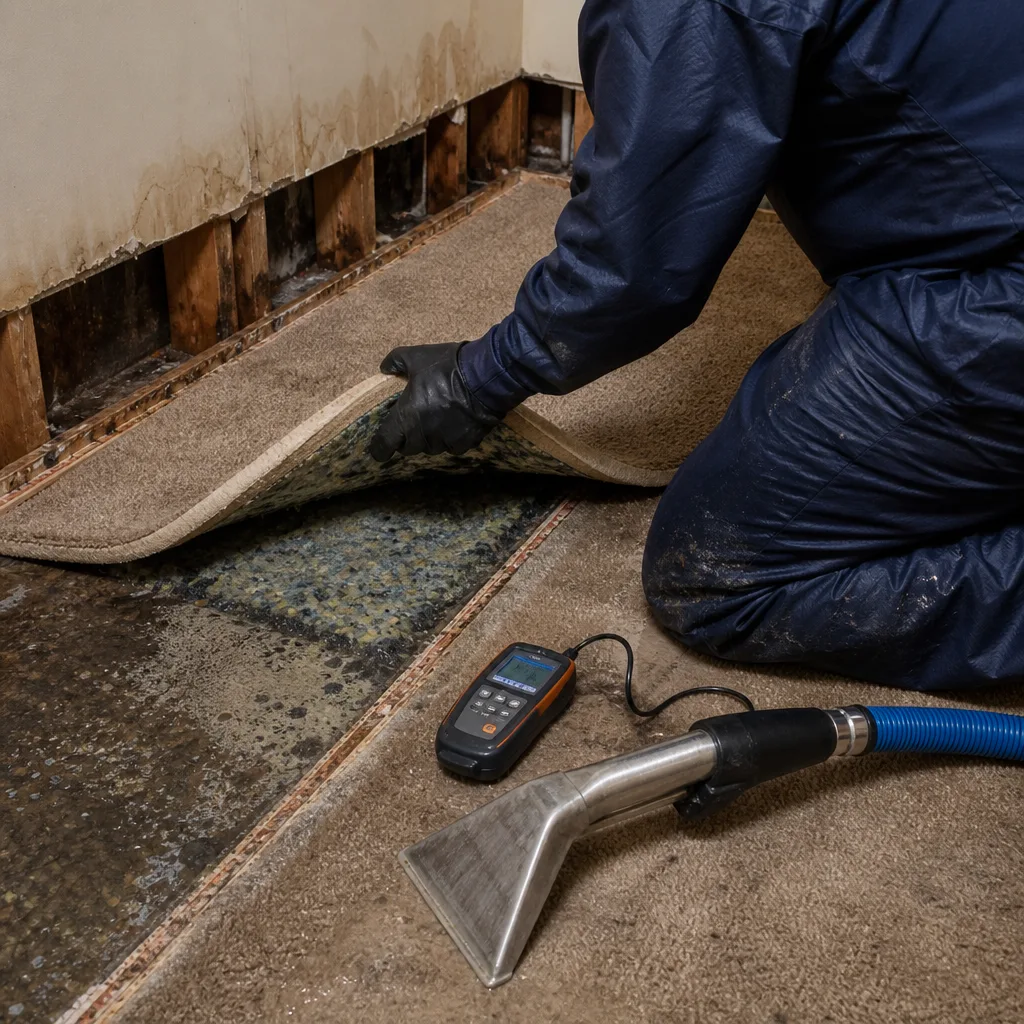
Flood Cleanup
After heavy rains overwhelm the drains or the Hudson pushes back into basement units, the contamination level is real. Category 3 water means full antimicrobial treatment, disposal of saturated materials, and HEPA air scrubbing to keep contaminated air from moving through shared hallways and stairwells.
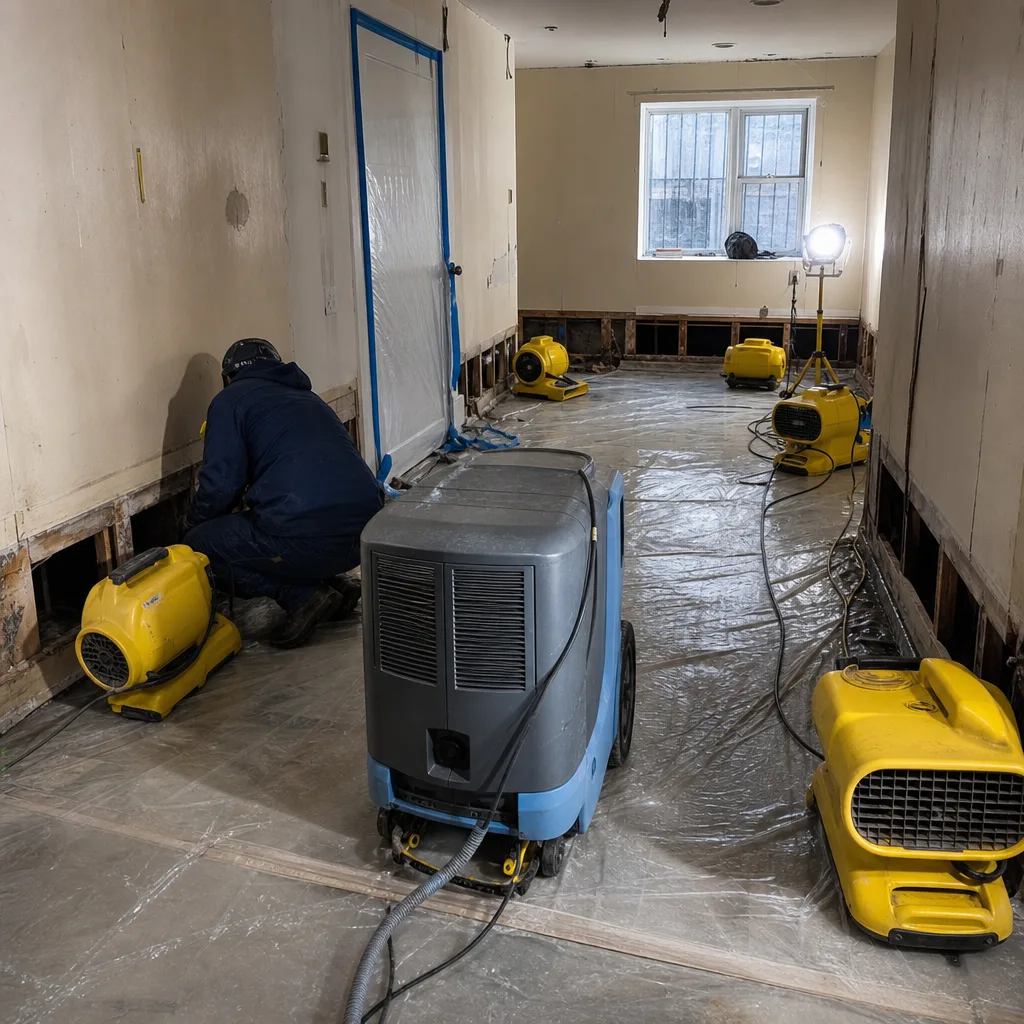
Burst Pipe Restoration
When a supply pipe bursts in one unit and the water travels through floor assemblies into the apartments below, the restoration is a multi-unit project from the start. We contain each affected floor, set drying across all of them, and document every step for the multiple insurance claims that follow. The fix is never just about the apartment where the pipe actually cracked.
Basement Water Removal
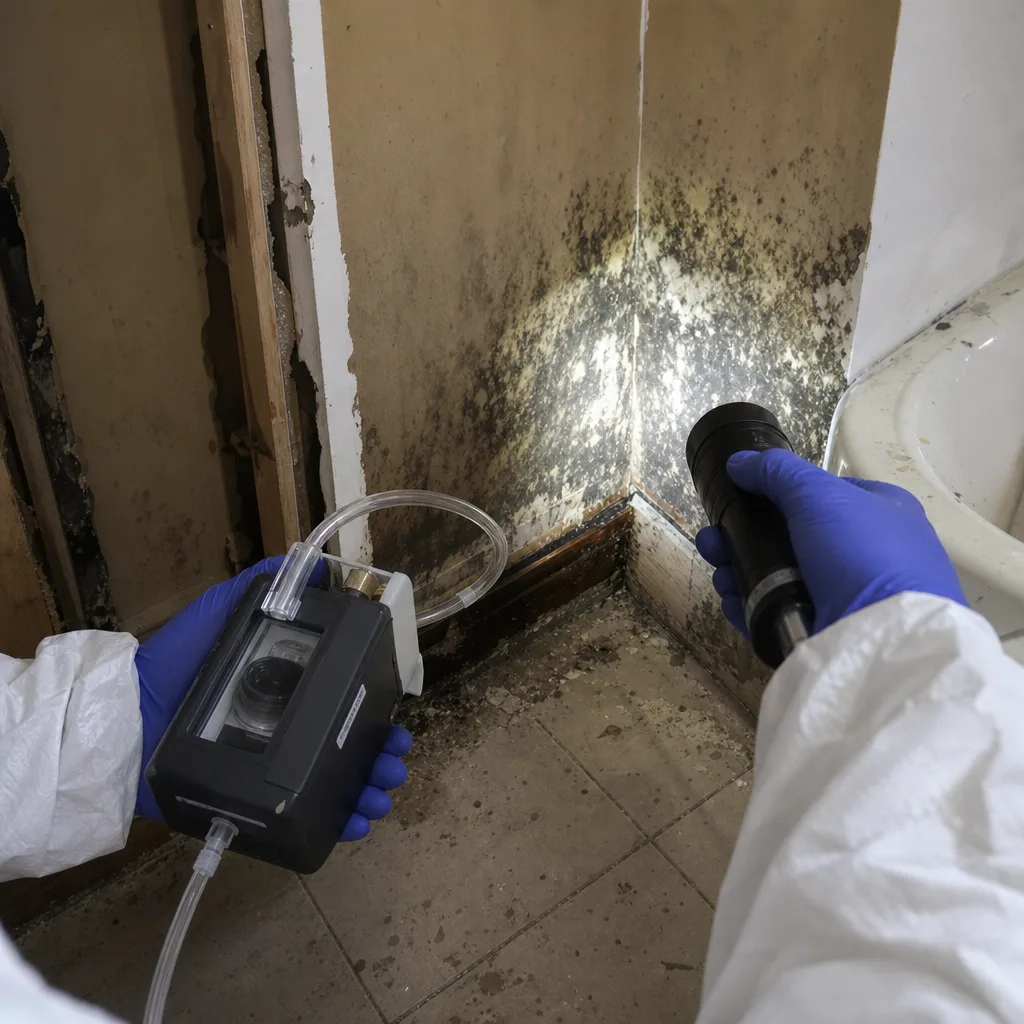
Basements in Union City’s older buildings are notorious for flooding. Original foundations leak, sump pumps fail or were never installed, and groundwater pressure finds every crack. We pump, dry, sanitize, and get the space back to use. For basements with no windows and no natural ventilation, we run HEPA air scrubbers throughout the job to manage the mold risk from day one.
What happens when you call
- 1
A real person answersNo phone trees - you reach a local pro.
- 2
You get an upfront price rangeHonest numbers before anyone is dispatched.
- 3
A background-checked tech heads outLicensed & insured, dispatched right away.
- 4
You approve before work beginsNothing starts until you say go.
Water Damage Restoration Costs in Union City, NJ
A typical emergency water extraction in Union City runs $450 to $1,200 depending on the size of the affected area and how many units are involved. Structural drying and dehumidification lands between $1,500 and $4,000 for most apartment spread, though multi-floor jobs with shared chase damage can push higher. Burst pipe restoration, including drywall replacement and painting in one typical tenement apartment, usually runs $2,500 to $6,000. Basement water removal with sanitization starts around $800 and goes up to $3,500 if sewage backup is involved. What moves the price: how many floors the water traveled, whether materials are salvageable or require removal, asbestos or lead abatement requirements in pre-1940s buildings, and how much structural repair is needed afterward. Insurance typically covers covered perils like a burst pipe or a storm-driven roof tear. Sewer backup may depend on your policy endorsement. The path to a firm number is a free visual inspection, which we do with no trip charge inside the county. Call (363) 666-2319 for an exact scope.
We Also Serve Cities Near Union City
Working across the Hudson County line, we handle water damage restoration for property owners in Weehawken, where hillside homes face their own drainage challenges, in Hoboken, where brownstone basements flood during heavy storms, and in Jersey City, mixing high-rises with century-old rowhouses. Same crew, same live answer, same 90-Day Done Right Promise.
Union City Water Damage Restoration Questions, Answered
How do you handle water damage that started in one Union City apartment but spread through the shared plumbing chase to my unit?
We treat every affected unit as part of one continuous loss event, not separate jobs. The first step is locating and stopping the source, which means gaining access to the unit where the failure originated, cutting the supply line, and then mapping moisture across every floor below. Each affected apartment gets its own containment, drying, and documentation, and we coordinate directly with the landlords and adjusters involved.
Can you dry a plaster-and-lath ceiling in a 1920s Union City walk-up, or does it always need to be removed?
It depends on how much water the ceiling absorbed and how long it sat. Plaster and lath can often be salvaged if the leak was caught fast and moisture readings show the water didn’t migrate deep into the keys that hold the plaster to the lath. When saturation is severe or the plaster has begun to delaminate, removal is safer and usually cheaper than a future collapse. We take readings and show you the numbers before recommending demolition.
What is your plan for parking and access when doing structural drying in a dense Union City tenement with no driveway?
We stage our equipment quickly and use portable units sized for apartment hallways and stairwells, not just suburban basements. The drying plan accounts for narrow entry points and limited access, and we run the equipment inside your unit, not from a truck parked on the curb. Our techs know the loading zones and parking realities around Bergenline Avenue and Palisade Avenue well enough to get in and out without a ticket eating into your afternoon.
How quickly do you start emergency water extraction after a burst pipe in Union City, given the building’s shared water shutoff?
We are typically on site and extracting within the hour. The first priority is locating the building’s main shutoff or the isolation valve for the unit if there is one. Many older Union City buildings have valves that are buried, painted over, or simply don’t work, so we come prepared to cut water at the street main if that’s what it takes. Every minute of delay means more water through the floor assemblies and more units affected. Call (363) 666-2319 the moment you see water and we head straight over.
Do you handle the mold risk in a flooded Union City basement that has no windows or ventilation?
Yes. In a basement with no airflow, mold risk starts fast, especially after Category 2 or 3 water. We run HEPA air scrubbers throughout extraction and drying, spray antimicrobial treatments on affected surfaces, and remove saturated materials that can’t be dried. The drying logs we hand you at the end of the job include the mold-risk prevention steps we ran. If you need full mold remediation beyond what water restoration covers, that’s handled by the same crew.
Will my insurance cover water damage restoration in a Union City apartment building?
It depends on your specific policy and what caused the water. Burst pipes and storm-driven roof leaks are typically covered perils. Sewer backup or flooding from an overwhelmed drain may require a specific endorsement. Nuisance leaks from long-term neglect are usually excluded. Here is the only honest answer: we document everything from the first hour and work directly with your adjuster, so your claim has the best possible paper trail. Call (363) 666-2319 with your policy and we will walk through it.
How long does structural drying take in Union City’s humid urban canyons?
Most single-unit drying jobs take three to five days. Jobs that span multiple units sharing plumbing chases can run seven to ten days because the affected area is larger and airflow is restricted by adjacent buildings. Plaster walls and lath-and-plaster ceilings hold moisture longer than drywall. We take moisture readings every day and show you the log, so you know exactly when the numbers hit dry standard rather than simply taking our word for it.
What should I do in the first 30 minutes after discovering water damage in my Union City apartment?
First, shut off the water at the nearest working valve or the building main if you can safely access it. Move electronics and small furniture out of the standing water. Do not use electrical outlets near wet areas. Then call us at (363) 666-2319. In a dense multi-unit building, the worst thing you can do is wait while water keeps feeding through floor assemblies into the apartments below. Speed now is the cheapest fix you will get.
Serving Union City, NJ - Our Local Coverage Area
We’re based in the Union City area and know this community well. Use the map below to see our service coverage - if you’re nearby, we can almost certainly help.
Water Damage in Union City’s Stacked Tenements: What Most Contractors Miss
Most restoration crews treat a water damage call like the water is only in the room where you found it. In Union City, that assumption costs people tens of thousands of dollars. The pre-war brick walk-ups are built around shared vertical plumbing chases and party walls that run the full height of the building. Water travels where gravity takes it, not where the lease says your unit ends. A failed galvanized fitting on the fifth floor at 2 a.m. doesn’t care that four other apartments are below it. The restoration contractor who shows up, dries one unit, and leaves has just guaranteed a second wave of claims when the water still sitting in the floor assembly drops into the next apartment a week later. We treat every water loss in a Union City tenement as a potential multi-floor event from the first inspection. That means checking the units above and below, not just the one that made the phone call.
On a frigid February night, we responded to a roof leak in a six-story walk-up off Bergenline Avenue where ponding water had frozen and torn open a flat tar-and-gravel roof seam. Our techs coordinated access with three landlords and five tenants, set containment on floors four through two, ran Injectidry mats and Dri-Eaz air movers in closets and stairwells, and documented moisture readings every four hours to bring all affected units to pre-loss condition before mold could set in. That’s what the job actually looks like here. Not a diagram in a training manual, but real buildings with real tenants and pressure that doesn’t stop at a property line.
The lead and asbestos part matters too. Disturbing drywall, plaster, or flooring in a pre-1940s Union City building triggers abatement protocols. Skip them, and you get stop-work orders, tenant complaints, and a job that stalls for weeks. We assess for those materials before demolition starts, document what’s present, and build the abatement requirements into the written scope of work you see before anything gets torn out. Transparency isn’t optional in these buildings. It’s the job.
Written by Wade Ferris, Owner at Wade’s Restoration. Wade founded the company in 2007 and still answers his own phone. Serving Union City water damage restoration needs with a 90-Day Done Right Promise in writing on every job.