
Free visual inspection and a written scope of work before any mitigation begins - photos, moisture readings, and drying logs go in your claim file
The scope we write is the scope we bill. Anything new gets shown to you, in writing, before we touch it.

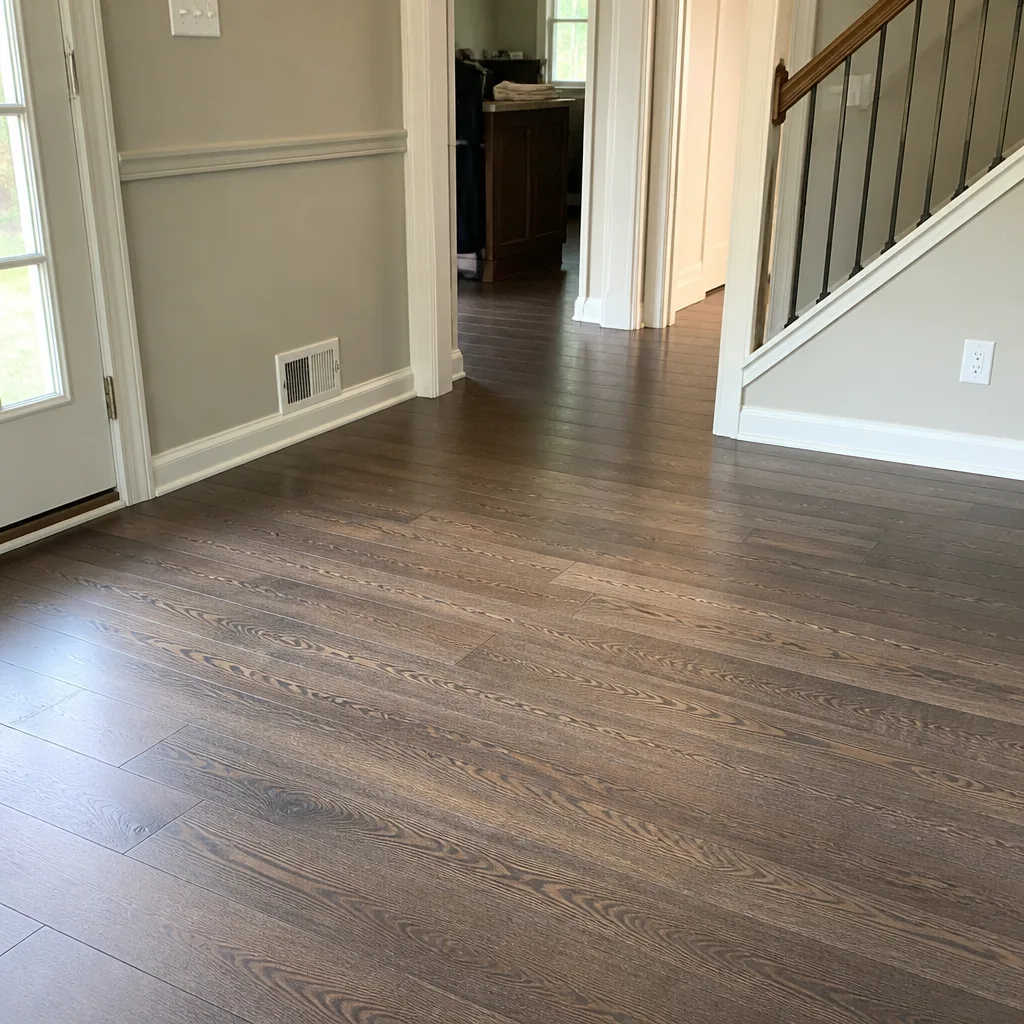
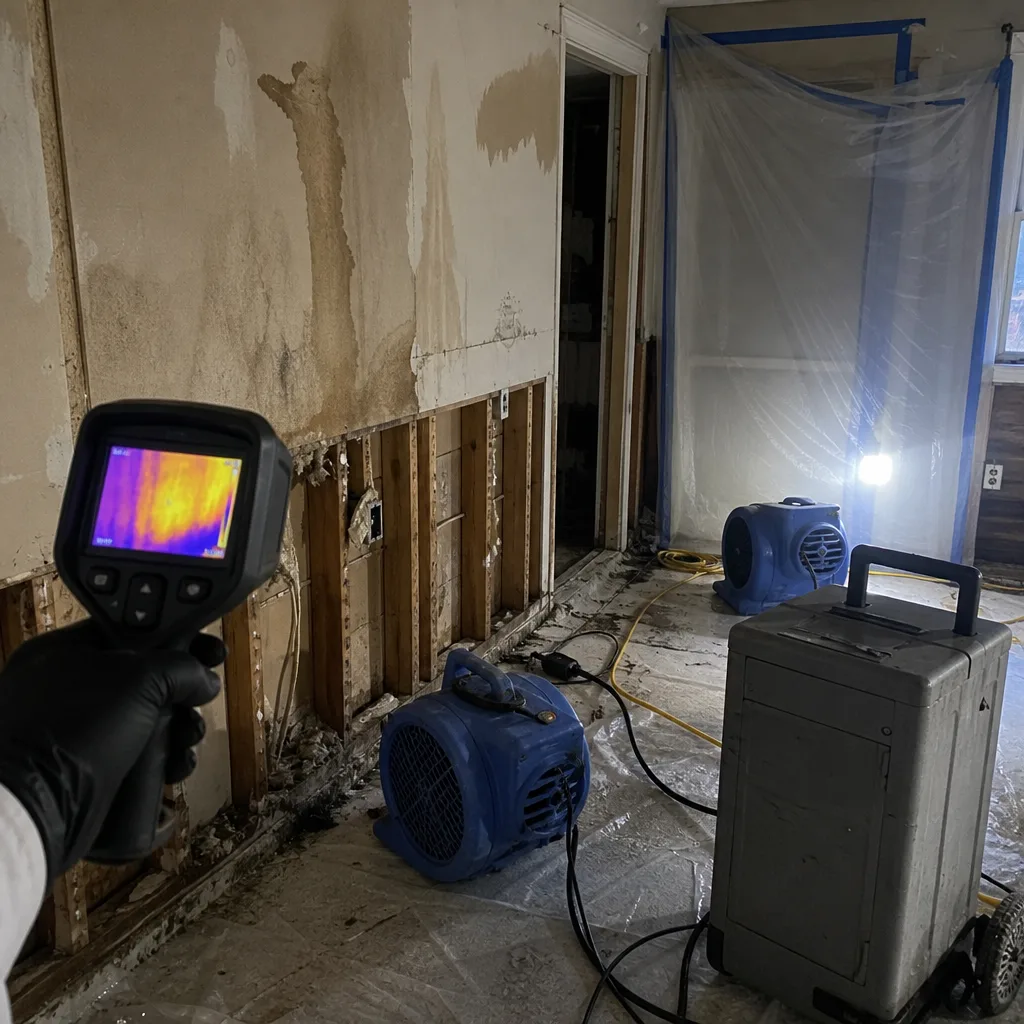 Before
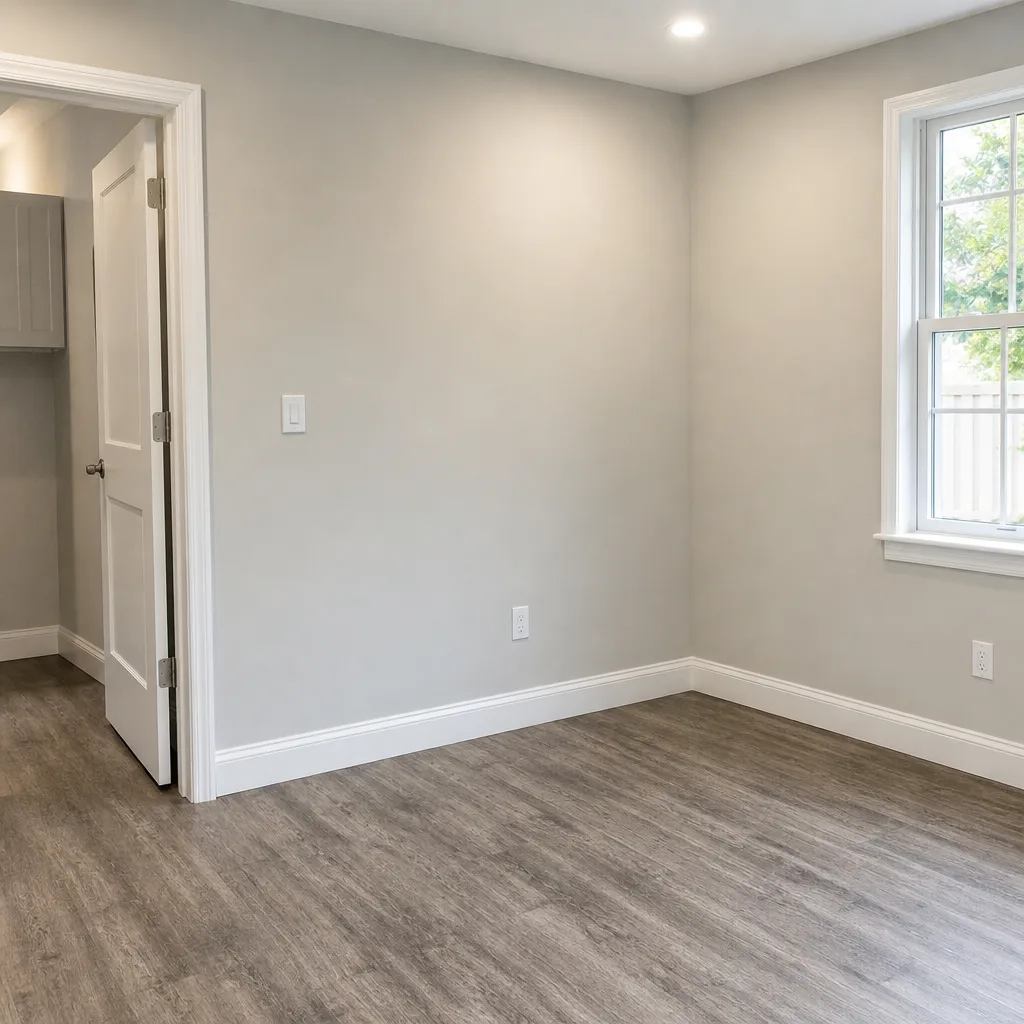 After
After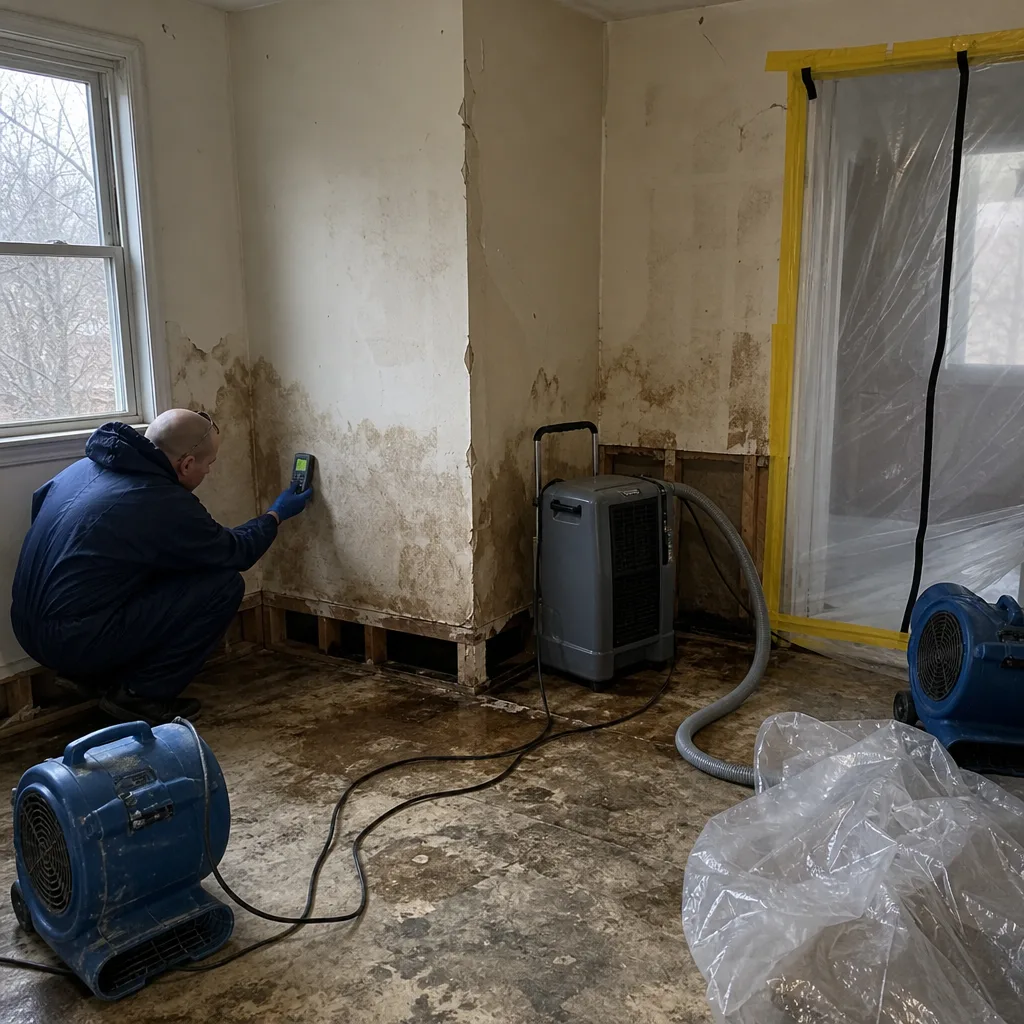 Before
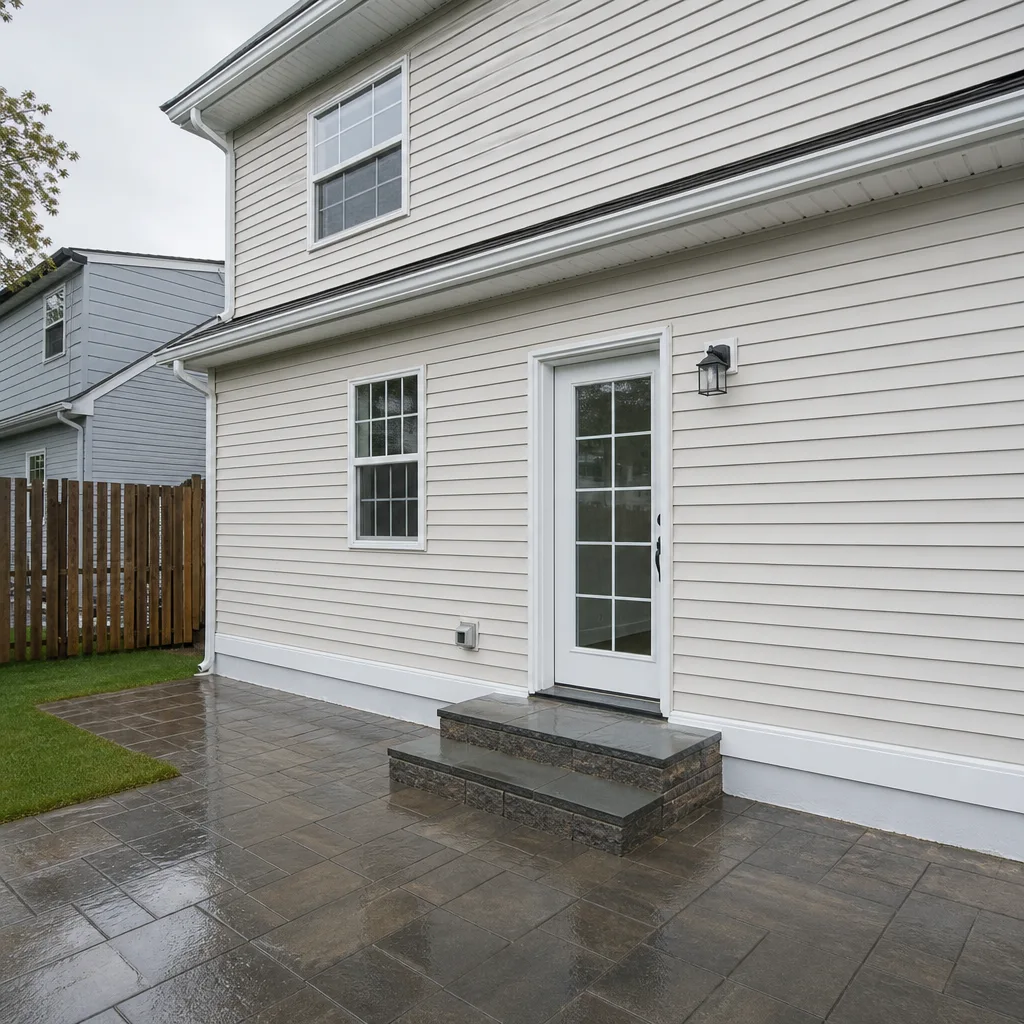 After
After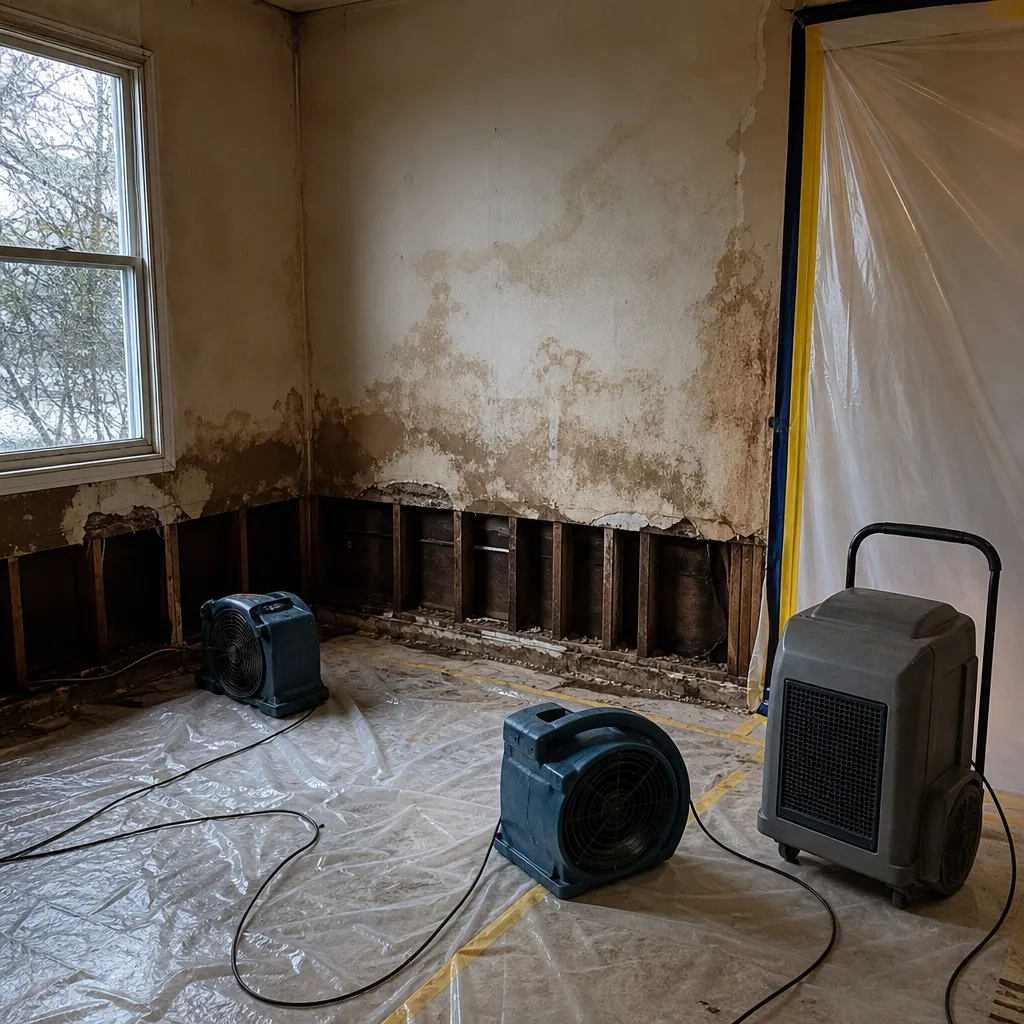 Before
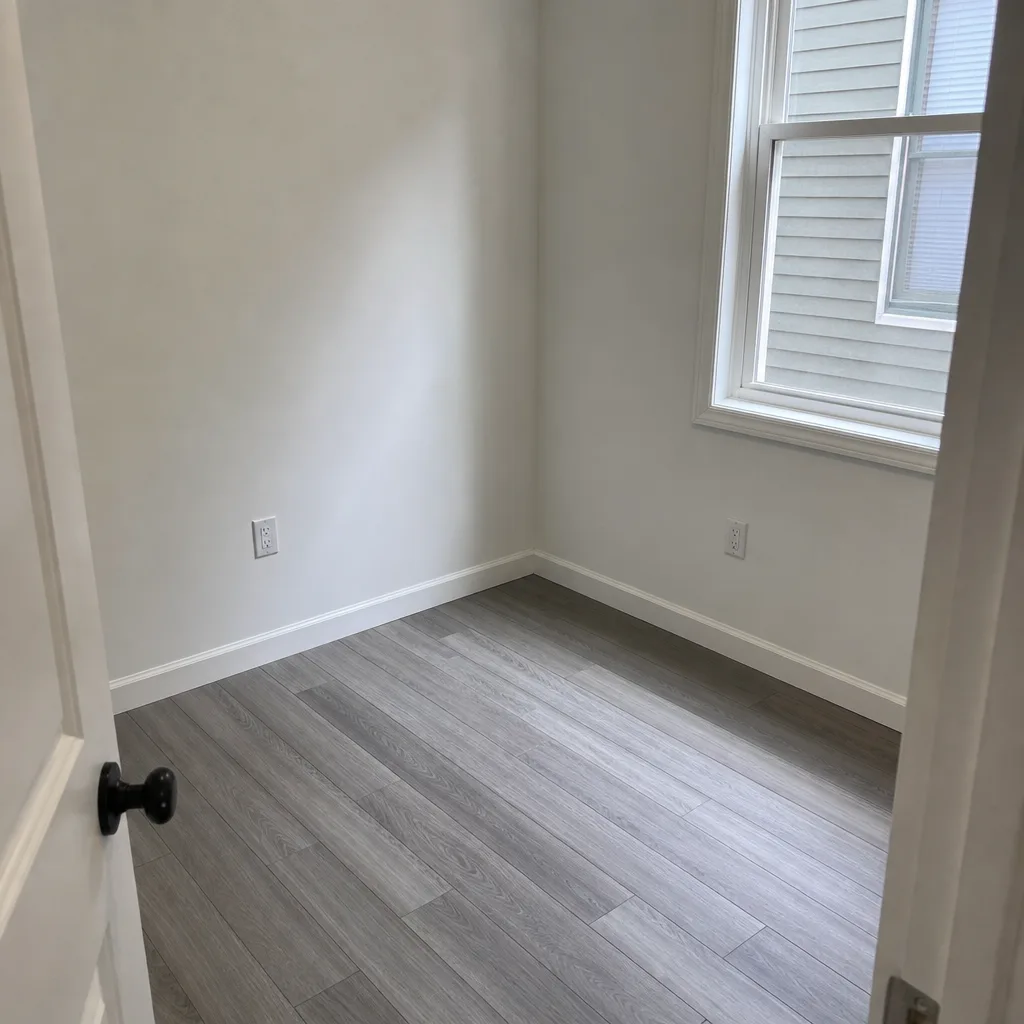 After
After24/7 Emergency Water Damage Restoration in Midtown Manhattan
Water damage in Midtown Manhattan rarely waits for business hours, and neither do we. A burst riser pipe on the 22nd floor at 2 AM, a failed fan coil unit leaking through three tenant suites, a roof drain overwhelmed during a nor’easter – these calls come in around the clock, and we answer live every time. Call (363) 666-2319 right now and you’ll reach a real person who can have extraction equipment staged at your building inside the hour. The first 60 minutes determine whether you’re dealing with a dry-out or a full gut-and-replace. In Midtown’s high-rise stock, water travels fast through shared riser chases and electrical closets, so the clock starts the moment you see the first drip. We run crews in Midtown Manhattan 24 hours a day, seven days a week, and every emergency inspection is free.
Understanding Water Damage Restoration Severity in Midtown Manhattan Properties
Not all water is created equal. We classify every loss by IICRC standards: Category 1 is clean water from a supply line or burst riser; Category 2 carries contaminants from sources like condensate overflow or sump failures; Category 3 is grossly unsanitary, typically from sewage backups or flooding that’s picked up whatever was in the street. Midtown’s building stock complicates every category. Pre-war towers from the 1920s through 1940s still run original cast-iron waste lines and Consolidated Edison district-steam heating risers, and those pipes have been corroding quietly for eight decades. Post-war curtain-wall high-rises have their own failure profile: aging sealant joints that let wind-driven rain behind the facade at floors 20 and above. We use moisture mapping with thermal imaging and penetrating meters to find water that’s traveled ten floors down a riser chase before surfacing on drywall. In a Midtown office tower, the visible damage is rarely the whole story. Structural drying here means reading the building vertically, not just the room you’re standing in.
Why Midtown Manhattan Property Owners Choose Wade’s Restoration
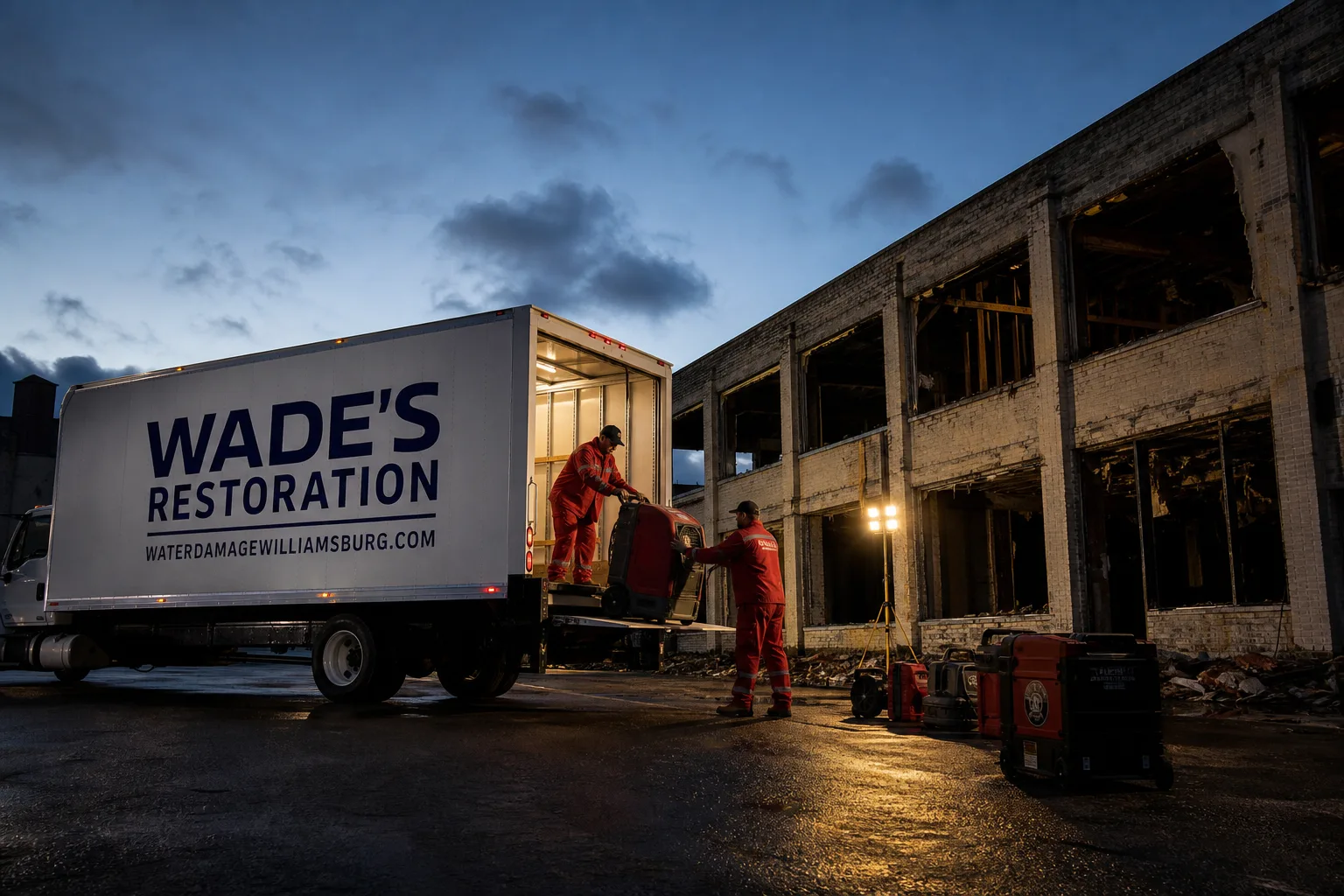
- 45-minute response commitment for Midtown Manhattan. When you call with water running, Wade’s crew is mobilizing before you hang up. We stage equipment fast because we know the freight elevator windows in this market.
- 24/7 live answer – a real person, never an automated system. Wade Ferris answers his own phone. At 3 AM you get a human who knows Midtown’s buildings, not a call center reading a script.
- IICRC-certified crews with WRT and ASD credentials. Every tech running air movers in your space carries Water Damage Restoration Technician certification and Applied Structural Drying training, backed by RIA affiliation.
- Free visual inspection with no trip charge, always. You owe us nothing for the assessment. We document what we find and give you a written scope before any work starts.
- Direct insurance billing and adjuster coordination. Wade deals with your carrier directly, including the adjuster walk-through, so you’re not stuck relaying information between two sides.
- One team from extraction through reconstruction. The crew that pulls your wet drywall is the crew that rebuilds it. No hand-off to a subcontractor you’ve never met.
Our Water Damage Restoration Process
Inspection & Assessment
We map the actual moisture migration using thermal imaging and penetrating meters, not the visible stain. In a Midtown high-rise, that means reading floors above and below the breach point. You get a written scope before we pull a single tool out.
Extraction / Stabilization
Submersible pumps and truck-mounted extractors in the freight elevator, staged to clear the building’s access windows. We get standing water out fast so it stops traveling through your floors.
Drying & Dehumidification
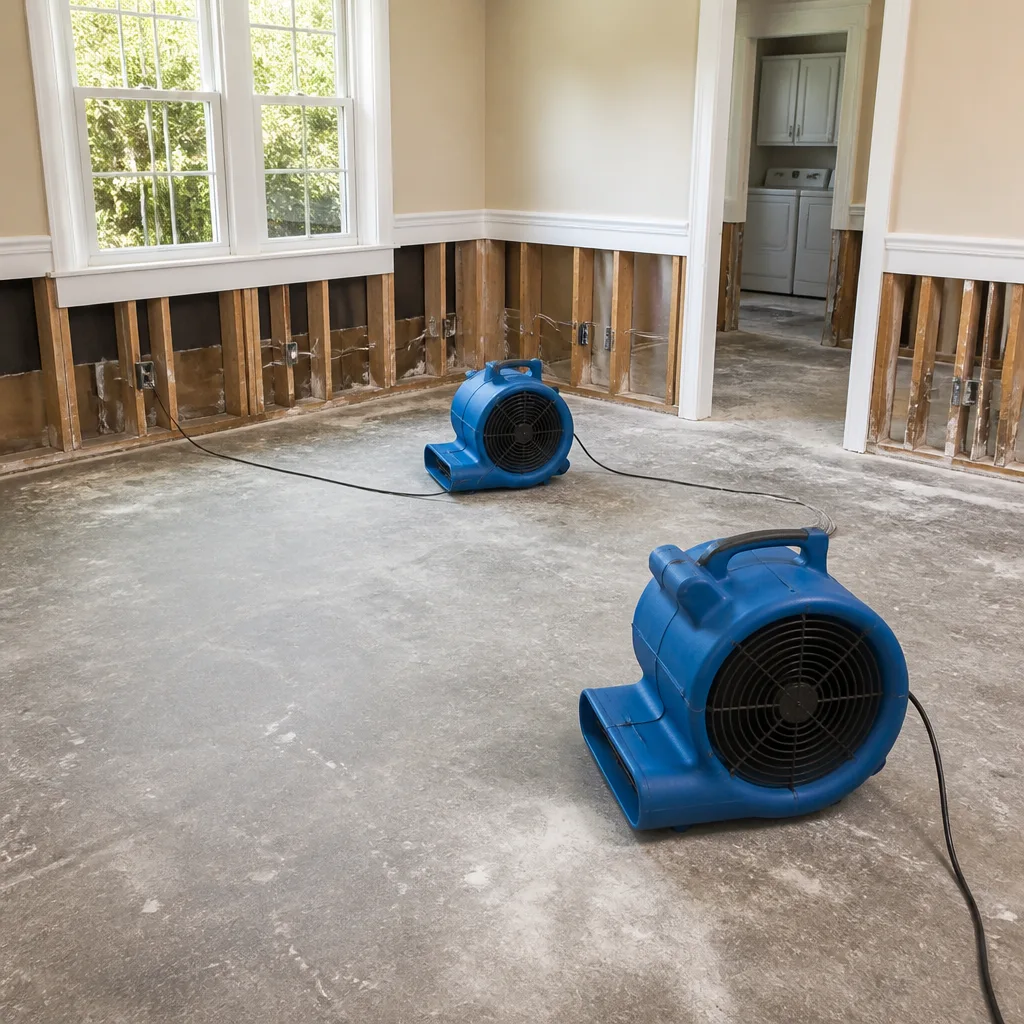
Dri-Eaz and Phoenix air movers running on a calculated drying chamber, with Injectidry panels for wall cavities that conventional airflow can’t reach. We take moisture readings every single day and log them for your insurer.
Cleaning & Sanitization
HEPA air scrubbers running during any demo work, anti-microbial treatments applied to affected framing, and Category 3 losses get full containment with negative air pressure before anyone touches the wet material.
Structural Drying Verification
We don’t call it dry until the moisture meters say dry, on every floor that was affected. Your drying log shows daily readings from day one to clearance.
Repairs & Restoration
Rebuild to pre-loss condition: drywall, trim, flooring, paint, and any mechanical work that was exposed. One crew, one scope, one 90-Day Done Right Promise in writing.
Need Emergency Water Damage Restoration in Midtown Manhattan Now?
Crews minutes away, answering live 24 hours a day. The sooner we start, the less it costs.
Working With Your Insurance Company
Here’s the honest truth about water damage claims in Midtown Manhattan: adjusters expect documentation that holds up, and most property owners don’t know what “holding up” means until a check gets delayed. We build your claim file from the first hour. Every photo is time-stamped and room-mapped. Every moisture reading is logged daily and handed to you at job’s end – almost nobody in this trade does that. When the adjuster schedules a walk-through, Wade is in the room with them, pointing at the exact meter readings and the drying chart. You don’t have to translate between your contractor and your carrier, because we talk to them directly. For high-rise losses involving multiple tenants and multiple carriers, that coordination is the difference between a claim that settles in weeks and one that drags for months.
What We Provide Your Insurer
- Thorough documentation of the loss
- Photos of all damage, room by room
- Moisture readings and drying logs
- A detailed, line-item scope of work
- Direct coordination with your carrier
Built for Midtown Manhattan’s Loss Calendar
Midtown’s water damage season runs on two tracks. Winter is the big one: January deep freezes push supply lines and sprinkler branch lines past their breaking point, especially in pre-war buildings where original piping runs through unconditioned exterior walls. A single burst on the 14th floor sends water down through electrical closets and elevator shafts for hours before anyone notices a ceiling stain in a lobby. Spring brings the thaw cycle and heavy rain, when aging flat roofs and mechanical penthouses fail – membrane splits that have been freeze-thaw stressed all winter finally let go during a March nor’easter. Summer is thunderstorm season, and Midtown’s urban canyon effect means wind-driven rain hits curtain-wall joints at 30 to 50 miles per hour, forcing water into sealant gaps that ground-level inspectors never see. Fall is the quiet stretch for water, which is exactly when smart building managers do facade and roof inspections. We see the same calendar every year, and we plan crew staging around it.
Water Damage Restoration Across Midtown Manhattan’s Neighborhoods
The building that shapes your water loss changes block by block in Midtown Manhattan. Around Grand Central and the 10017 corridor, you’re dealing with a dense cluster of 1920s and 1930s commercial towers – heavy steel frame, original cast-iron waste stacks, and steam risers that have been in service since Hoover was president. Water here travels straight down the pipe chases, and a Category 1 loss on the 18th floor becomes a Category 2 problem by the time it hits tenants on 11. Over in the Theater District around Times Square and 10036, we’re inside newer mixed-use buildings with retail on the ground floor and hotel rooms above, where a single failed fan coil in a guest suite sends condensate through the drop ceiling and into the restaurant below. The Garment District around Seventh Avenue and 10018 has pre-war loft buildings with timber floor systems buried under modern finishes, and water hides between those layers for days. North of 59th Street along the Park Avenue corridor, you’ve got a mix of residential co-ops and Class-A office towers where freight elevator rules dictate our entire drying schedule. Each of these areas has its own access pattern, its own insurance complexity, and its own clock.
Specialized Water Damage Restoration Services We Offer in Midtown Manhattan
Wade’s Restoration serves the full Water Damage Restoration scope for Midtown Manhattan, from the first extraction call to the final coat of paint. Here’s what that actually looks like on the ground in this market.
Burst Pipe Restoration
A frozen supply line on the 31st floor of a Midtown tower isn’t just a plumbing repair. It’s a vertical cascade event. We respond to the breach, stop the source if it’s accessible, extract the standing water, and then map how far it traveled through the riser chase. Burst pipe restoration here means opening walls three floors below where anyone first noticed the problem. We do it clean, with containment set up before demo starts, and we dry every affected cavity with Injectidry panels so you’re not ripping out trim twice.
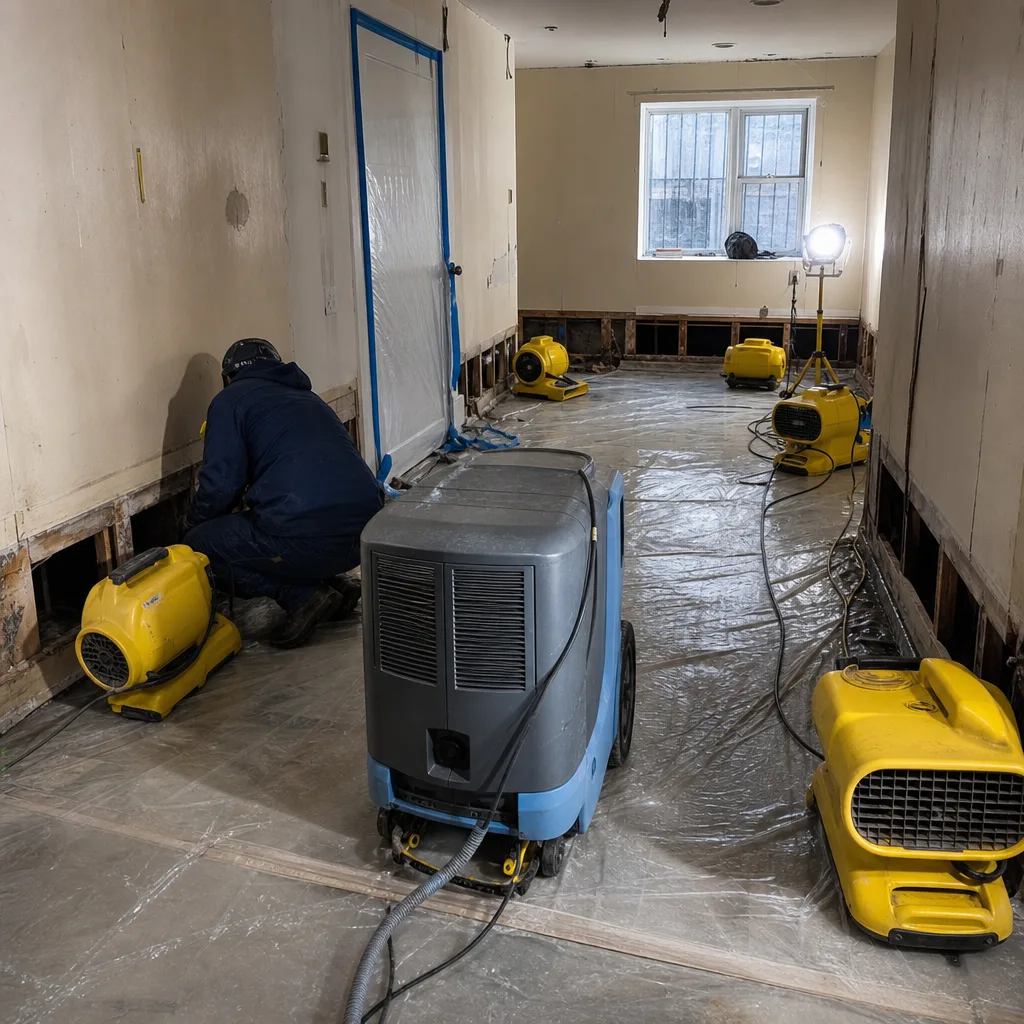
Emergency Water Extraction
Speed matters most in the first hour. Water extraction in a Midtown high-rise starts with logistics: getting submersible pumps and truck-mounted extraction equipment into the freight elevator before the building’s contractor access window closes. We stage Dri-Eaz and Phoenix equipment in the lobby at 5 AM if that’s what it takes to hit the 6 AM elevator slot. Then we extract, measure, and start airflow immediately. Every minute water sits in a high-rise cavity, it’s wicking into drywall, under flooring, and down to the floor below.
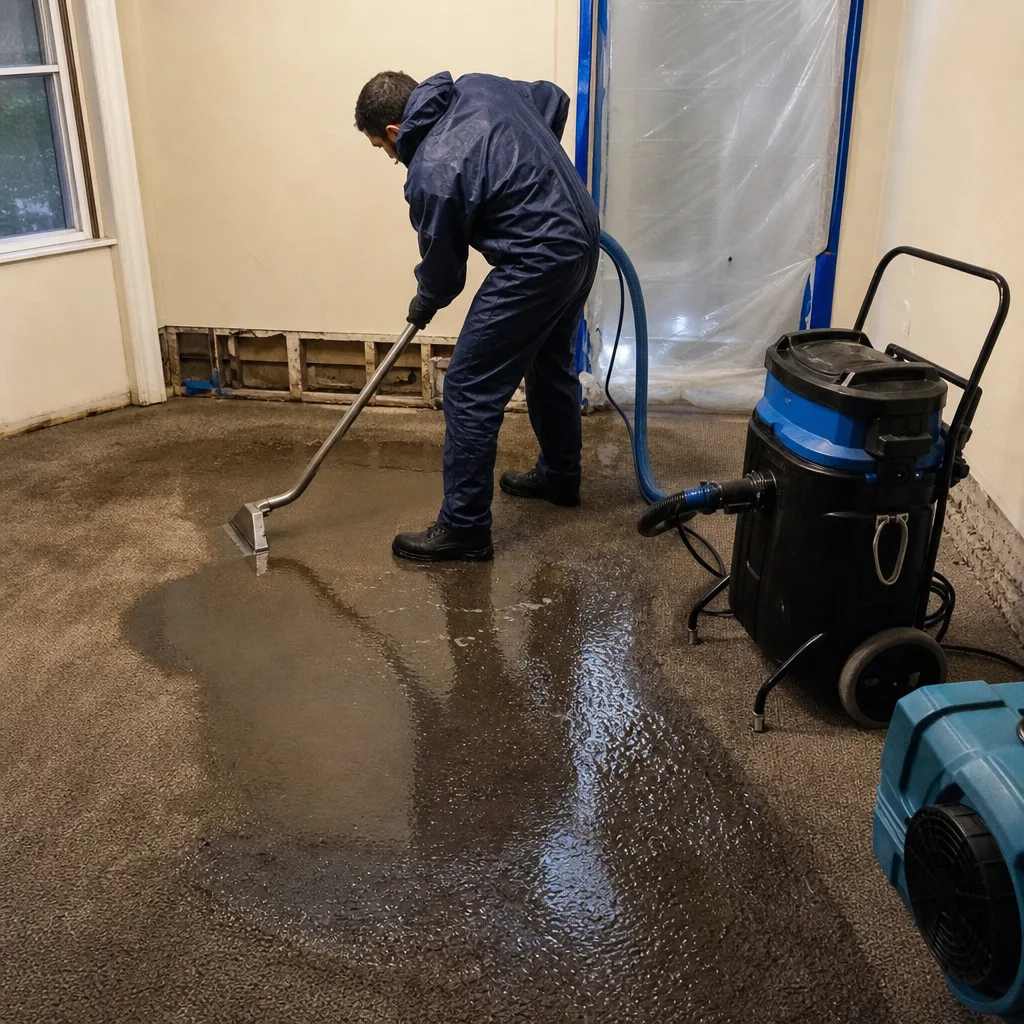
Ceiling & Roof Leak Water Damage
Midtown’s tall-building stock has a failure mode you won’t find in a suburban ranch: wind-driven rain at altitude. When a nor’easter pushes rain sideways at 40 miles per hour, it forces water through curtain-wall sealant joints and masonry facade seams on floors 20 and above. A ground-level roof inspection misses this entirely. We use the building’s facade access equipment when available, thermal imaging to trace the interior migration, and we document the full path from entry point to the ceiling stain on the 17th floor. That documentation is what your insurer needs to cover facade-related water damage, and it’s what building management needs to file their own masonry claim.
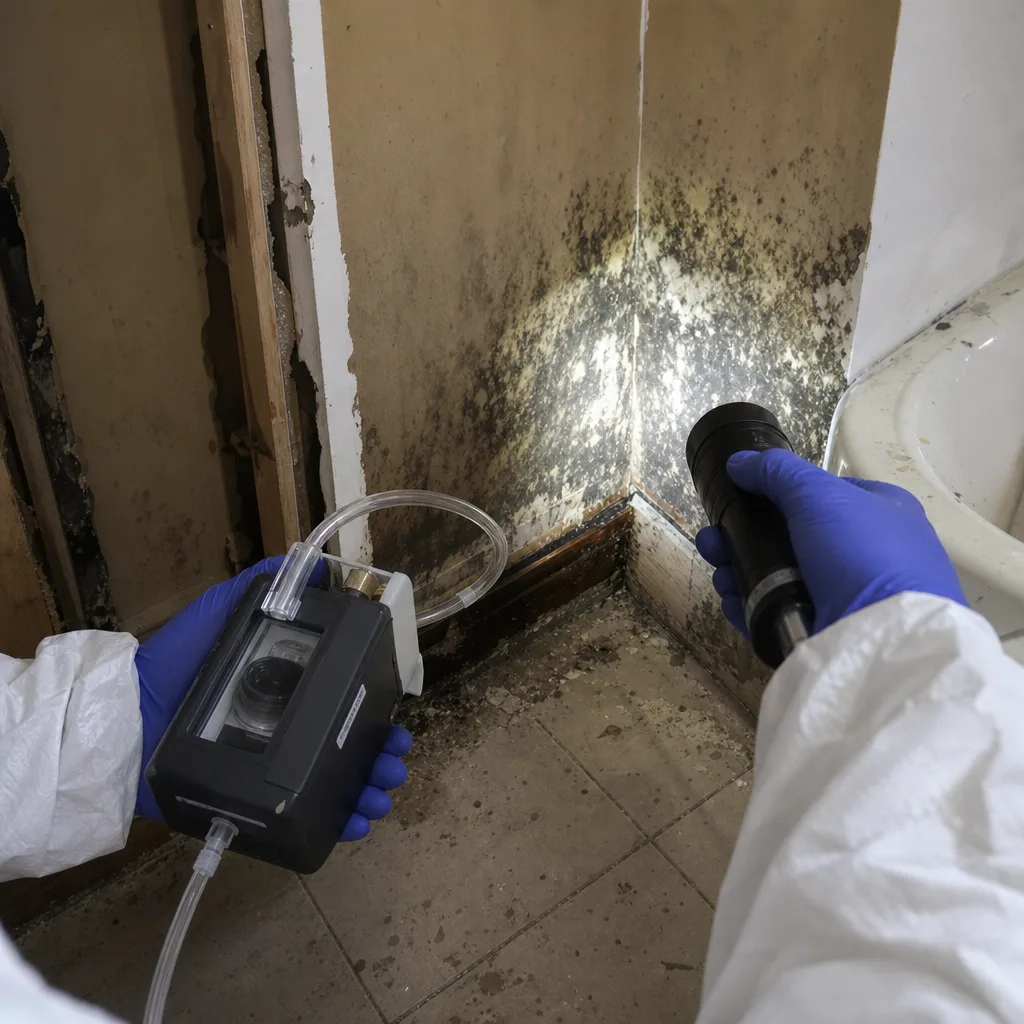
Flood Cleanup
When heavy rain overwhelms street-level drains and floodwater enters a Midtown storefront or lobby, the water is Category 3 – it’s picked up everything from the sidewalk and street. Flood cleanup means full containment, HEPA air scrubbing, anti-microbial treatment, and proper disposal of contaminated material. We coordinate with your building’s management to schedule dumpster access and freight elevator time, because that’s the piece that derails high-rise flood jobs.
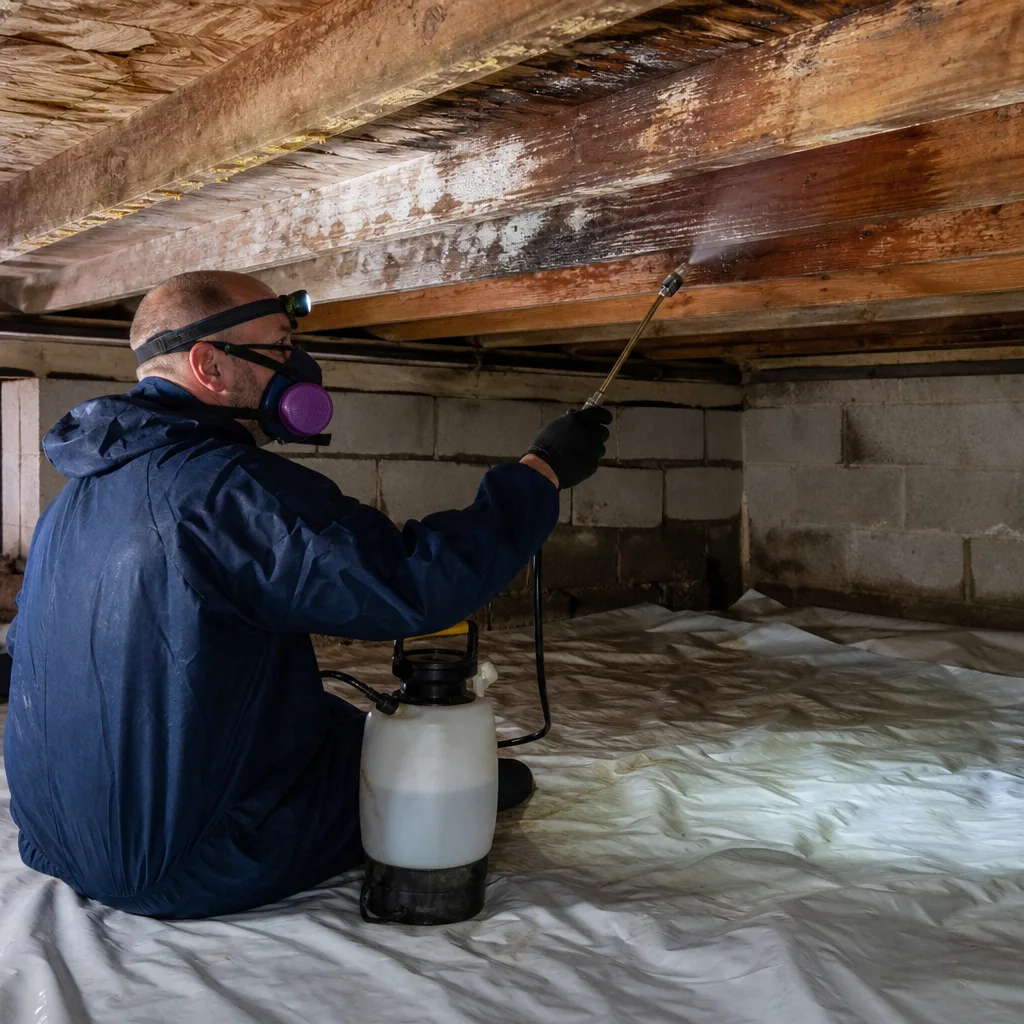
Structural Drying & Dehumidification
Drying a high-rise suite isn’t the same arithmetic as drying a basement. Shared riser chases mean moisture from one floor’s leak migrates into three floors’ drywall. We calculate drying chambers floor by floor, with desiccant dehumidifiers running on mechanical floors and LGR units in the affected suites. Daily moisture readings from every affected floor go into your log, and we don’t remove equipment until every reading is at dry standard – not just the one the tenant complained about.
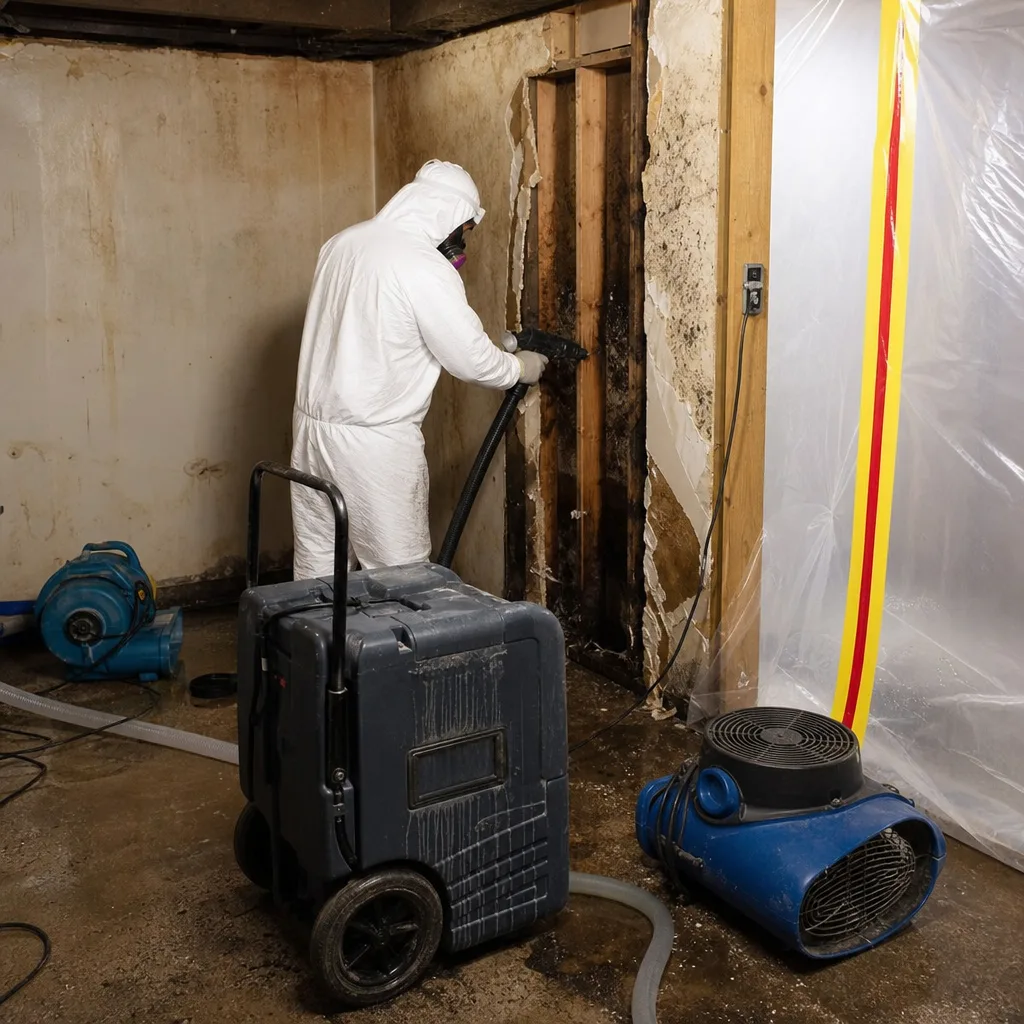
Basement Water Removal
Midtown’s basements are a different animal: many are mechanical floors, storage rooms, or retail back-of-house spaces built into the building’s subgrade. When a basement floods here, it’s usually from a failed sump pump, a broken steam condensate return line, or street-level water intrusion during a storm. We extract with gas-powered pumps when the power’s out, then dry with high-velocity air movers and desiccant dehumidifiers sized for the space’s volume and the concrete’s moisture condition.
What happens when you call
- 1
A real person answersNo phone trees - you reach a local pro.
- 2
You get an upfront price rangeHonest numbers before anyone is dispatched.
- 3
A background-checked tech heads outLicensed & insured, dispatched right away.
- 4
You approve before work beginsNothing starts until you say go.
Water Damage Restoration Costs in Midtown Manhattan, NY
Real numbers for Midtown Manhattan water damage work. Emergency water extraction in a high-rise unit typically runs $1,800 to $4,500 depending on floor count, equipment staging, and how many floors the water affected. Structural drying with daily monitoring lands between $2,500 and $7,000 for a single-suite loss, more if we’re drying three floors at once. Burst pipe restoration, including demo, drying, and rebuild, ranges $8,000 to $35,000 in this market – high-rise bids get heavier because of freight elevator fees, building engineer coordination, and multi-floor containment. Ceiling and roof leak damage from facade failures usually falls between $4,000 and $15,000 after the leak source is addressed. What moves the price: Category of water, number of affected floors, elevator access restrictions, and whether we’re doing pack-out and storage for tenant belongings. Most of these claims are insurance-covered, and we bill your carrier directly. The free inspection gets you a written scope with firm numbers before you commit to anything.
We Also Serve Cities Near Midtown Manhattan
Our crews are staged throughout the city, so we also respond across Williamsburg, East New York, the Financial District, and Lower Manhattan. Same live answer, same documented drying process, same Water Damage Restoration in Midtown Manhattan standard applied wherever the water shows up.
Serving Midtown Manhattan, NY - Our Local Coverage Area
We’re based in the Midtown Manhattan area and know this community well. Use the map below to see our service coverage - if you’re nearby, we can almost certainly help.
Midtown Manhattan Water Damage Restoration Questions, Answered
How do you handle water damage restoration in a Midtown high-rise when the freight elevator is only available after 6 PM?
We plan the job around the elevator, not the other way around. Most Class-A Midtown towers restrict contractor access to service elevators between roughly 8 AM and 6 PM on weekdays, so we stage equipment in the lobby before dawn and load freight slots precisely. If a drying timeline would blow because of an elevator blackout window, we write that constraint into the drying logs and the estimate from day one. Wade’s crew has done enough of these that we know which buildings have after-hours access, which require a building engineer escort, and which will waive restrictions for emergency water extraction. Call (363) 666-2319 and we’ll tell you what your building actually allows before we schedule anything.
Can a burst pipe on one floor create water damage ten floors below in a Midtown tower?
Yes, and it happens more than building management wants to admit. Water from a burst supply line or failed riser travels straight down through the pipe chase, following the same path the plumbing takes. A Category 1 break on floor 12 can become Category 2 or 3 water by the time it pools in a suite on floor 3, because it’s picked up dust, insulation, and whatever lived inside the wall cavity. We moisture-map every floor along the riser path, not just the floor where the pipe actually broke. That’s the only way to prove to an insurer how many tenancies were actually affected.
What makes wind-driven rain at altitude a bigger water damage risk in Midtown than in neighboring boroughs?
Height changes everything. Midtown’s urban canyon effect funnels wind between the towers, and at floors 20 and above, wind-driven rain hits the facade at 30 to 50 miles per hour. That pressure forces water through curtain-wall sealant joints, aging masonry seams, and window gaskets that would never leak under normal rainfall. Ground-level inspections miss these failures because they never look up. We’ve traced water entry points on the 31st floor that were staining ceilings on 17. The fix starts with facade access and thermal imaging, not a bucket.
Why do you need moisture readings from multiple floors before starting structural drying in a Midtown office tower?
Because the water doesn’t stay on one floor. Midtown towers share riser chases, pipe runs, and cavities between floor slabs, so moisture from a single leak migrates vertically and horizontally through the building’s skeleton. If we dry only the suite where the damage is visible, the adjacent floors keep feeding moisture back, and mold develops in the cavities we never opened. Multi-floor moisture mapping before drying starts is standard procedure on every Midtown high-rise loss we handle, and the readings from all affected floors go into your daily drying log.
How soon can mold start growing on wet drywall in a Midtown apartment after a sink overflow?
Mold growth can begin within 24 to 48 hours on wet drywall, paper backing, and organic debris, especially in the warm, humid conditions common in Midtown apartments. The clock starts the minute water touches the material. That’s why our crews run air movers and dehumidifiers immediately after extraction, not next week. If a Category 2 or 3 loss has been sitting for more than 48 hours before we arrive, we treat it as a potential mold job and set up containment before any demo work starts. If you had a sink overflow last night, don’t wait to see what it looks like tomorrow. Call us now.
What should I do in the first 30 minutes after discovering water damage in Midtown?
Turn off the water source if you can do it safely, then move anything valuable out of the wet area. Don’t use a shop vac on Category 2 or 3 water, and don’t open any walls or ceilings yourself – you could hit an electrical line or spread contaminated water further. Document what you see with photos for your insurer, then call (363) 666-2319. We’ll have equipment staged and a crew on the way fast. In a high-rise, the clock matters more than in a house, because water moves through the building’s shared cavities and affects tenants below you within hours.
Will my insurance cover water damage restoration in a Midtown high-rise?
Most water damage from sudden and accidental events – a burst pipe, a failed supply line, a sprinkler misfire – is covered under standard commercial or condo/co-op policies. Gradual leaks from aging sealant joints or long-term moisture intrusion are trickier and often get denied or partially covered. The difference usually comes down to documentation. We provide daily moisture logs, room-by-room photos, time-stamped evidence of the source, and a line-item scope that stands up to adjuster scrutiny. Wade deals with your carrier directly, so you’re never in the middle trying to explain why floor 17 needs drying when the pipe broke on floor 19.
Do I need full restoration or just a drying-out after water damage in a Midtown apartment?
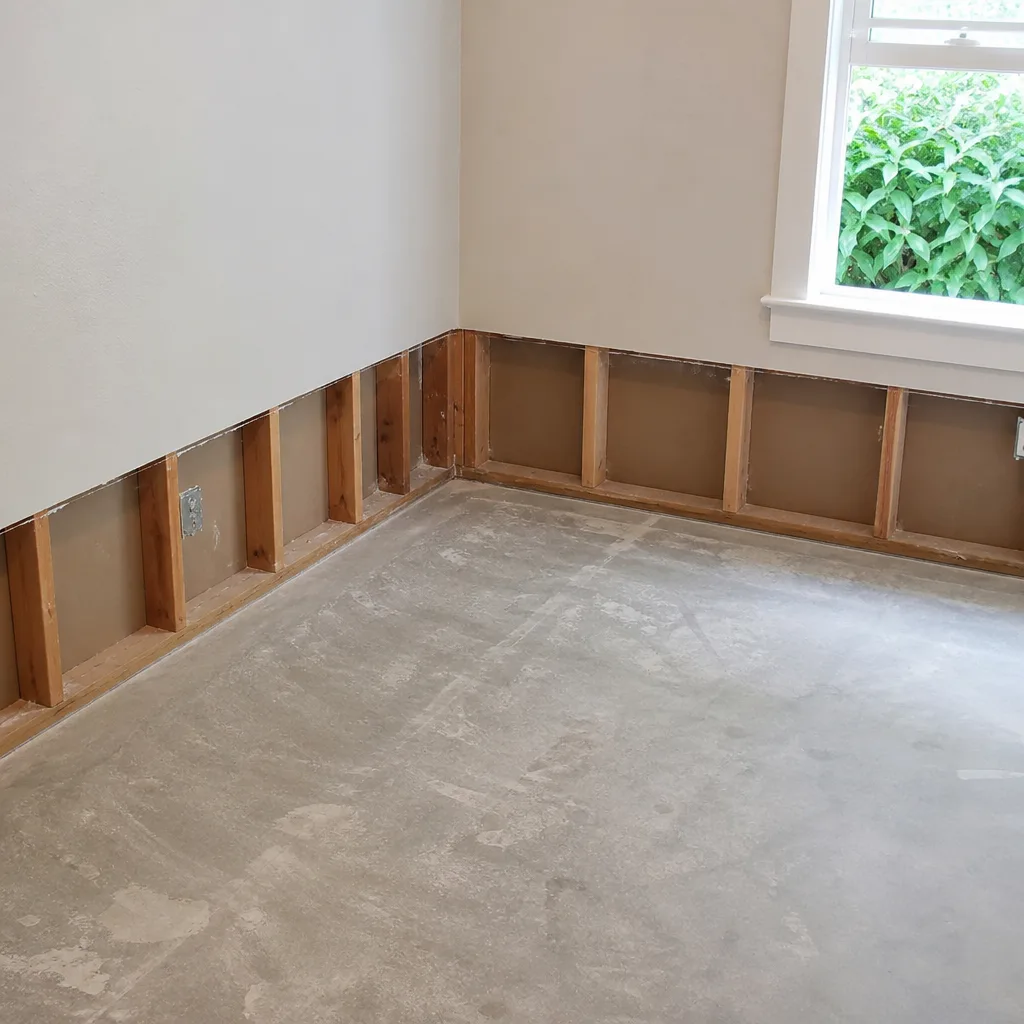
Depends on the category and how fast you caught it. Category 1 water from a clean supply line, caught within hours, often only needs extraction and structural drying. Category 2 or 3 water, or any loss that sat more than 48 hours, almost always requires removing affected drywall, insulation, and possibly flooring, then rebuilding. We don’t sell you a demo you don’t need. The free inspection gives you a straight answer with meter readings to back it up, and if it’s a drying job, that’s all we quote. Call (363) 666-2319 and we’ll tell you the honest truth before any work starts.
Written by Wade Ferris, Owner at Wade’s Restoration, serving Midtown Manhattan with documented drying, honest pricing, and a 90-Day Done Right Promise in writing on every job.