
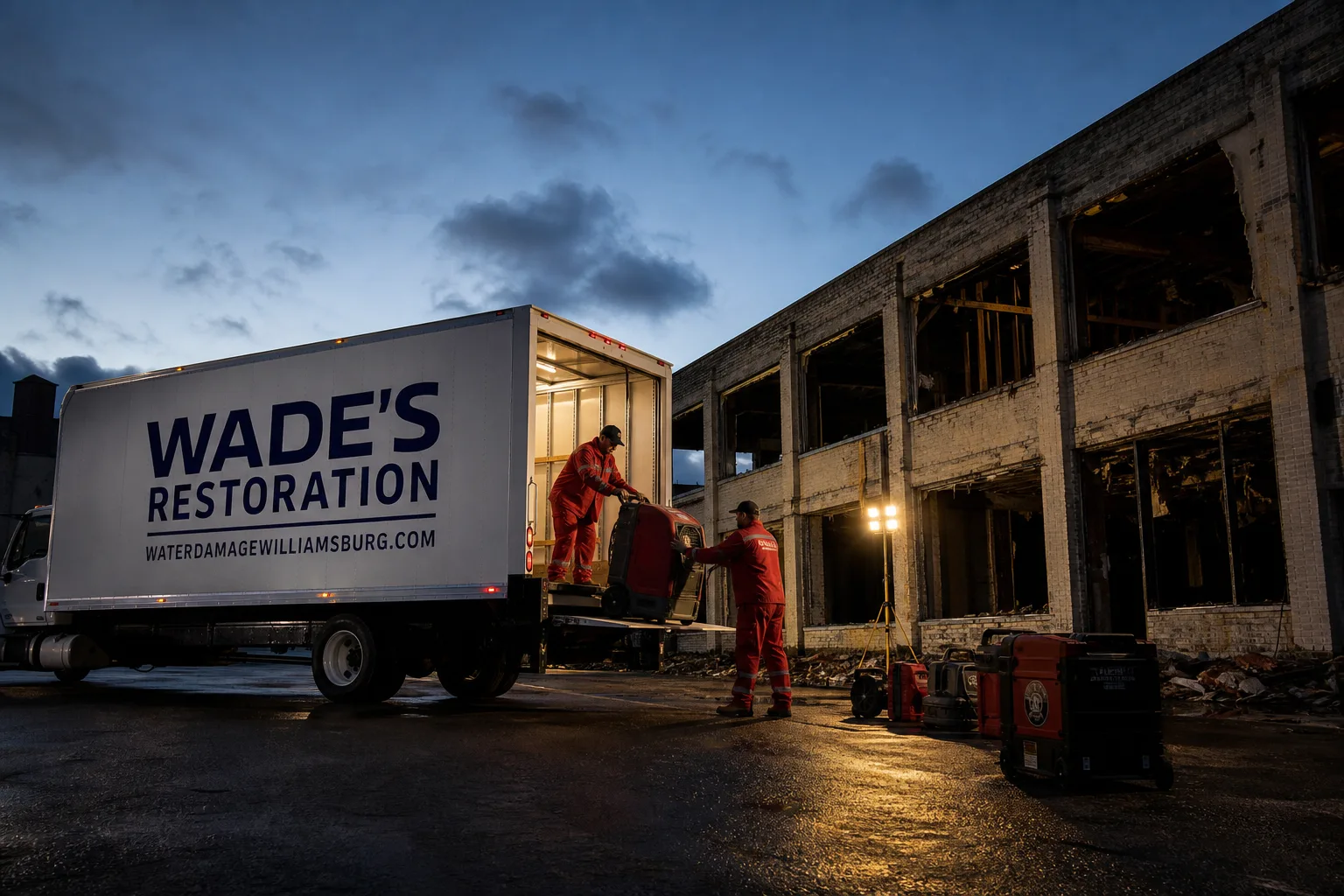
Free visual inspection and a written scope of work before any mitigation begins - photos, moisture readings, and drying logs go in your claim file
The scope we write is the scope we bill. Anything new gets shown to you, in writing, before we touch it.
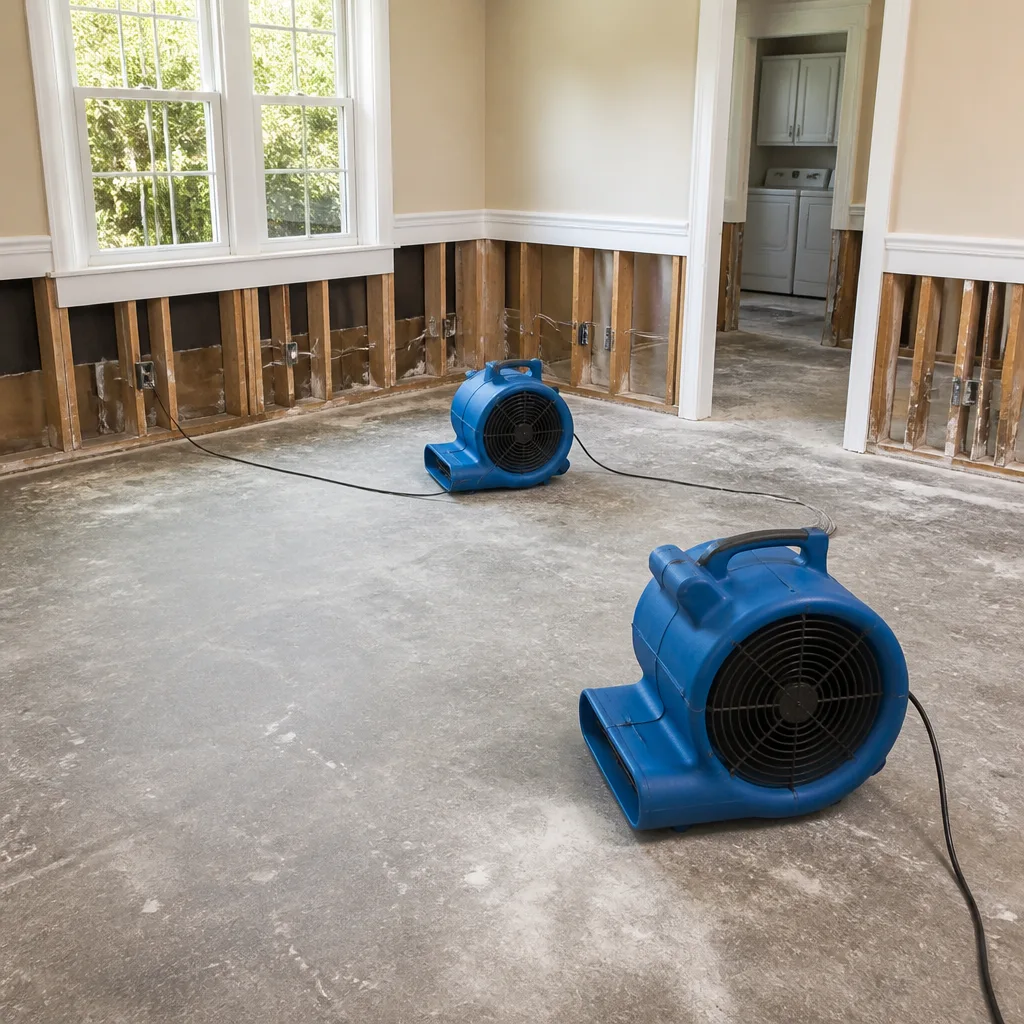
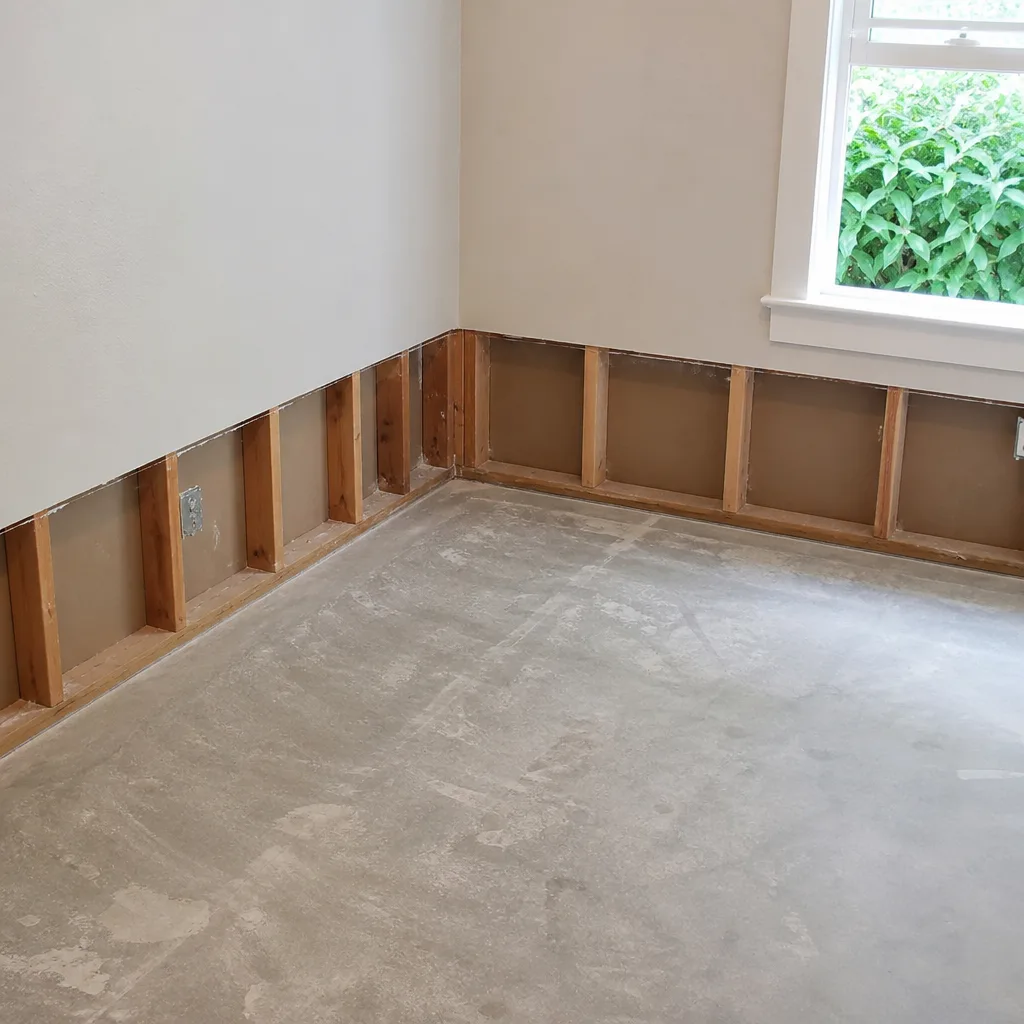
 Before
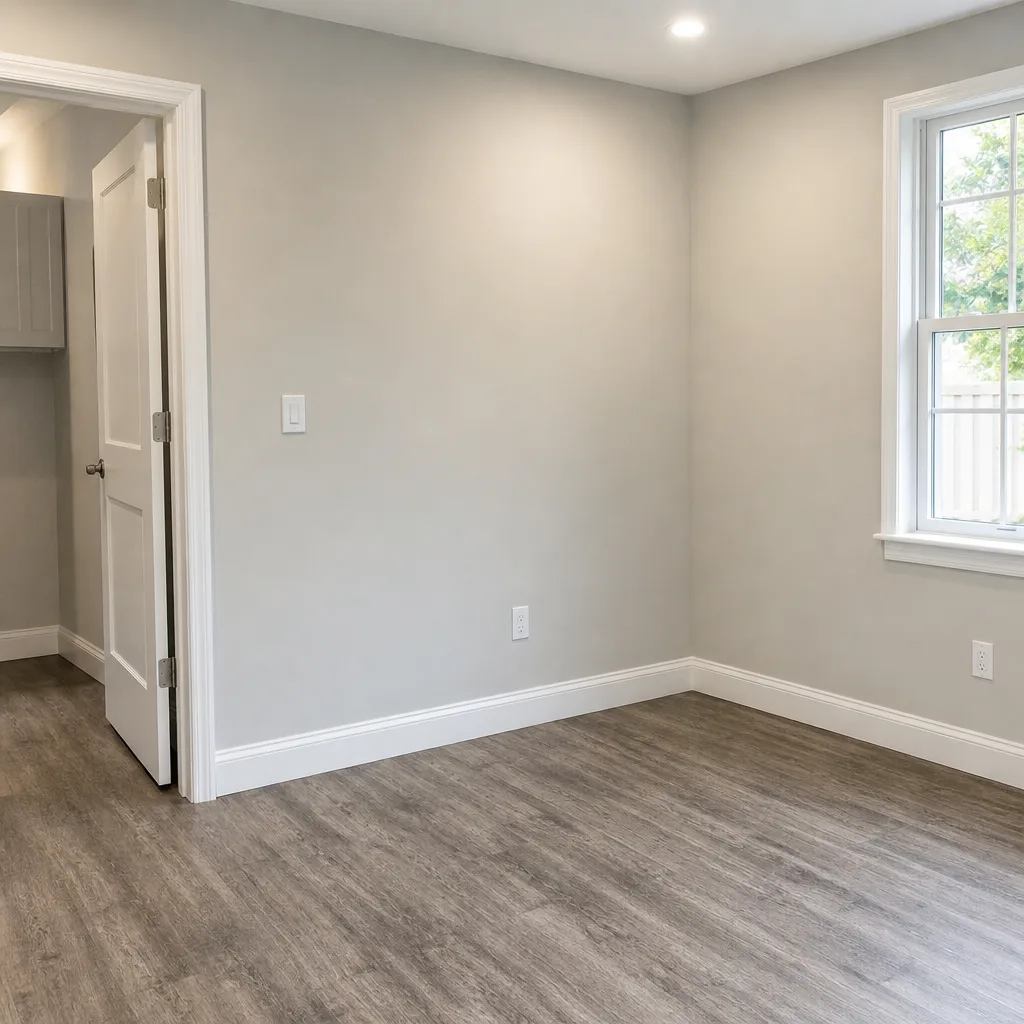 After
After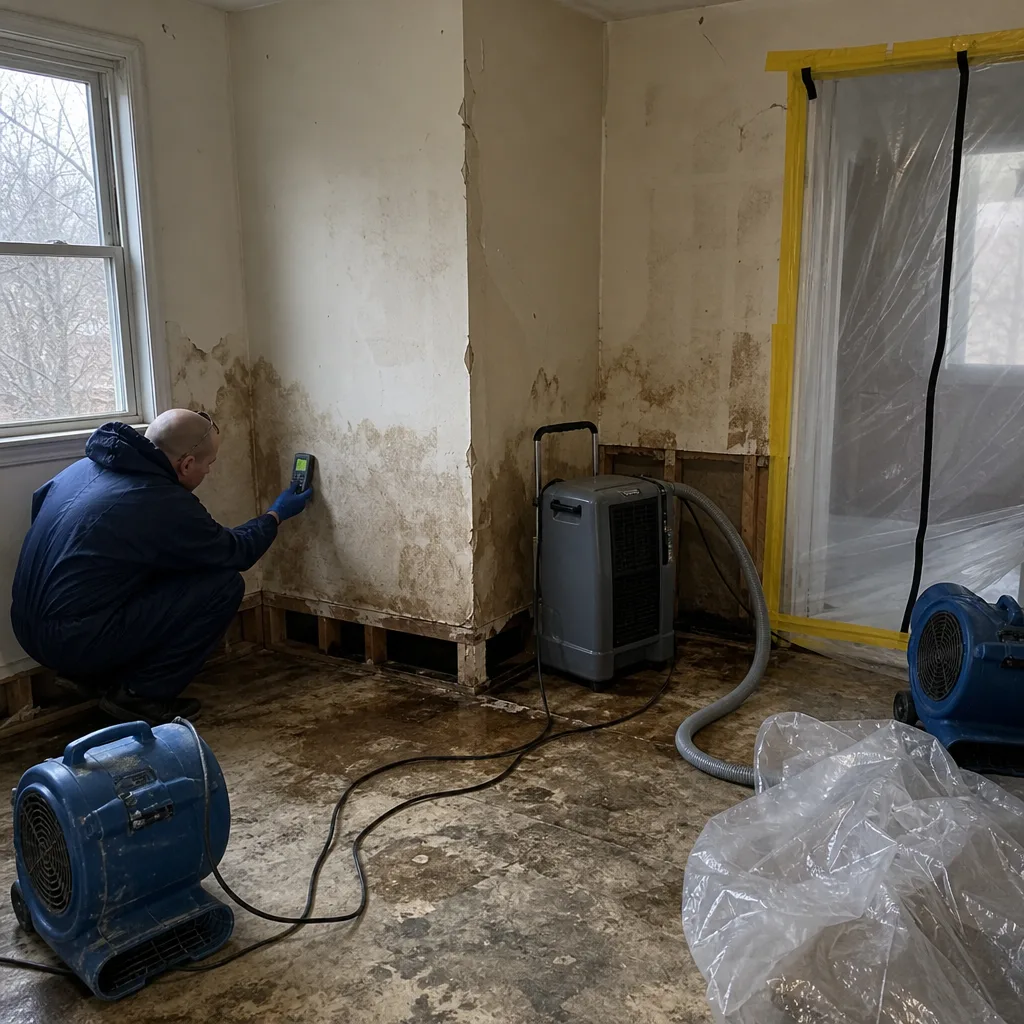 Before
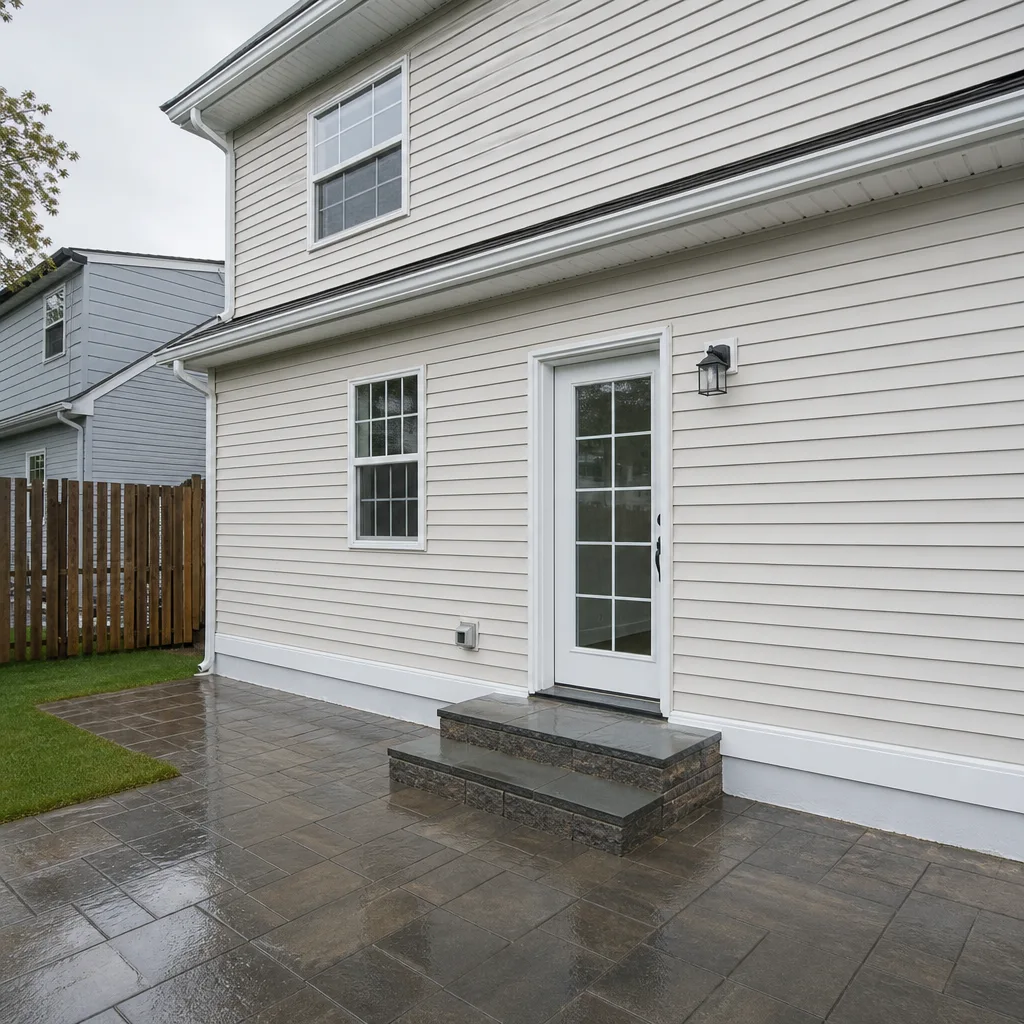 After
After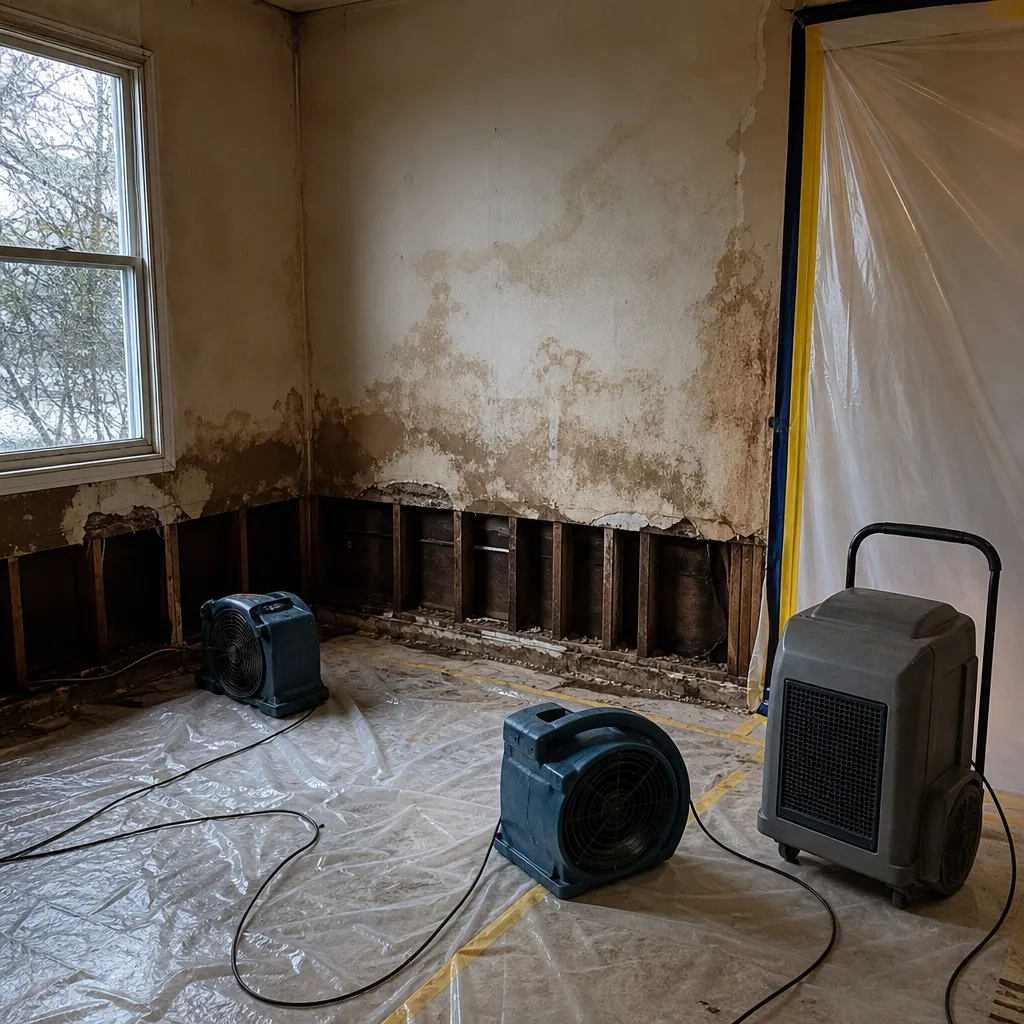 Before
 After
After24/7 Emergency Sewage Cleanup in Astoria
Sewage backing up into an Astoria basement is not a tomorrow problem. It’s a right-now problem. Category 3 water carries bacteria, viruses, and parasites that colonize porous surfaces within hours, and in attached pre-war rowhouses that contamination rarely stops at one property line. Call Wade’s Restoration at (363) 666-2319 any hour, day or night. A live person answers, Wade heads out, and a crew can be on your block inside 45 minutes for a free visual inspection before you’ve finished bailing out the first bucket of black water.
We’ve been doing Sewage Cleanup in attached brick buildings long enough to know what the first hour decides. The faster extraction starts, the less wicked into plaster-and-lath walls, original wood joists, and shared party walls. Every minute of delay expands the scope and the bill. That’s not pressure. That’s just how water behaves.
Understanding Sewage Cleanup Severity in Astoria Properties
Astoria’s housing stock was built tight. Rowhouses from the 1920s through 1940s share uninsulated brick party walls, original plaster-and-lath, and in many cases a single cast-iron waste line running through a common trench under both cellars. When sewage backs up, the water we’re dealing with is Category 3, the most contaminated classification in the trade. It’s not dirty water. It’s water carrying raw human waste, and it moves through wall cavities, under slab floors, and along mortar joints you can’t see from the wet spot on the floor.
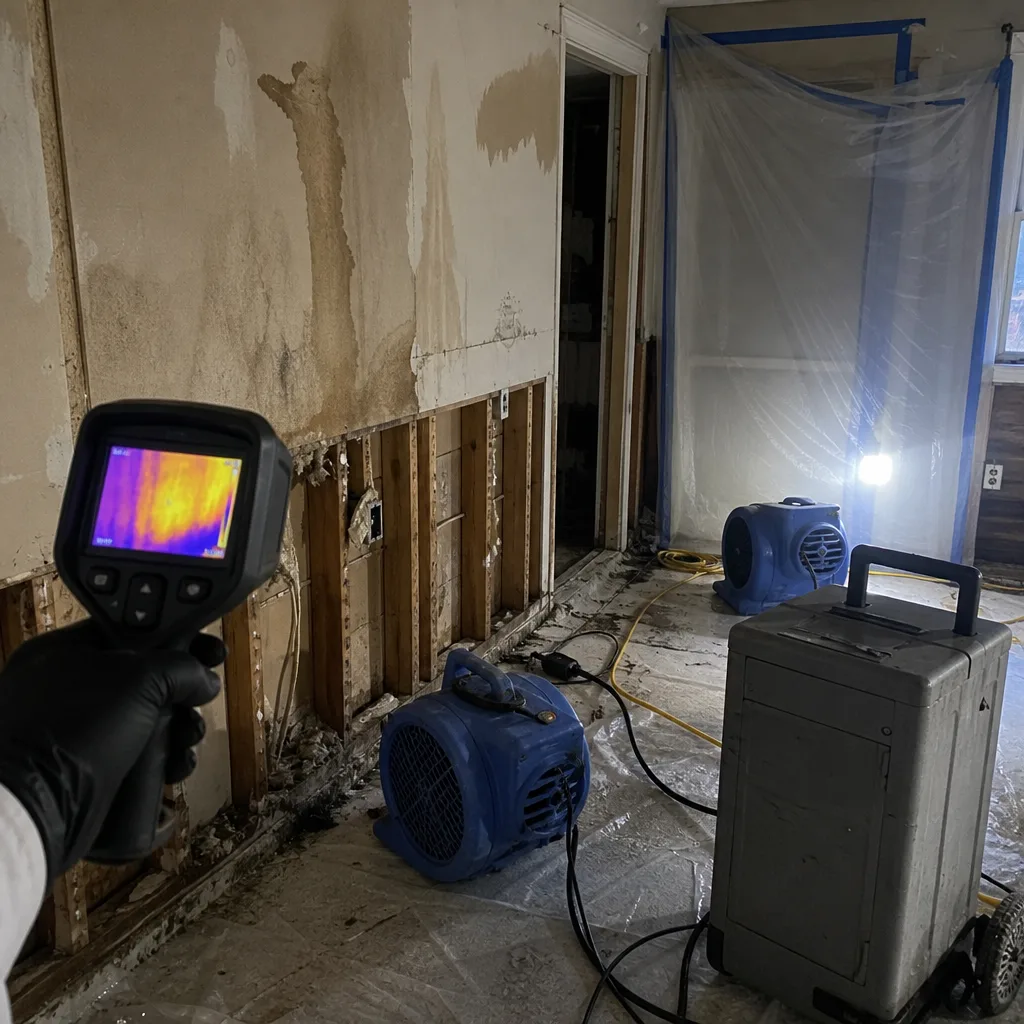
Moisture mapping matters more here than in a detached house. We take readings on both sides of the party wall because what looks like your backup may have migrated from the neighbor’s failed line through the common house trap. Containment goes up before extraction starts, HEPA air scrubbers run during the entire process, and drying logs record every reading until the structure reaches its documented dry standard. When we peel back drywall to find original plaster, or lift LVP flooring to find asbestos vinyl tile underneath, the scope changes: hazmat assessment, abatement phase, then rebuild. Almost every sewage job in this neighborhood touches something old underneath the recent renovation.
Why Astoria Property Owners Choose Wade’s Restoration
- 45-minute response commitment. When sewage is pooling, Wade heads out immediately from the New York City office, and crews serving Astoria are usually on scene in under an hour.
- 24/7 live answer, always a person. No voicemail, no answering service, no call center. Wade Ferris answers his own phone at 2 a.m. if that’s when the toilet overflows.
- IICRC-certified crews. The people Wade sends hold WRT and AMRT certifications and carry professional-grade equipment from Dri-Eaz, Phoenix, and Injectidry.
- Free visual inspection. You get eyes on the damage and a straight answer about scope before any equipment rolls in or any money changes hands.
- Direct insurance billing. We document from the first hour, write the scope your adjuster can read, and deal with the carrier directly so you’re not the one relaying messages.
- One team from extraction to reconstruction. Same crew, same standards, same accountability from the first pump-out to the final coat of paint on the rebuilt cellar.
Our Sewage Cleanup Process
Inspection & Assessment
We walk the affected area, take moisture readings on both sides of any shared wall, and identify the source. In Astoria rowhouses, that often means checking the neighbor’s cleanout in the same trench. You get a written scope before any work starts.
Extraction & Stabilization
Black water comes out fast with Dri-Eaz extractors. We set containment barriers across doorways, stairwells, and any opening to shared hallways to keep aerosolized droplets from spreading into adjacent units.
Drying & Dehumidification
Air movers and dehumidifiers go in after the standing water is gone. We take daily moisture readings, map the drying curve, and keep running equipment until the structure hits its dry standard, not just until the floor looks dry.
Cleaning & Sanitization
Antimicrobial treatment goes on every surface the Category 3 water touched: original brick foundation, plaster-and-lath, subfloor, joists. We cut out saturated material above the damp line and dispose of it as contaminated waste.
HEPA Air Scrubbing & Clearance
HEPA air scrubbers run throughout the cleanup to pull spores and droplets from the air. Final clearance testing confirms the space is safe before it’s turned back to you.
Repairs & Restoration
The last phase puts it back: new framing, drywall, flooring, and paint. One crew handles it from start to finish, and the 90-Day Done Right Promise applies to the whole job, in writing.
Need Emergency Sewage Cleanup in Astoria Now?
Crews minutes away, answering live 24 hours a day. The sooner we start, the less it costs.
Working With Your Insurance Company
We’ve handled enough Astoria sewage claims to know exactly what adjusters need. From the first hour, we photograph every surface, log every moisture reading, and write a line-item scope that matches industry-standard pricing software. When the loss crosses a party wall into the neighbor’s unit, both insurers get involved, and we coordinate both files directly so neither homeowner is stuck playing telephone between carriers.
What We Provide Your Insurer
- Thorough documentation of the loss
- Photos of all damage, room by room
- Moisture readings and drying logs
- A detailed, line-item scope of work
- Direct coordination with your carrier
Built for Astoria’s Loss Calendar
Astoria’s sewage backup season doesn’t follow one clean pattern. The aging combined sewer system means any intense rain event, from a summer thunderstorm to a fall nor’easter, can overwhelm the pipes and push Category 3 water back up through floor drains, toilets, and basement fixtures. Hurricane Ida in September 2021 was the worst example, but smaller versions happen every year. Garden-level apartments and basement units flood first, and they’re often the ones with semi-legal occupancy status, which complicates claims.
Winter brings a different failure mode: cast-iron waste lines that have been in the ground since the 1930s freeze, crack, or simply rot through. A January backup off 34th Street is rarely too much rain. It’s usually a ninety-year-old pipe giving up. Spring thaw and heavy runoff push groundwater against foundations and into every crack in the cellar floor. None of these seasons surprise us anymore. We plan around them and keep equipment staged for it.
Sewage Cleanup Across Astoria’s Neighborhoods
The blocks around Ditmars Boulevard are mostly two-family rowhouses with rear yard cellar entrances and shared waste lines in the same trench. When one backs up, the other usually follows within days. We’ve walked both cellars on more jobs than we can count, mapping moisture on both sides of the party wall before anyone starts drying.
Down toward 30th Avenue and Broadway, the buildings get taller. Walk-up apartment buildings with garden-level units under the stoop put six or eight families on one waste line. A single toilet overflow on the parlor floor migrates down through ceiling cavities and shows up in the garden apartment’s closet. Response routes off the Steinway Street corridor mean we can be on scene fast, but the building’s age always adds a hazmat layer: asbestos tile under newer vinyl, lead paint under latex, original plaster under drywall.
Over by Astoria Park, the pre-war co-ops along Shore Boulevard sit on land that slopes toward the East River. Groundwater finds cellars there even without a sewer event, and when a storm surge pushes the river up, basements flood through floor drains and wall seams simultaneously. The 11103 ZIP code covers some of the oldest housing stock in the neighborhood, and we work it constantly.
The blocks around 36th Avenue and Northern Boulevard are a mix of attached brick rowhouses and small commercial buildings sharing party walls. A clogged grease trap in a restaurant garbage line can back sewage into the residential cellar next door, and that’s a two-policy mess every time. We’ve coordinated enough multi-insurer scopes there to know the building forms by heart.
Specialized Sewage Cleanup Services We Offer in Astoria
Sewage Backup Cleanup
The full-scope response: extraction, containment, structural drying, antimicrobial treatment, and rebuild. We handle the NYC DOB permitting when it’s required and coordinate across property lines when the backup crosses a party wall. Same crew, same standards, start to finish.
Toilet Overflow Cleanup
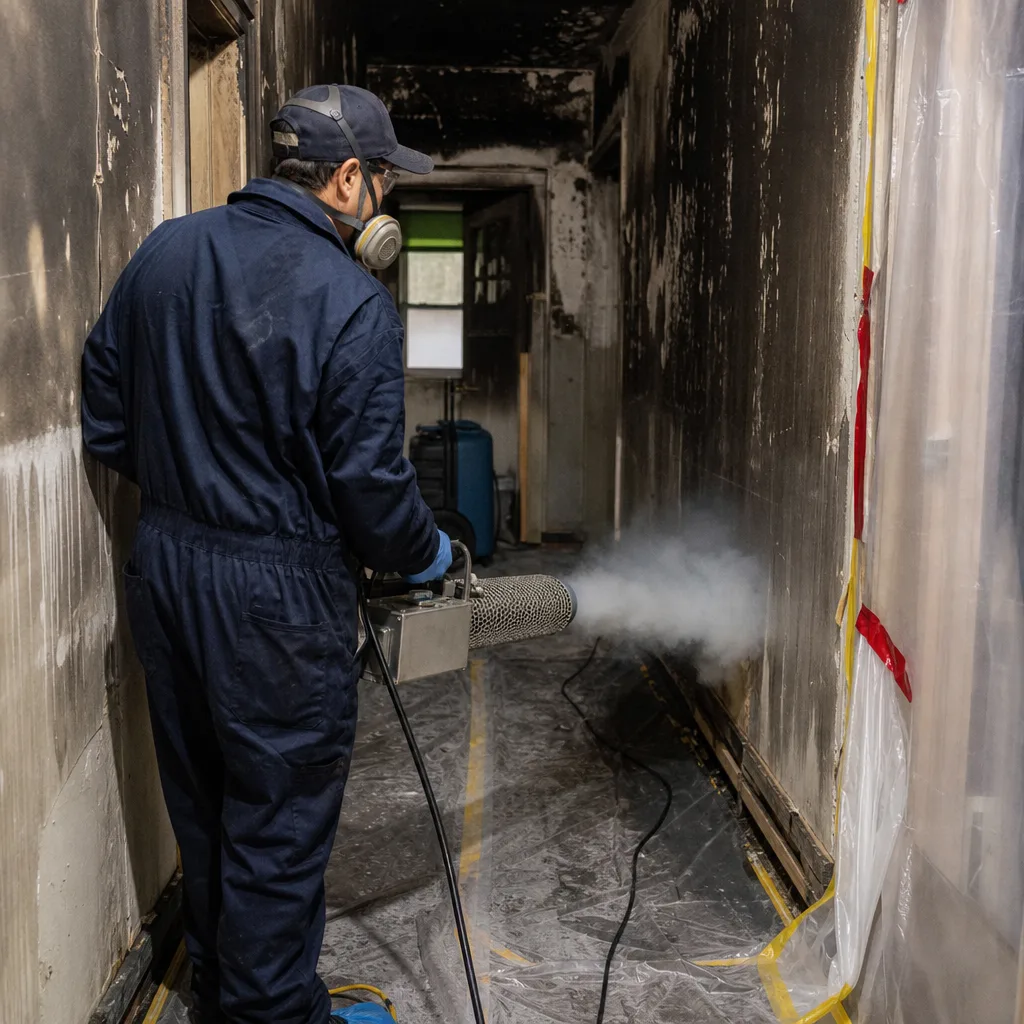
A toilet overflow in an attached rowhouse is not a mop-and-move-on situation. The water seeps into the subfloor and down through old plaster ceilings. We extract, dry, and sanitize the entire path of water, not just the visible puddle around the fixture.
Septic Failure Cleanup
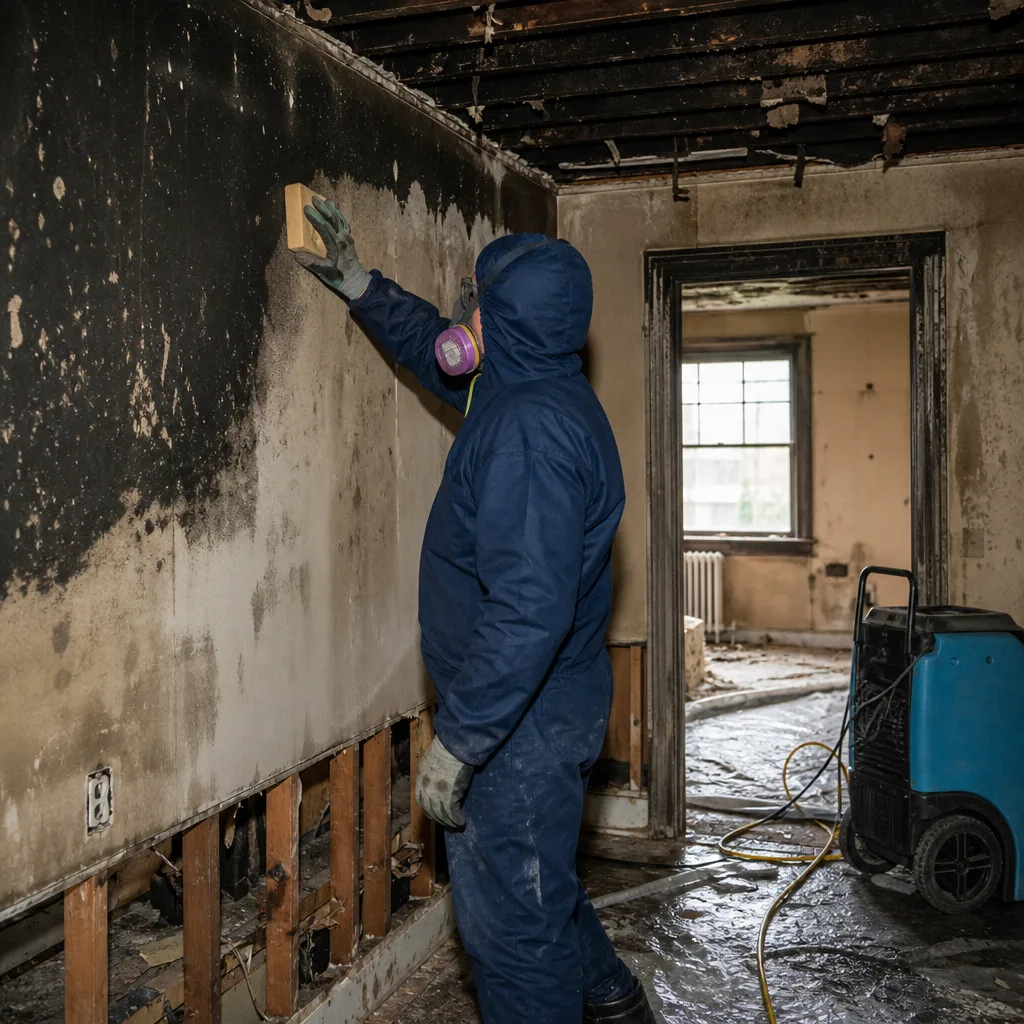
Most of Astoria is on municipal sewer, but a few older properties still run private septic lines. When a septic field fails and waste surfaces in the yard or leaches into the cellar, that’s Category 3, and the scope includes excavation, line repair, and full sanitation of anything the effluent touched.
Black Water Extraction
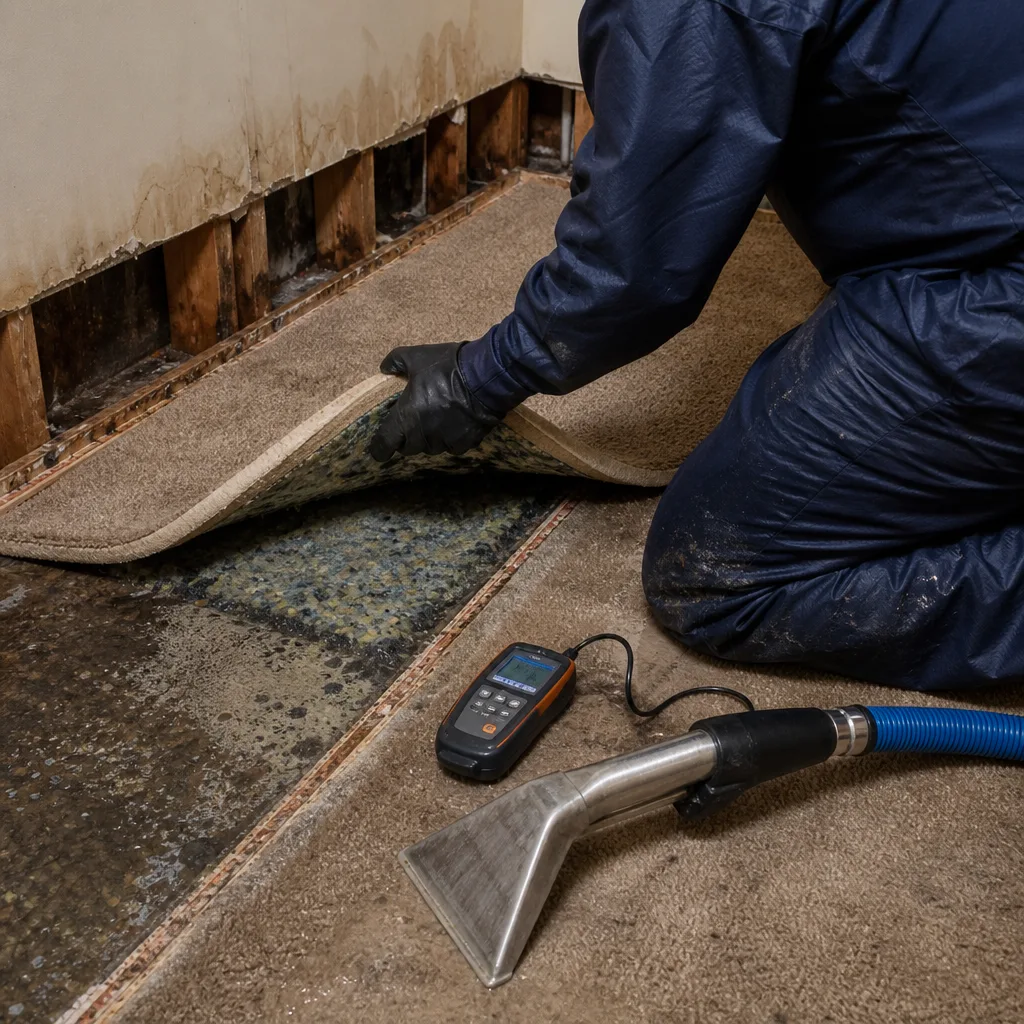
This is the core of sewage work. Category 3 water has to be extracted fast, and in Astoria’s attached buildings, that means containment first, then extraction, then moisture mapping on the adjacent address. We run Dri-Eaz extractors and vacuum systems that pull water from wood, concrete, and brick before drying equipment ever turns on.
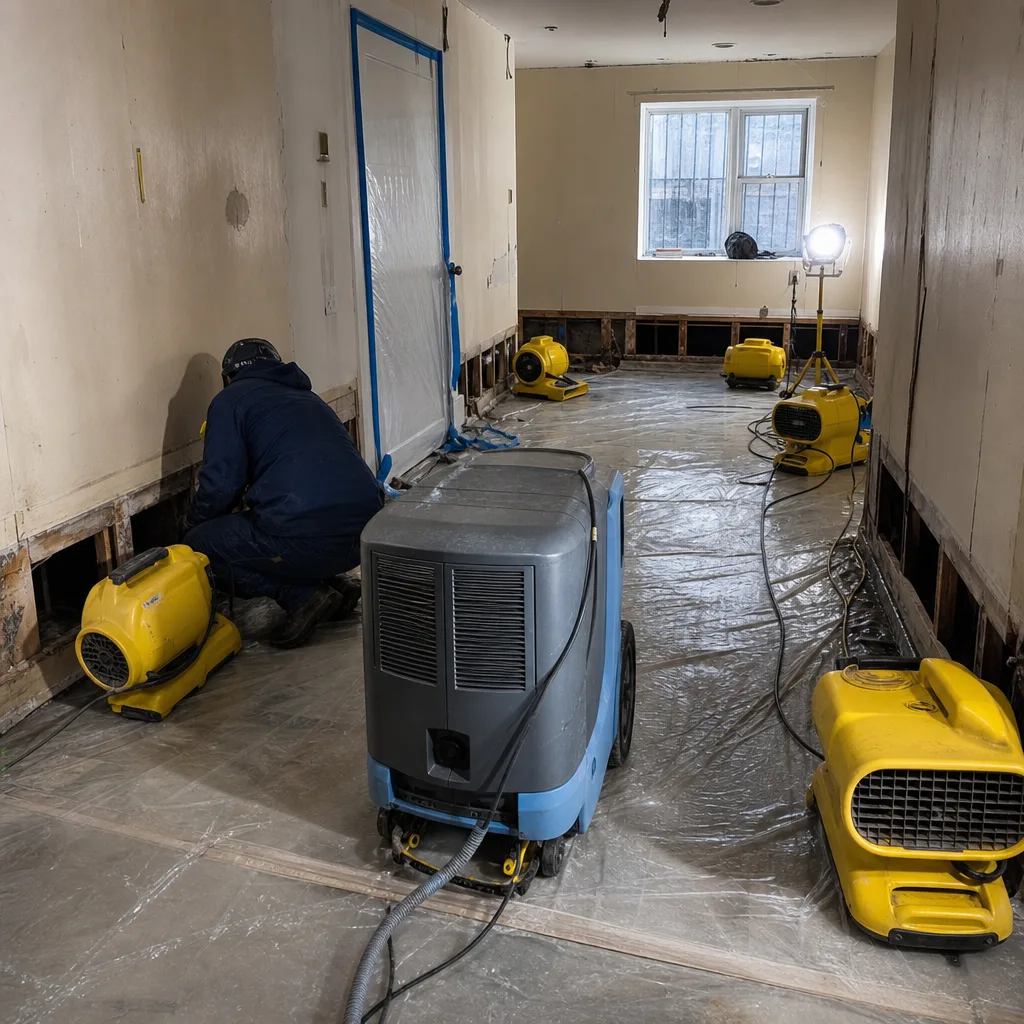
Sanitization & Disinfection
Extraction removes the water. Sanitization removes the threat. We apply antimicrobial agents to every surface the Category 3 water contacted, including original brick foundations and the mortar joints that wick contamination upward. The drying log documents every reading until we can prove the structure is dry, not just say it is.
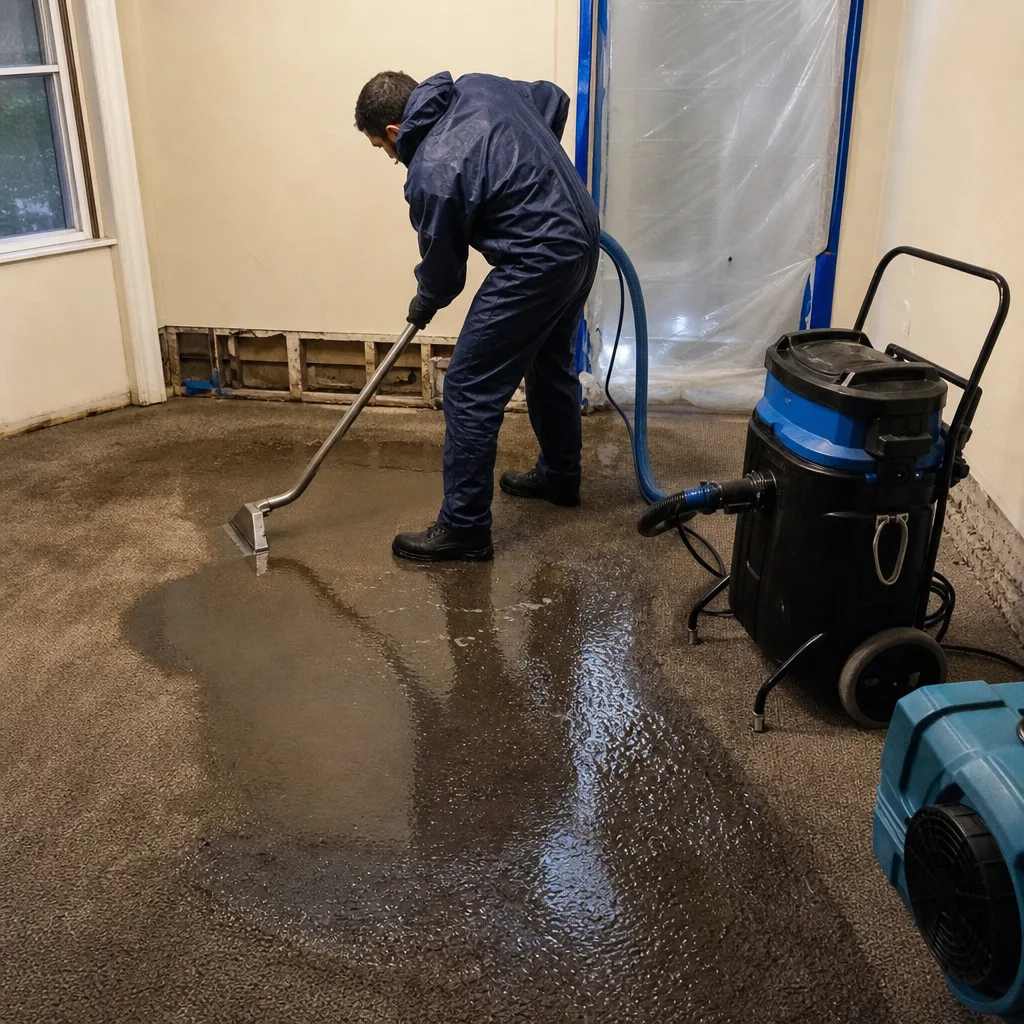
What happens when you call
- 1
A real person answersNo phone trees - you reach a local pro.
- 2
You get an upfront price rangeHonest numbers before anyone is dispatched.
- 3
A background-checked tech heads outLicensed & insured, dispatched right away.
- 4
You approve before work beginsNothing starts until you say go.
Sewage Cleanup Costs in Astoria, NY
Straight numbers, because you deserve them. A contained toilet overflow cleanup in a garden-level Astoria apartment typically runs $800 to $1,800 when we get there within hours and the water hasn’t crossed into the walls. A full sewage backup in a pre-war rowhouse cellar with saturation into plaster-and-lath and original framing runs $4,000 to $9,000. When the backup crosses a party wall and both units need extraction, drying, and sanitization, the combined scope lands between $9,000 and $20,000, split across two policies. Black water extraction alone runs $500 to $1,200 for a standard cellar, but that’s just the first line item.
What moves the price: whether asbestos-containing materials are present and an abatement phase triggers, how far the water wicked up the walls, whether the neighbor’s unit is involved, and whether the source is a broken cast-iron line that needs excavation. Insurance covers most sewage backups when the cause is sudden and accidental, but the semi-legal garden apartment situation can muddy that. The free inspection gets you a firm written scope with real numbers before you commit to anything.
We Also Serve Cities Near Astoria
Our crews head out to Long Island City regularly, where the newer high-rise stock and converted warehouses bring a different set of sewage scope challenges. Same live answer, same 45-minute response, same documentation standards.
Serving Astoria, NY - Our Local Coverage Area
We’re based in the Astoria area and know this community well. Use the map below to see our service coverage - if you’re nearby, we can almost certainly help.
Astoria Sewage Cleanup Questions, Answered
My basement flooded with sewage after heavy rain. Is that a sewer backup or a stormwater issue in Astoria’s combined system?
In Astoria, it’s usually both. The combined sewer system carries sanitary waste and stormwater in the same pipes. When heavy rain overwhelms capacity, the system backs up and sewage-laced stormwater comes up through floor drains and basement fixtures. The fix is the same either way: Category 3 extraction, sanitization, and structural drying, but the claim gets clearer when we document that the source was external backflow rather than an internal clog. Call (363) 666-2319 and we’ll walk the cellar with you.
Do I need to tell my neighbor if sewage from my line backed up into their rowhouse cellar?
Yes, immediately. In attached pre-war rowhouses, Category 3 water travels through the uninsulated brick party wall and the shared house trap. If sewage from your line found its way into their cellar, their insurer will eventually find out through moisture readings and contamination testing. Telling them now means both scopes get scoped and priced together, which is faster and cleaner for everyone. We coordinate both files directly.
Can sewage water saturate the old brick party wall and cause problems a month later?
Absolutely, and it does often. Original brick is porous. Category 3 water wicks upward through mortar joints and into the plaster-and-lath on both sides of the wall. If we don’t map moisture readings on the adjacent address and dry both sides, mold colonizes the gypsum and the brick stays damp for weeks. That’s a health problem and a structural one. This is why we never treat a rowhouse sewage backup as a one-unit job.
Is it safe to just mop up a toilet overflow in a garden-level Astoria apartment?
No. Mop water is not extraction, and in a garden-level unit with original plaster walls, the overflow has already seeped into the subfloor and the wall cavities before you finish mopping. Without containment and HEPA air scrubbing, the act of mopping aerosolizes Category 3 droplets into the air and onto surfaces. Call before you mop. The first 30 minutes matter more than the cleanup effort itself.
How does an attached pre-war building change a sewage cleanup scope of work compared to a single-family house?
In a detached house, the contaminated area is yours and the water stops at your foundation. In an Astoria rowhouse, the water moves through a shared party wall, sometimes through a common waste trench, and into the neighbor’s unit before either of you knows it. That means the scope includes moisture mapping on the adjacent address, coordination with a second insurer, and potentially NYC DOB permits. The price goes up, the timeline extends, and the documentation has to be airtight from hour one.
How fast can you actually get to an Astoria address?
Wade heads out immediately from the New York City office, and crews serving Astoria are usually inside 45 minutes. If it’s a sewage emergency, that 45 minutes can be the difference between a $1,500 cleanup and an $8,000 rebuild. Call (363) 666-2319 any time. A live person answers.
Will my insurance cover sewage backup in Astoria?
Most policies cover sewage backup when the cause is sudden and accidental, like a cast-iron line rotting through or a storm overwhelming the combined sewer. The semi-legal basement apartment situation can complicate an interior finish claim, but we document the loss as it actually happened and coordinate directly with your adjuster. We write the scope in their language from the first photo onward. Free second opinion on any written estimate, and the inspection is free.
How long does sewage cleanup and drying take in an Astoria rowhouse?
Extraction and sanitization usually wrap in one to two days. Structural drying in an attached pre-war building runs three to five days, longer if the party wall is involved and we’re drying both sides. Rebuild timing depends on whether asbestos abatement triggers, but on a typical cellar job, you’re looking at one to two weeks from first pump-out to final paint. The drying log records every reading until the structure earns its dry standard, not a day early.
Written by Wade Ferris, Owner at Wade’s Restoration, serving Astoria since 2007.
If you’ve got sewage in your Astoria basement, don’t wait. Call (363) 666-2319 now. Free inspection, straight answer, and a crew that knows these old rowhouses better than any franchise ever will.