
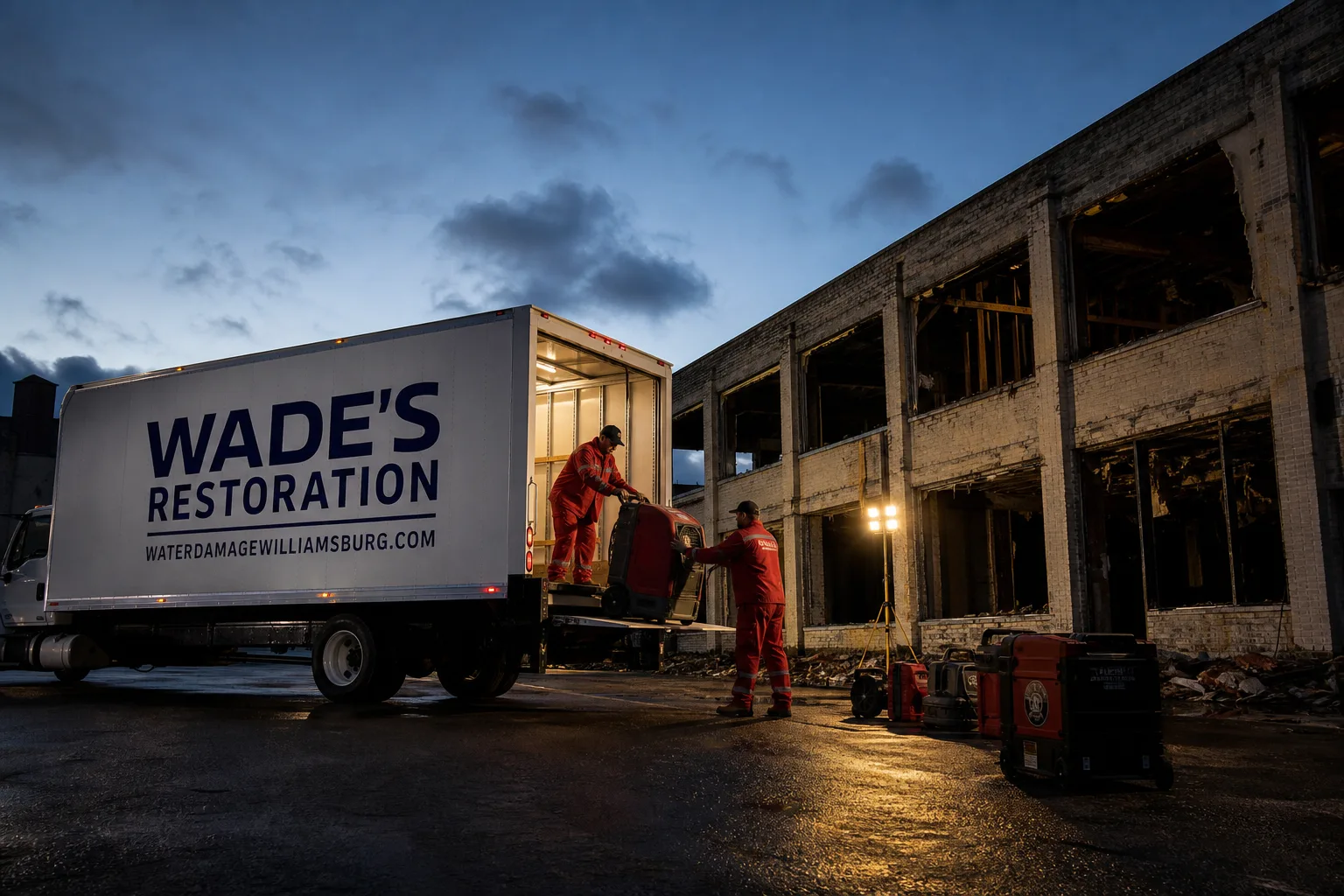
Free visual inspection and a written scope of work before any mitigation begins - photos, moisture readings, and drying logs go in your claim file
The scope we write is the scope we bill. Anything new gets shown to you, in writing, before we touch it.
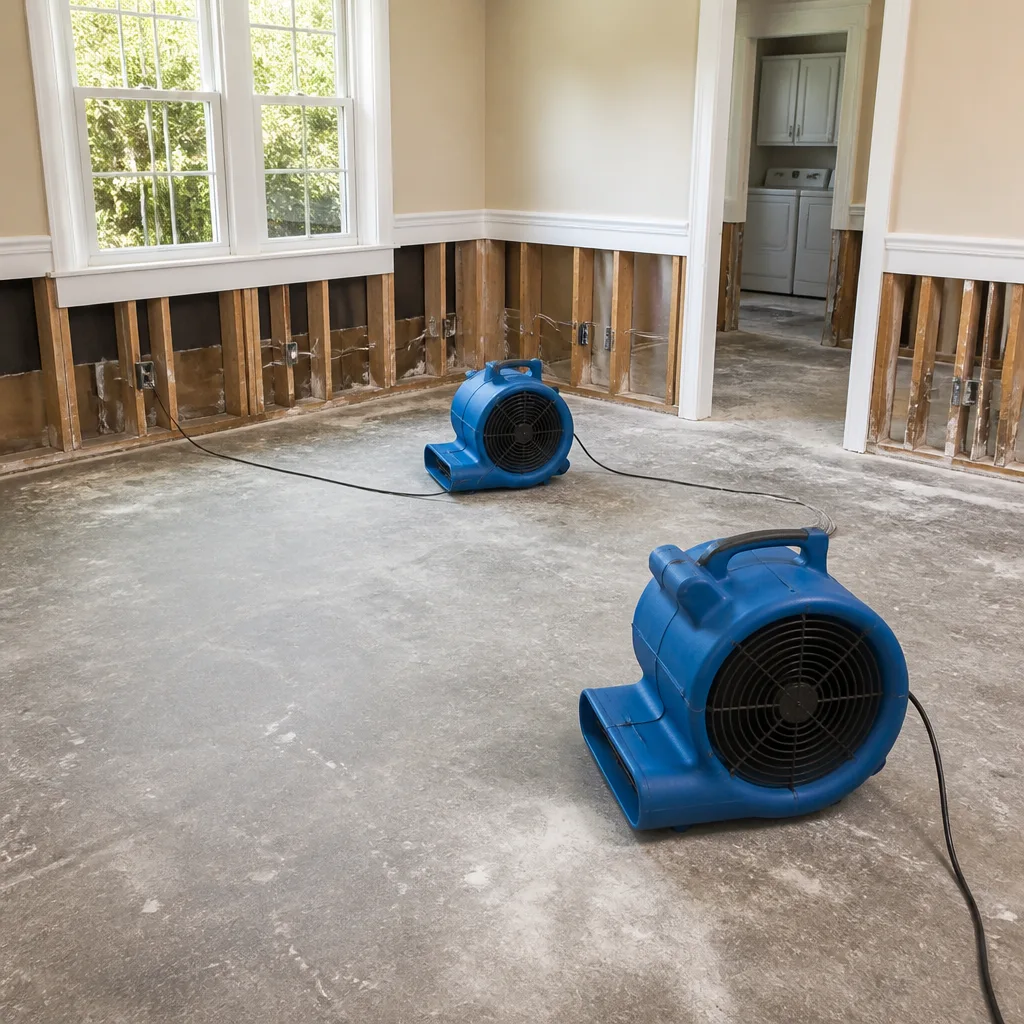

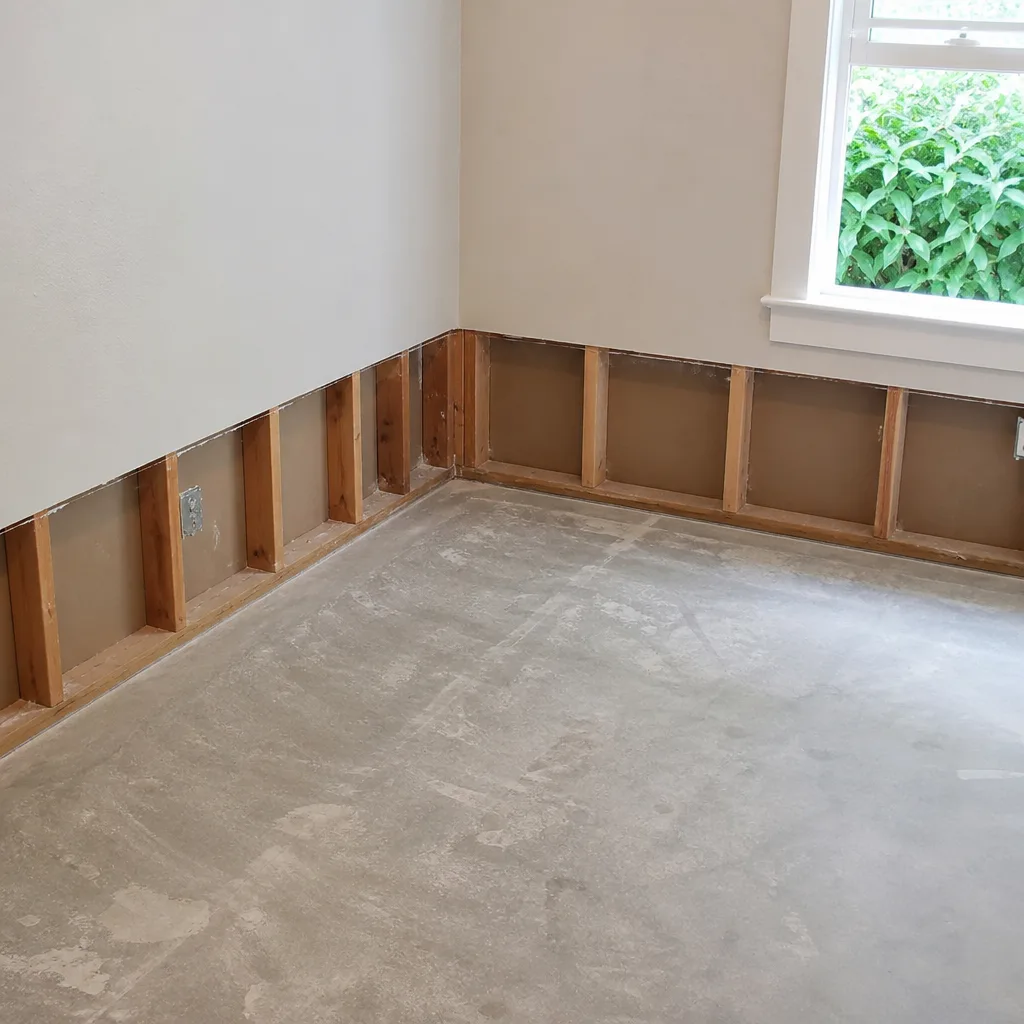

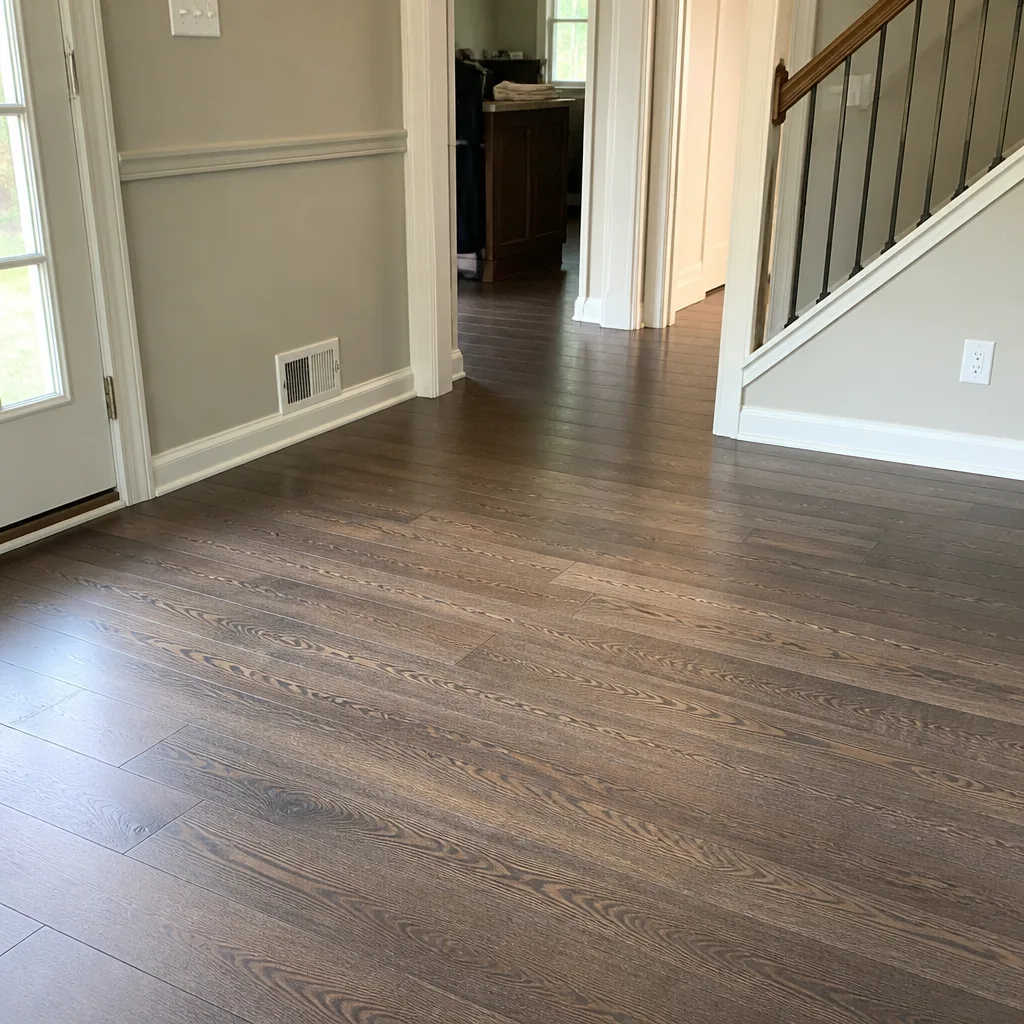

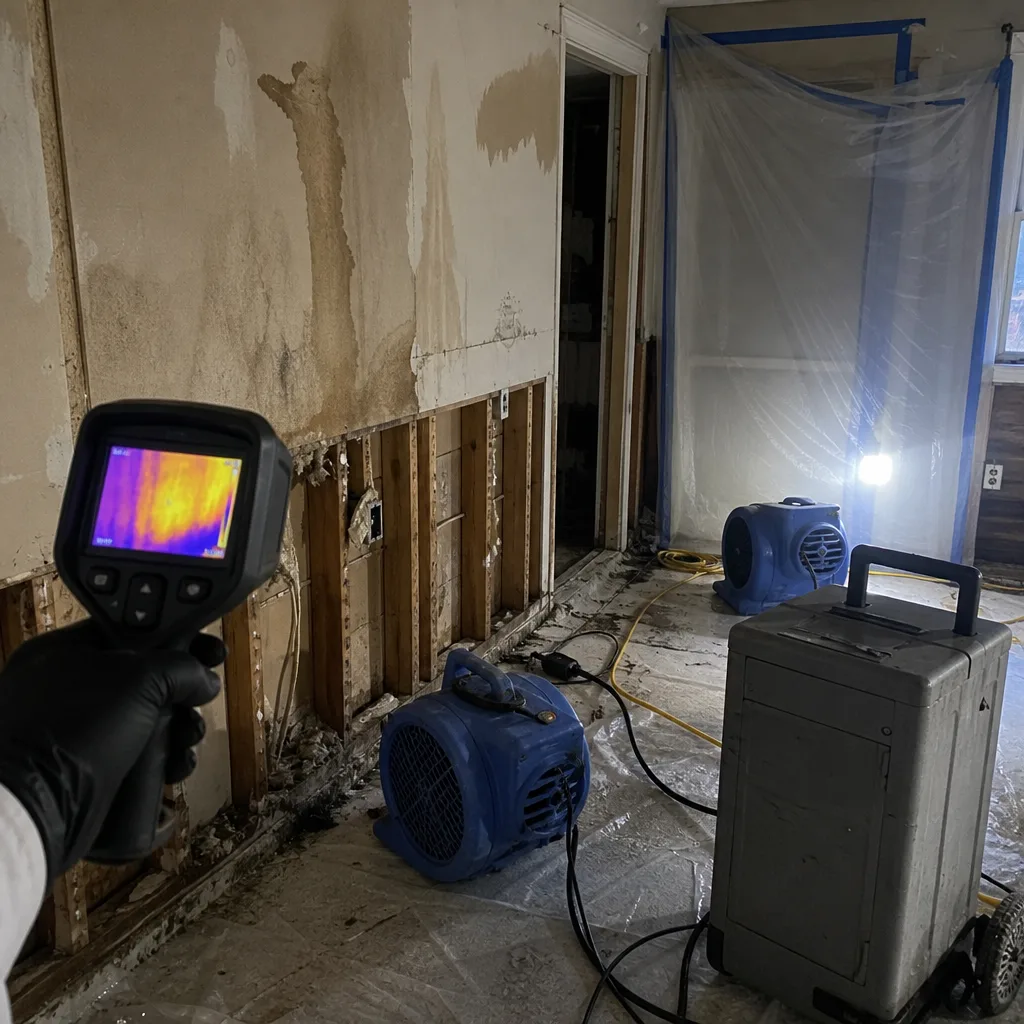 Before
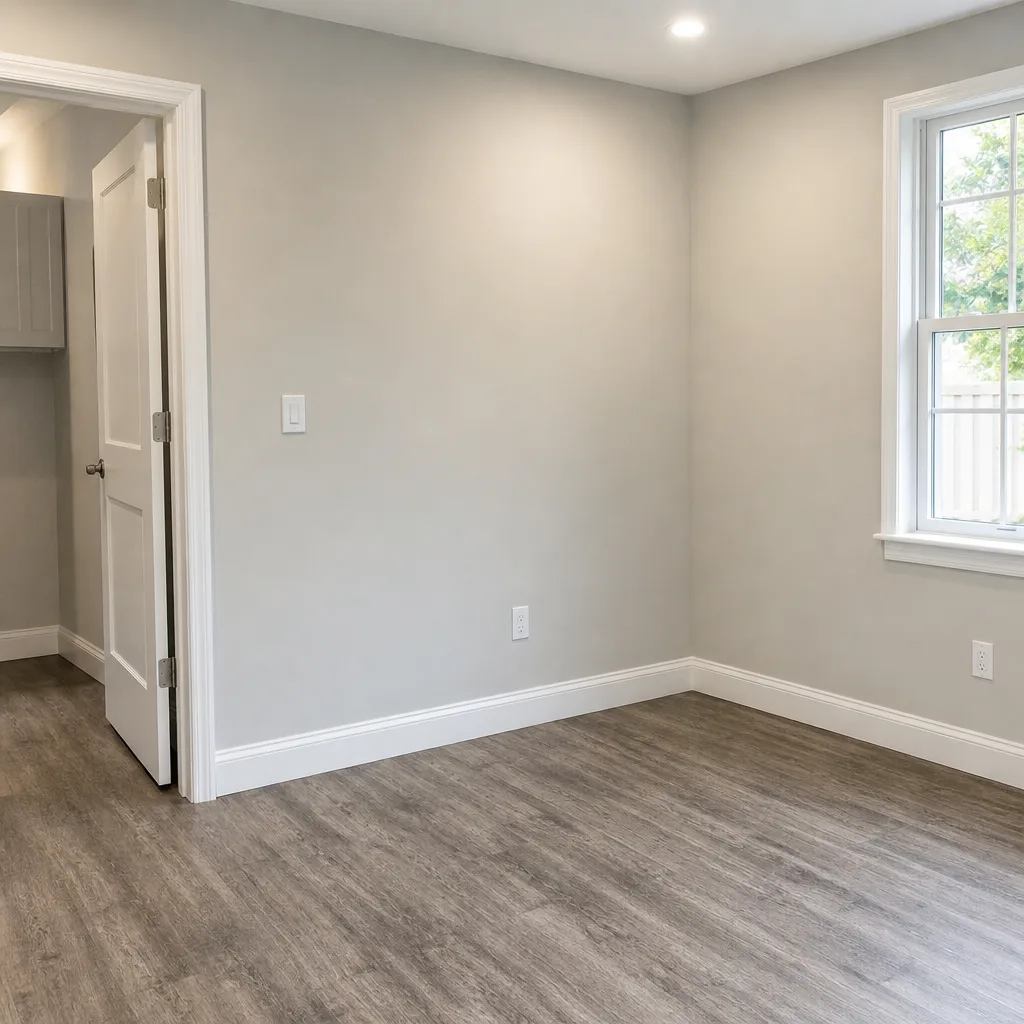 After
After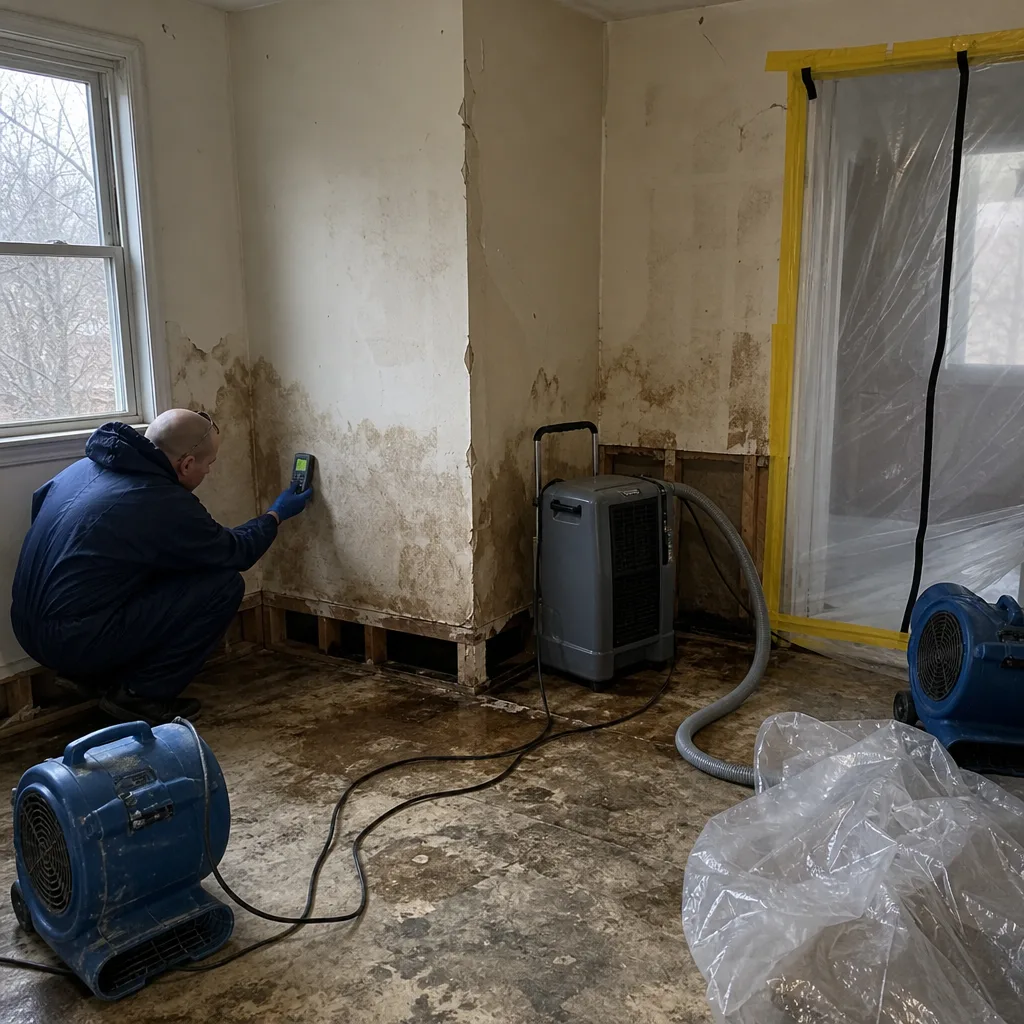 Before
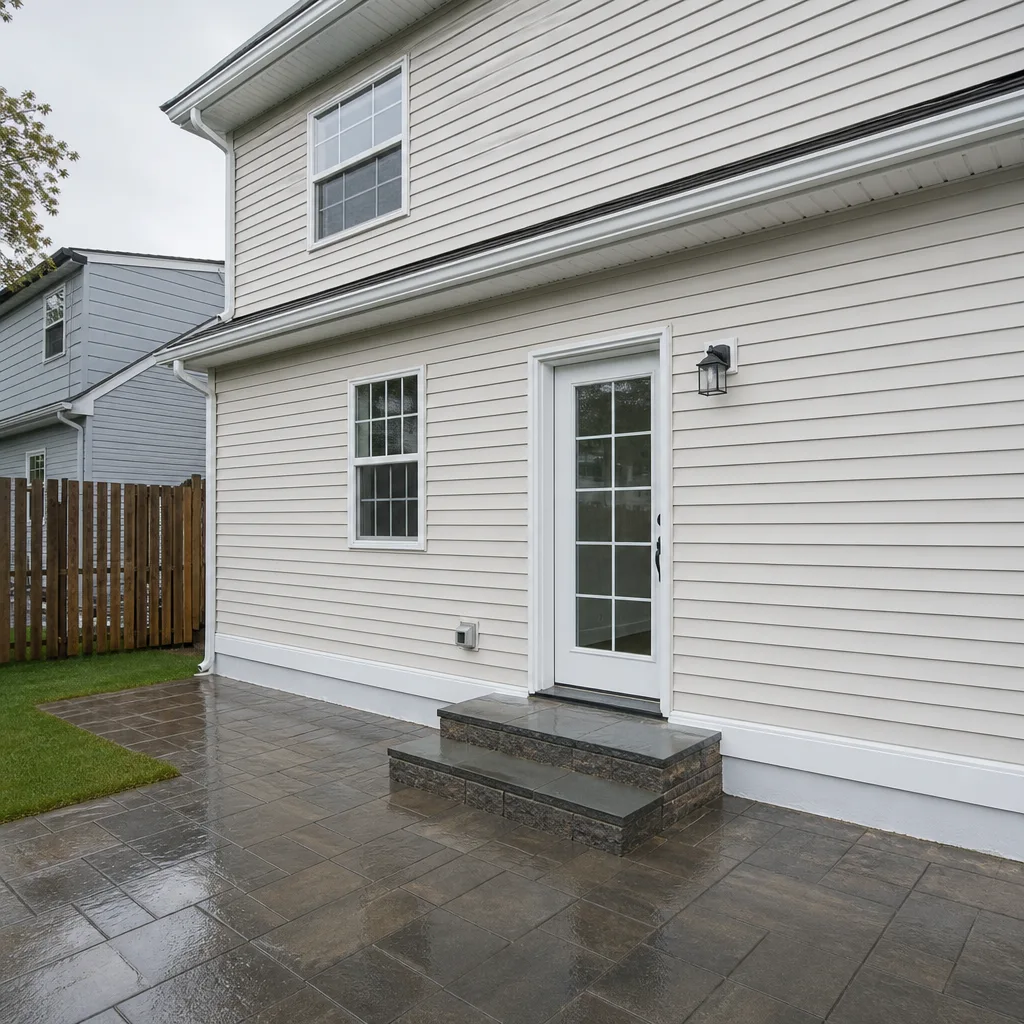 After
After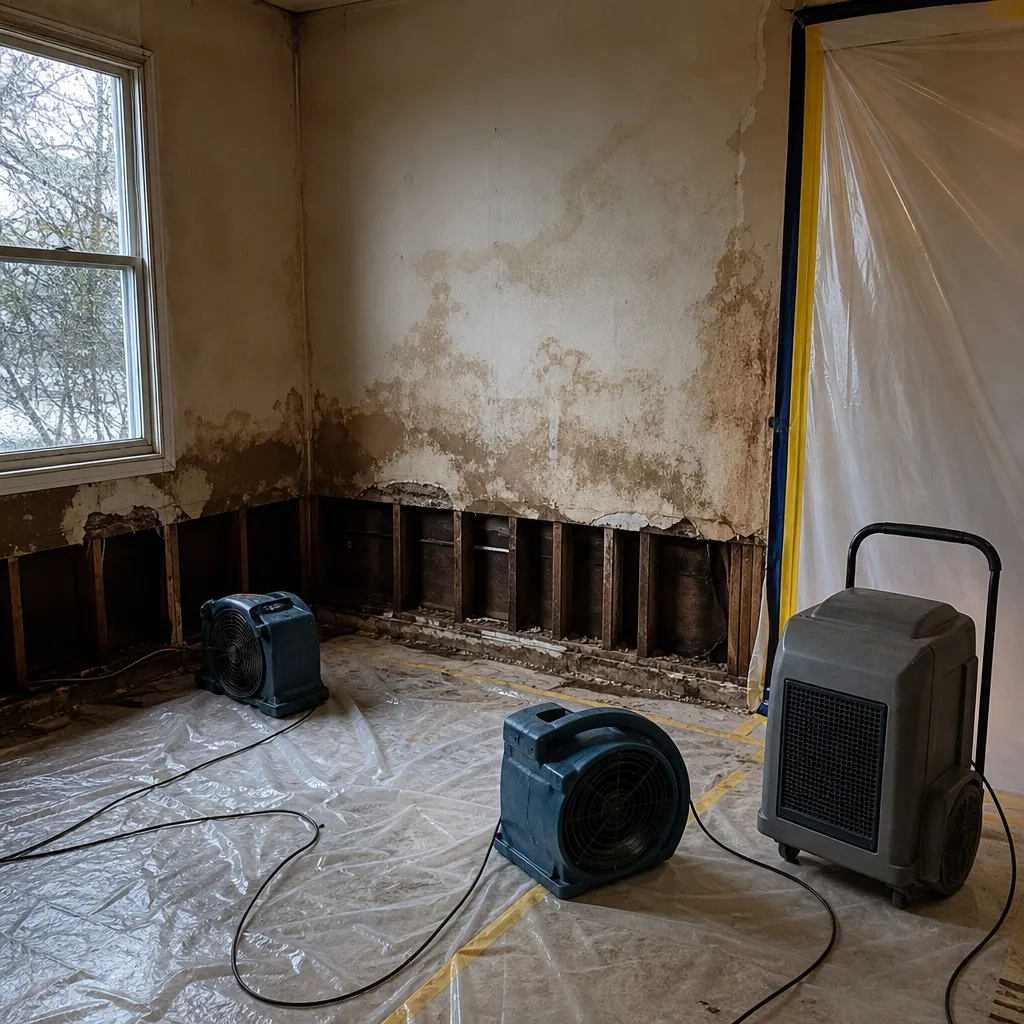 Before
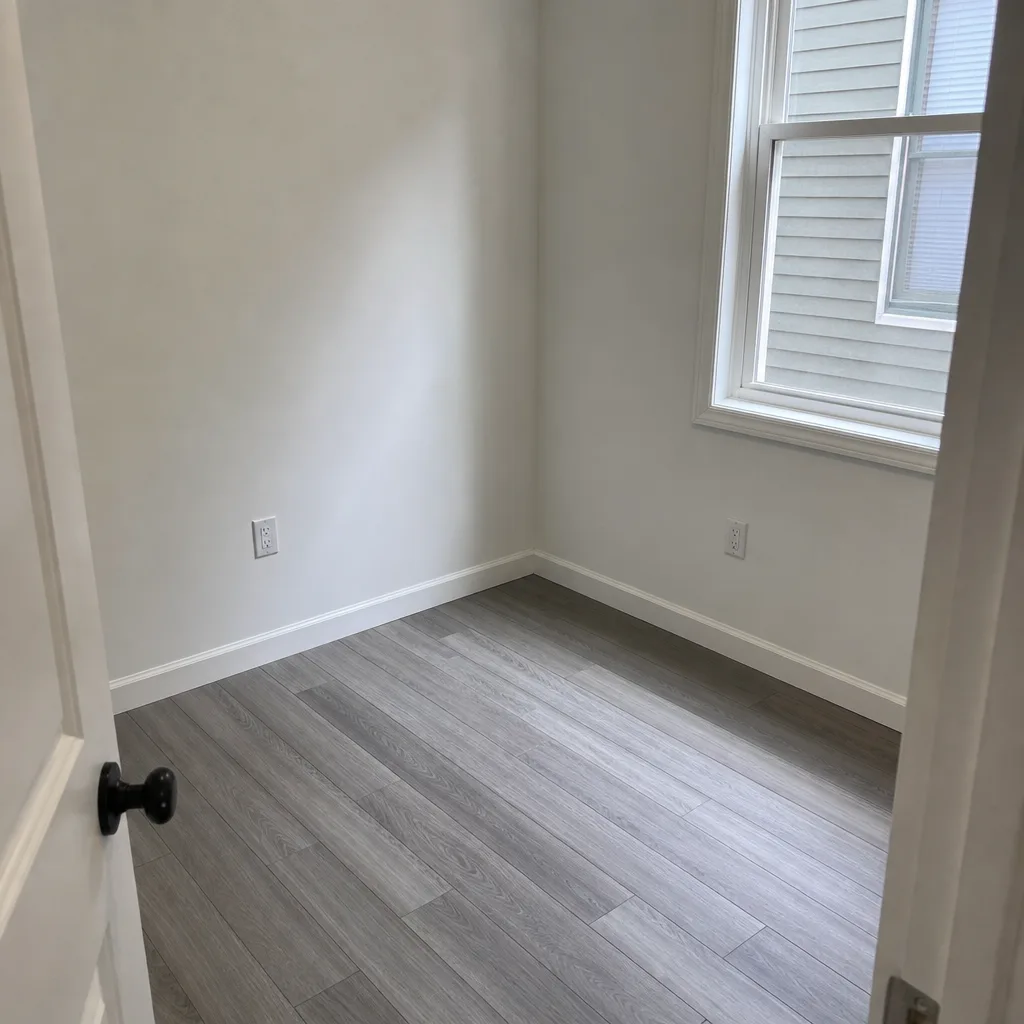 After
After24/7 Emergency Mold Remediation in Midtown Manhattan
Mold remediation in Midtown Manhattan typically costs $1,800-$6,500 depending on how far the colony has spread through wall cavities and riser chases, and whether containment of multiple floors is required. Most jobs in the district can be started same-day, but high-rise access rules sometimes push equipment staging to the next morning. If you’ve found mold, call (363) 666-2319 right now. Wade answers his own phone, and he’ll tell you straight whether you need full remediation or just a targeted cleaning. The first hour matters because mold keeps releasing spores into your air every minute it sits undisturbed.
Wade’s Restoration crews serve Midtown Manhattan around the clock. We know the freight elevator windows, the building superintendents, and the access quirks that can turn a small mold patch into a 30-floor problem if you bring in a crew that doesn’t know the district. One call gets you a live person, not a queue.
Understanding Mold Remediation Severity in Midtown Manhattan Properties
Mold severity in Midtown Manhattan breaks down differently than in a single-family house. In a house, mold stays roughly where the water went. In a 35-story tower, mold from a 27th-floor pipe leak doesn’t stay on the 27th floor. Water follows riser chases, conduit runs, and pipe sleeves through the slab, and by the time visible staining shows up on floor 19, the source breach might have happened three weeks earlier eight floors above. That’s why we don’t just treat the visible colony. We trace the moisture path.
Most Midtown buildings fall into two categories. Pre-war towers from the 1920s through the 1940s carry original cast-iron waste lines and district-steam risers that still work but sweat inside chases. That interstitial condensation creates exactly the dark, warm, humid environment mold needs, even without an active leak. Post-war curtain-wall buildings have a different failure pattern: sealant joints fail, wind-driven rain gets forced through at floors 20 and above, and the water runs down the inside face of the glass until it pools on a spandrel beam or a pipe chase. Ground-level inspections never catch this. Containment, air scrubbing, and clearance testing have to be planned around the building’s actual anatomy, not a generic checklist.
Why Midtown Manhattan Property Owners Choose Wade’s Restoration
- 45-minute response commitment – Wade heads out the moment you call. If the job’s in Midtown Manhattan, he’s usually on site inside the hour, moisture meter in hand.
- 24/7 live answer, always a real person – No answering service, no voicemail tree. Wade answers his own phone, even at 2 AM when a riser pipe lets go.
- IICRC-certified crews – Our people hold WRT and AMRT certifications. They know the difference between a surface bloom and a cavity infestation.
- Free visual inspection – Wade will look at the affected area, tell you what he sees, and hand you a written scope. No charge for that.
- Direct insurance billing – We photograph everything, log every moisture reading, and talk to your adjuster directly. You don’t relay messages between two sides.
- One team from start to finish – The same crew that sets containment handles the final clearance testing. No handoffs, no gaps in the chain.
Our Mold Remediation Process
Inspection & Assessment
We start with thermal imaging and hygrometer readings across the visible colony AND the areas you haven’t seen yet. In Midtown Manhattan, that means checking the riser chase above and below the affected floor, tapping the chase access doors, and checking adjacent tenant spaces.
Containment & Stabilization
HEPA air scrubbers go in first, negative air pressure established, and 6-mil polyethylene containment set up. We seal the work area properly because mold spores travel through hallways and HVAC returns faster than people realize.
Drying & Dehumidification
Dri-Eaz desiccant dehumidifiers and Phoenix air movers go to work. We take moisture readings every single day and hand you the full log when the job ends. That’s a Wade’s Restoration habit almost nobody else in this trade does.
Cleaning & Sanitization
Non-porous surfaces get HEPA-vacuumed and wiped with antimicrobial treatments. Porous materials that can’t be salvaged get bagged and removed under containment. We treat the affected materials for what they are, not what a brochure says.
Moisture & Humidity Control in Risers and Chases
Midtown-specific step. We open the chase access panels and check for interstitial condensation around district-steam risers and cast-iron waste lines. If we don’t fix the humidity source, the mold comes back.
Repairs & Restoration
Once the structure is dry and the mold is gone, we rebuild what was removed. Drywall, insulation, baseboards, paint. We leave the space clean and ready for occupancy, with clearance testing data in hand.
Need Emergency Mold Remediation in Midtown Manhattan Now?
Crews minutes away, answering live 24 hours a day. The sooner we start, the less it costs.
Working With Your Insurance Company
Most Midtown Manhattan mold claims start with a water event: a burst pipe, a failed sprinkler head, a backed-up waste line. The insurer covers mold remediation when it traces to a sudden and accidental water loss. The problem is proving it. We document from the first hour: photos of the original breach, thermal imaging of moisture spread, daily drying logs, and a line-item scope that matches the adjuster’s format. Wade deals with the adjuster directly, because when a 30-floor riser claims involves three different carriers and a half-dozen tenants, you need someone who speaks their language.
What We Provide Your Insurer
- Thorough documentation of the loss
- Photos of all damage, room by room
- Moisture readings and drying logs
- A detailed, line-item scope of work
- Direct coordination with your carrier
Built for Midtown Manhattan’s Loss Calendar
Midtown Manhattan mold losses follow a pattern you can set a watch to. January and February bring deep freezes that burst supply lines in unheated mechanical rooms and along perimeter walls. A 22nd-floor pipe lets go at 3 AM, water runs down the riser for hours before anyone notices, and by spring, mold has colonized the chase. March and April bring thaw cycles that stress aging roof membranes and parapet flashings. Summer thunderstorms dump wind-driven rain against curtain-wall sealant joints, forcing water behind the glass at floors 20 and above. And the nor’easter season from September through November tests every pre-war facade seam in the district. When the water gets in, the clock starts. The building doesn’t dry itself.
The vertical cascade problem is what makes Midtown Manhattan different from anywhere else in the metro. A single burst riser pipe, a sprinkler misfire, or an HVAC condensate overflow can send water traveling through stacked tenant suites, hotel rooms, or office floors across 10 to 30 levels within minutes. That creates multi-party claims, multiple insurance carriers, and a freight elevator scheduling nightmare. No suburban market deals with this at this scale.
Mold Remediation Across Midtown Manhattan’s Neighborhoods
Response routes in Midtown Manhattan shape how fast we can get equipment on site. Along Fifth Avenue and the Plaza District, pre-war residential hotels and office conversions share riser systems that haven’t been fully modernized in 80 years. A mold call there often starts not with visible growth but with a musty smell in a closet that abuts the riser chase. Over near Times Square, the older theater buildings and residential hotels run cast-iron waste lines that fail from the inside out, sending category 3 water down the stack. Bryant Park and the areas around 42nd Street mix office towers with old loft buildings, each with its own access restrictions. And in the Garment District, shared freight elevators and narrow service corridors mean our equipment sometimes has to wait for the 6 AM window. Wade’s crews know these routes because we’ve worked them for years. We plan around the building’s rules, not in spite of them.
Specialized Mold Remediation Services We Offer in Midtown Manhattan
Mold Inspection & Testing
Visual inspection plus moisture mapping and air sampling. In Midtown Manhattan, a proper inspection means checking the riser chase, not just the stained drywall. Wade will walk the apartment or suite with you and point out what he sees, like a neighbor who actually knows what he’s looking at.
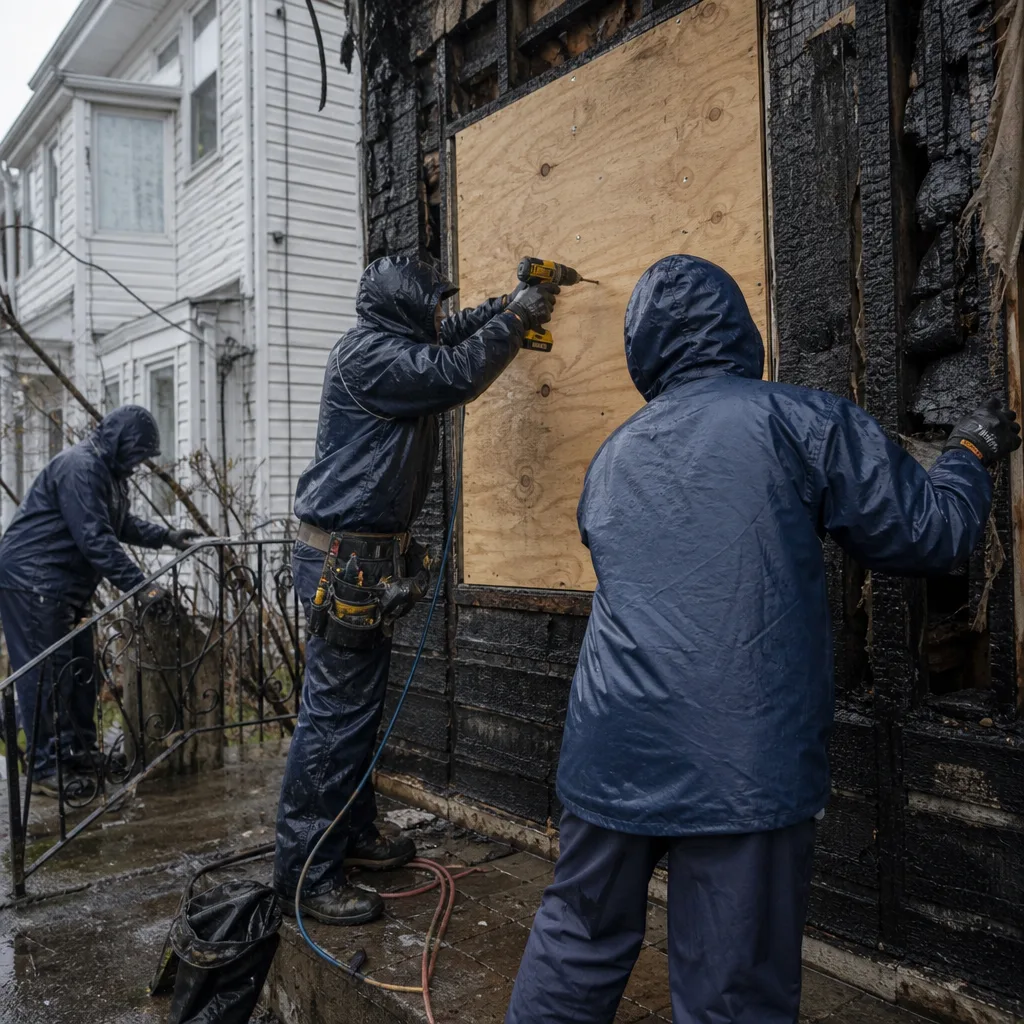
Mold Removal
Containment, HEPA scrubbing, antimicrobial treatment, and removal of contaminated porous materials. We handle the freight elevator logistics for you. If the building says no contractor access between 8 and 6, we stage equipment overnight and start at dawn.
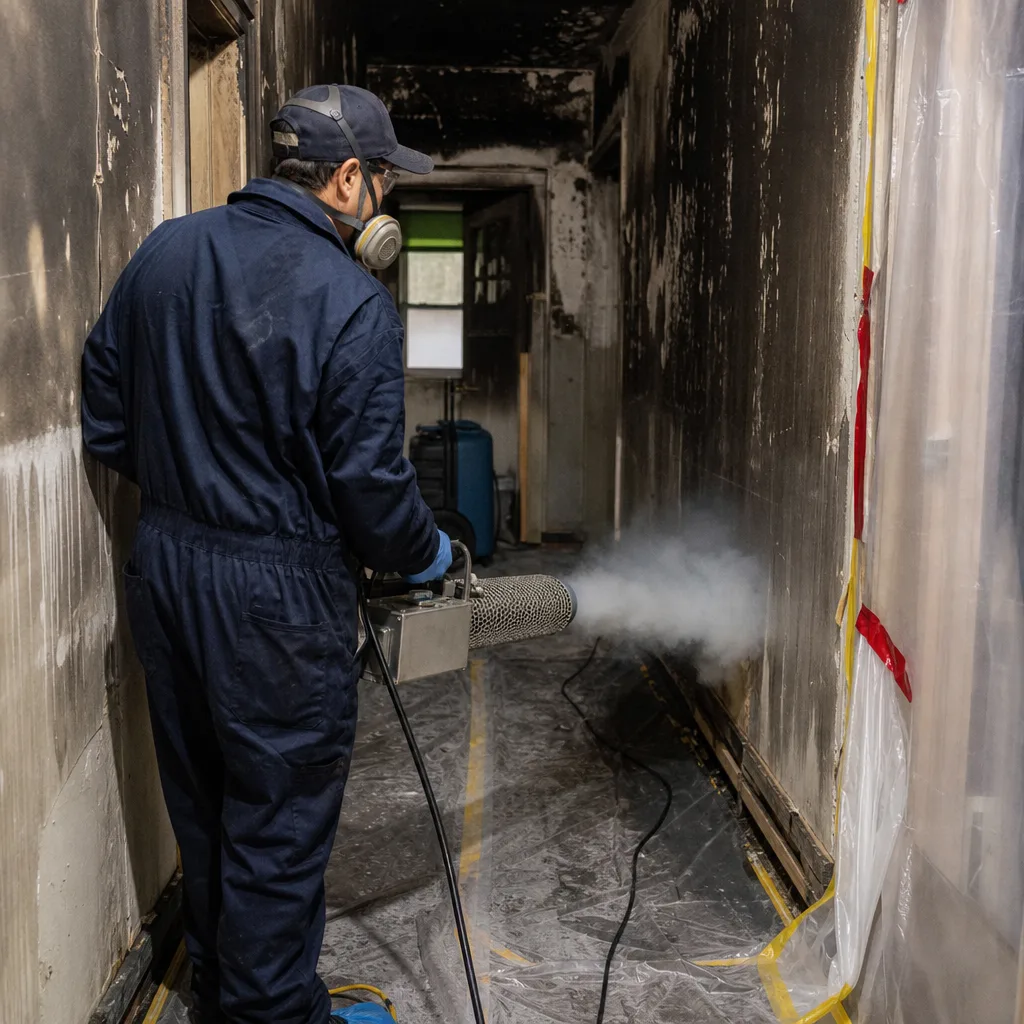
Black Mold Remediation
Stachybotrys chartarum is the one people fear, and for good reason. It loves the cellulose in drywall and the paper backing on insulation. In a pre-war Midtown high-rise with cast-iron waste lines, black mold often establishes behind baseboards where sewage backup water wicked up the gypsum before anyone saw it. Full PPE, full containment, clearance testing at the end. No shortcuts.
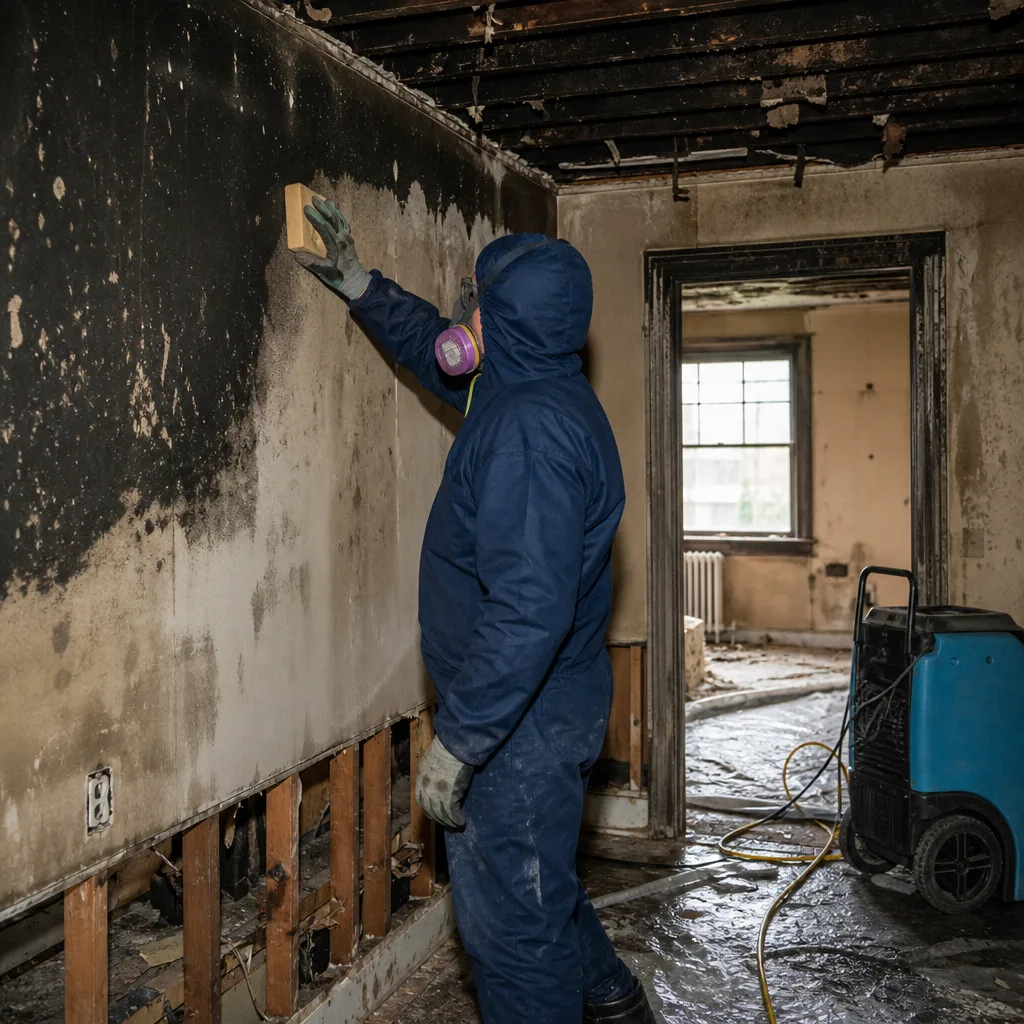
Air Quality Restoration
After the visible mold is gone, the air still carries spore load. We run HEPA air scrubbers under negative pressure until clearance samples come back clean. For a Midtown office suite, this is the step that lets you reopen without tenants complaining about a smell.
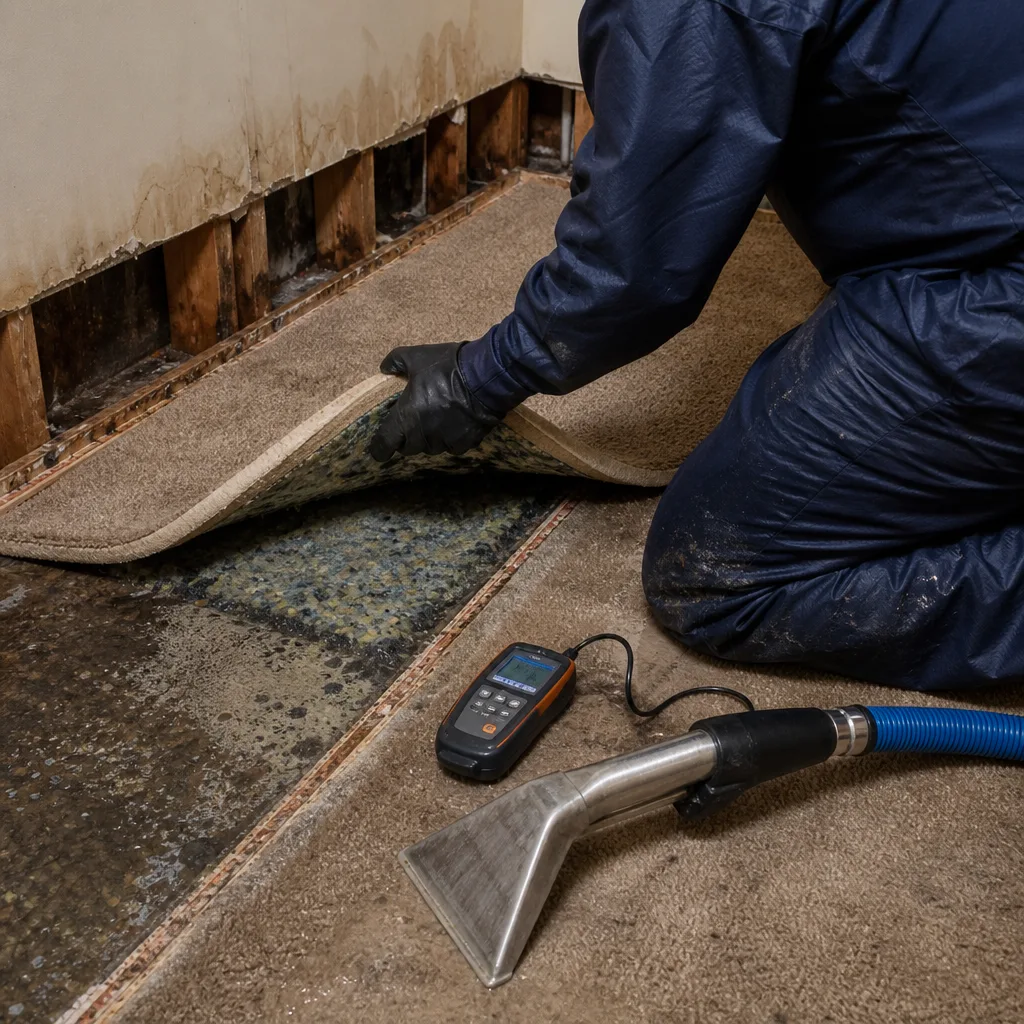
Crawl Space Treatment
Yes, Midtown Manhattan has crawl spaces: the sub-basement utility tunnels, pipe galleries, and mechanical chase levels in pre-war buildings. They’re dark, humid, and forgotten until a mold problem surfaces four floors above. We treat those spaces directly.
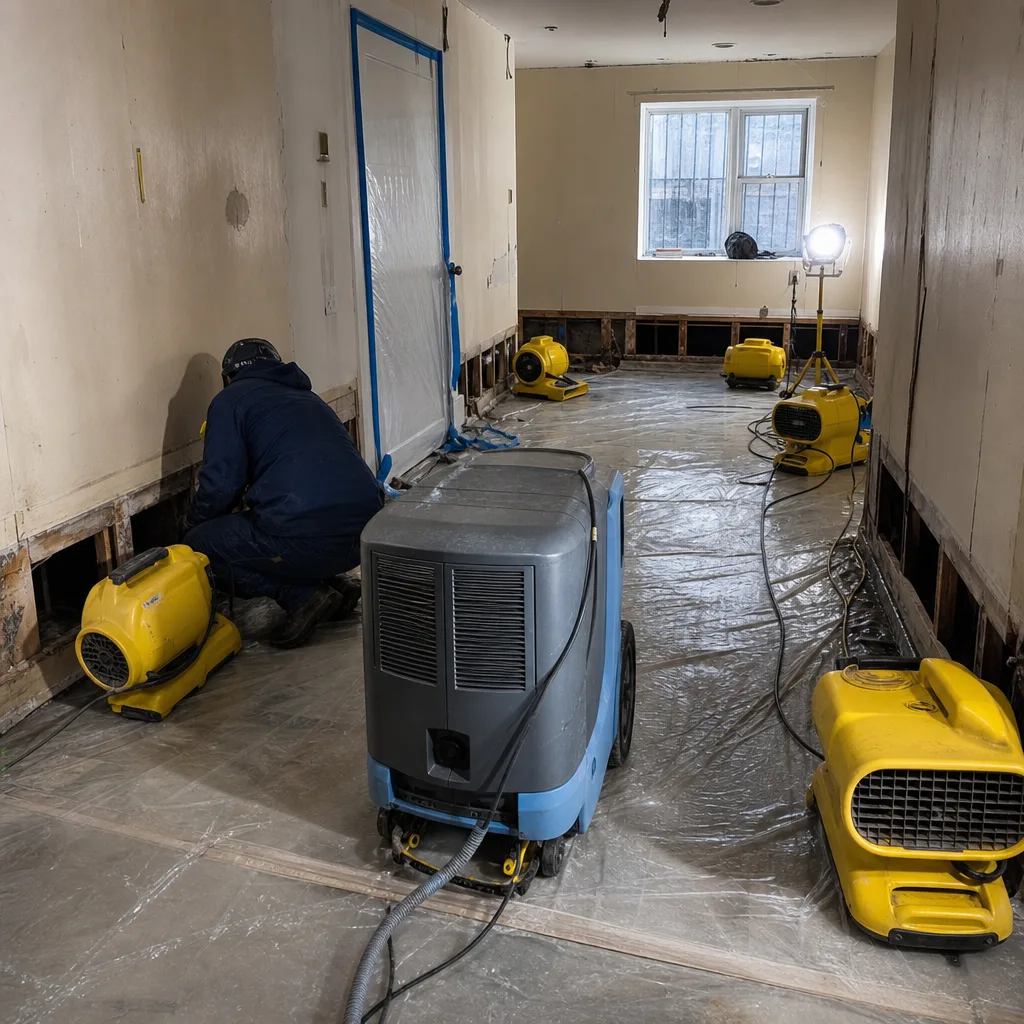
Moisture & Humidity Control
The long-term fix. Midtown’s district-steam risers and shared chases create condensation cycles that reactivate mold after visible treatment. We map the humidity sources, install or adjust ventilation, and give you a plan that keeps mold from coming back. This is the step generic remediation companies skip.
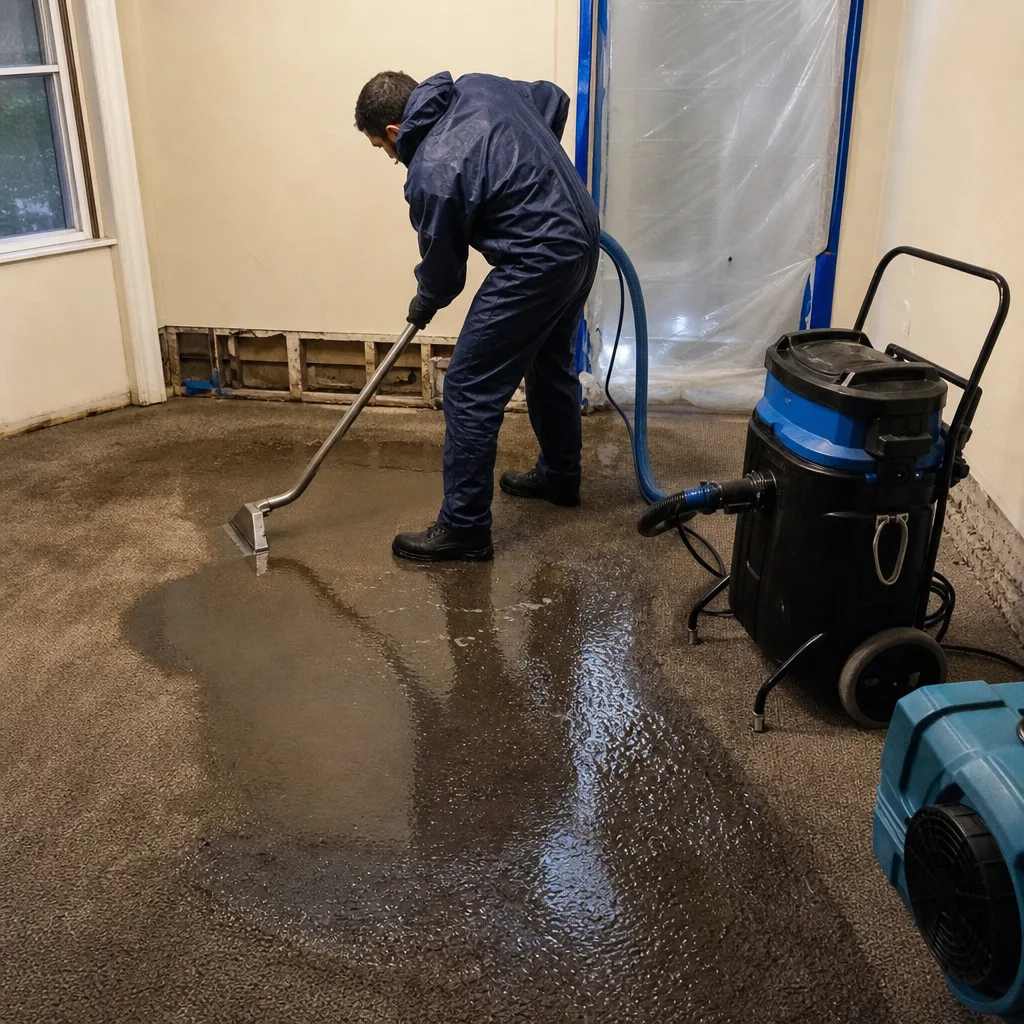
What happens when you call
- 1
A real person answersNo phone trees - you reach a local pro.
- 2
You get an upfront price rangeHonest numbers before anyone is dispatched.
- 3
A background-checked tech heads outLicensed & insured, dispatched right away.
- 4
You approve before work beginsNothing starts until you say go.
Mold Remediation Costs in Midtown Manhattan, NY
For a single bathroom closet with surface mold and no chase penetration, expect $1,800-$3,200. A full apartment or office suite with containment, multiple HEPA scrubbers, and chase access runs $4,500-$9,500. The vertical cascade jobs, where water traveled from an upper floor through a riser and mold colonized multiple levels, push $12,000-$25,000 or more, because each floor needs containment and clearance testing. What moves the price: how many floors are affected, whether the freight elevator restricts staging hours, how much porous material has to be removed, and whether the chase itself needs interior access. Insurance covers most Midtown mold claims that trace back to a covered water loss. For anything out of pocket, Wade gives you a written scope before work starts, so the number doesn’t change when the crew walks through the door. Call (363) 666-2319 for a free visual inspection and a straight answer.
We Also Serve Cities Near Midtown Manhattan
Wade’s Restoration handles mold remediation throughout the metro. If you’re in Williamsburg, East New York, the Financial District, or Lower Manhattan, the same live-answer phone line and the same IICRC-certified crews are available 24 hours a day. Different buildings, same method: find the moisture source, treat the whole path, document everything.
Serving Midtown Manhattan, NY - Our Local Coverage Area
We’re based in the Midtown Manhattan area and know this community well. Use the map below to see our service coverage - if you’re nearby, we can almost certainly help.
Midtown Manhattan Mold Remediation Questions, Answered
How do you access mold in a Midtown high-rise when the freight elevator is restricted to off-hours?
We plan around the building’s blackout windows. Most Class-A towers in Midtown Manhattan restrict contractor access to service elevators between roughly 8 AM and 6 PM on weekdays. That means we stage air movers and desiccant dehumidifiers in the lobby Tuesday afternoon, then start structural drying at dawn Wednesday when the freight elevator comes available. The drying timeline accounts for this delay from the start. Call (363) 666-2319 and Wade will tell you exactly how the schedule works for your building.
Can mold from a burst riser pipe in a 40-story tower spread to floors below the leak?
Yes, and it almost always does. Water from a burst riser travels down through the chase, following pipe sleeves, conduit, and slab penetrations. Mold can establish in floor cavities 10, 20, even 30 levels below the original breach before visible staining appears. That’s why we inspect the entire vertical path, not just the floor where the pipe failed.
What’s the right drying protocol for a pre-war building with cast-iron waste lines?
Cast-iron waste lines rust from the inside and eventually crack or separate at the hub. When they leak, category 2 or 3 water runs down the riser chase. The right protocol includes opening chase access panels, removing wet insulation around the stack, applying antimicrobial treatment to the chase interior, and running desiccant dehumidifiers until wood and drywall below 15% moisture content. Skipping the chase means the mold comes back.
Do I need to move out during black mold remediation in a Midtown office suite?
Usually not for the whole space, but the contained work area is off-limits while HEPA scrubbers run under negative pressure. For an office suite, we can often isolate one quadrant at a time and keep the rest of the floor operational. For residential units in pre-war buildings, you may want to stay elsewhere for 24 to 48 hours while we cut out contaminated drywall. Wade will give you a straight answer after the free inspection.
How do you prevent mold from returning after a high-rise facade leak is fixed?
The key is moisture mapping after the leak repair is done. We check the affected wall cavities with thermal imaging and hygrometers, not just a visual pass. If the facade fix didn’t stop the water, we’ll find it before you re-occupy the space. We also treat the cavity with antimicrobial after drying, and we document every reading so you have proof the job was done right. That’s the 90-Day Done Right Promise in action: if it’s not right, Wade makes it right.
How fast can you get to a Midtown Manhattan mold job?
Wade picks up the phone himself, day or night, and he can usually be on site within 45 minutes for an emergency. The full crew and equipment follow shortly after, subject to the building’s access rules. The quicker you call, the more we can save.
What do I do in the first 30 minutes after finding mold in a Midtown building?
Don’t disturb it. Don’t wipe it, don’t paint it, don’t run a box fan near it. Disturbing a mold colony releases spores into the air, and that makes the problem bigger. Close the door to the room if you can, call (363) 666-2319, and let Wade walk you through what to do based on what you’re seeing.
Are your crews certified for mold work in New York?
Yes. Our people hold IICRC WRT and AMRT certifications, and the company is RIA-affiliated and IFA-recognized. We use Dri-Eaz, Phoenix, Injectidry, XPOWER, and B-Air equipment. No subcontractors in unknown vans. The people who show up are the people Wade hired and trained.
Written by Wade Ferris, Owner at Wade’s Restoration, answering his own phone for Midtown Manhattan since day one.