
Quick Summary
Securing water damage insurance coverage depends on proving that structural damage resulted from sudden and accidental perils rather than excluded gradual leaks or outside flooding. Wade's Restoration bridges the gap between property owners and adjusters by delivering rapid emergency mitigation alongside the comprehensive moisture logs and photographic evidence needed for claim approval. Readers will understand how to navigate policy requirements effectively and can contact Wade's Restoration for a free visual inspection and expert claim documentation support.
Water Damage Insurance Coverage: How to Document and File a Claim
Documenting a water damage claim thoroughly is critical when seeking coverage under a property insurance policy. When a plumbing line fails or water intrudes into a building, property owners face immediate decisions. How your policy responds depends on your specific coverage terms, deductibles, exclusions, and whether the water intrusion meets the policy definition of sudden and accidental damage.
Claim evaluations depend on the evidence presented regarding the cause and timing of the water intrusion. Photographs, records, moisture measurements, estimates, and prompt reporting can help document the loss, subject to the policy and the adjuster’s investigation. Having clear documentation of unaffected baseline areas and affected building materials helps establish the timeline and scope of damage during the claim review process.
What Does Water Damage Insurance Coverage Actually Include?
What Does Water Damage Insurance Coverage Actually Include? in brief: Sudden and accidental water damage, such as damage resulting from a burst pipe, appliance supply line failure, or sudden storm-related opening, may be covered under standard homeowners insurance, subject to exclusions, limits, deductibles, maintenance issues, and policy-specific freezing provisions. Standard policies generally exclude continuous seepage, deferred maintenance, flood damage from groundwater, rain runoff, snowmelt, rivers, or outside flooding (which generally requires separate flood coverage), and sewer, drain, or sump backups unless an endorsement or separate coverage applies.[5]
Understanding what an insurance policy covers requires separating the origin of the water from the resulting damage. In many standard policies, coverage may apply to repairing or drying damaged structural finishes and personal property from a covered loss, while the failed plumbing part itself may be considered an uncovered maintenance item.
The Sudden and Accidental Standard
Sudden and accidental water damage, such as damage resulting from a burst pipe, may be covered under standard homeowners insurance, subject to exclusions, limits, deductibles, maintenance issues, and policy-specific freezing provisions. Conversely, gradual damage, wear and tear, or continuous leaks that occur over an extended period are generally excluded under standard property policies. Providing moisture readings, repair invoices, and photographs can help substantiate that the damage occurred suddenly.
Key Differences Between Water Damage and Flood Coverage
Standard homeowners insurance generally does not cover flood damage from groundwater, rain runoff, snowmelt, rivers, or similar outside flooding, which generally requires separate flood coverage.
According to the Federal Emergency Management Agency, as of March 31, 2025, the National Flood Insurance Program (NFIP) protected approximately $1.3 trillion in assets through nearly 4.7 million active policies across more than 22,700 communities in all 50 states and six territories. Outside flooding, surface runoff, or rising bodies of water generally require coverage through a separate flood policy.[1]
Emergency Water Damage Restoration
Emergency restoration focuses on stabilizing building structures, removing standing water, and drying affected materials to prevent further deterioration.
Rapid Extraction and Structural Mitigation
Property owners should take reasonable emergency measures to prevent additional damage, photograph and document the condition, preserve receipts and estimates, and notify the insurer or agent promptly for instructions. Documenting mitigation steps creates a clear record showing that prompt action was taken to protect the property.
Direct Insurance Claim Coordination
According to specialists at Wade’s Restoration, insurance adjusters evaluate claims based on itemized estimates, drying logs, and photos documenting the loss. FEMA records show that nearly one-third of National Flood Insurance Program claims filed between 2014 and 2024 originated in areas outside mapped high-risk flood zones. Clear documentation of the water’s source and path helps clarify whether an event involves internal water damage, a backup, or outside flooding.[2]
Flood Damage Restoration
Flood restoration addresses external water intrusion caused by surface runoff, overflowing waterways, or heavy rain accumulation.
NFIP Claims vs Standard Property Policies
The National Flood Insurance Program processed more than 2.7 million claims between 1968 and 2025. Data indicates that approximately 4% of U.S. homeowners carried flood insurance in 2025. Because standard homeowners insurance generally excludes outside flood events, losses involving surface runoff or rising water must generally be filed under a separate flood policy. If an incident involves both wind-driven water and ground flooding, detailed documentation of entry points and water levels is critical.[3]
Managing Storm Surges and Ground Water Infiltration
Groundwater infiltration often requires water extraction, drying of structural assemblies, and removal of non-salvageable materials, followed by cleaning and dehumidification to restore safe indoor conditions.
Mold Remediation
Need water damage insurance coverage?
We’re available now - call for a fast, free estimate.
Coverage for mold remediation varies significantly by policy and typically depends on whether the mold resulted directly from a covered sudden and accidental water loss.
Coverage Caps and Policy Limitations
Many property policies include specific limits, endorsements, or exclusions regarding mold remediation. Under the National Flood Insurance Program, flood coverage limits reach up to $250,000 for residential buildings and $500,000 for non-residential buildings, subject to NFIP rules, deductibles, and limitations regarding secondary damage.[4]
Preventing Denials Through Prompt Moisture Control
Beginning drying measures promptly and maintaining daily moisture records helps show that the property owner took appropriate steps to address moisture before secondary mold growth could develop.
Sewage Cleanup
Sewage and wastewater backups present health concerns and require specialized containment and sanitization procedures.
Category 3 Water Hazards
Wastewater from drains or sewers can contain contaminants. Mitigation typically involves extracting wastewater, removing unsalvageable porous items such as drywall or carpeting, and sanitizing structural components prior to completing structural drying.
Sewer and Drain Backup Endorsements
Standard homeowners insurance policies generally exclude damage from backed-up sewers, drains, and sump pumps unless an endorsement or separate coverage applies. Adding this optional endorsement provides specific coverage for backup-related cleanup and repairs up to the policy’s endorsed limit.
Fire and Smoke Damage Restoration
Fire suppression efforts often result in substantial water accumulation inside a structure, compounding smoke and fire damage.
Extinguishing Water Damage Combined with Soot Mitigation
Water used during firefighting must be extracted quickly while soot and smoke residues are stabilized. Prompt mitigation helps minimize staining, corrosion, and structural deterioration.
Restoring Structural Integrity and Air Quality
Restoration teams dry structural framing, clean contaminated surfaces, and filter indoor air to address both moisture and odor. Itemized documentation helps ensure all related fire, smoke, and suppression water damages are accounted for under the covered peril.
Common Local Water Scenarios: Burst Pipes, Roof Leaks, and Prewar Flooding
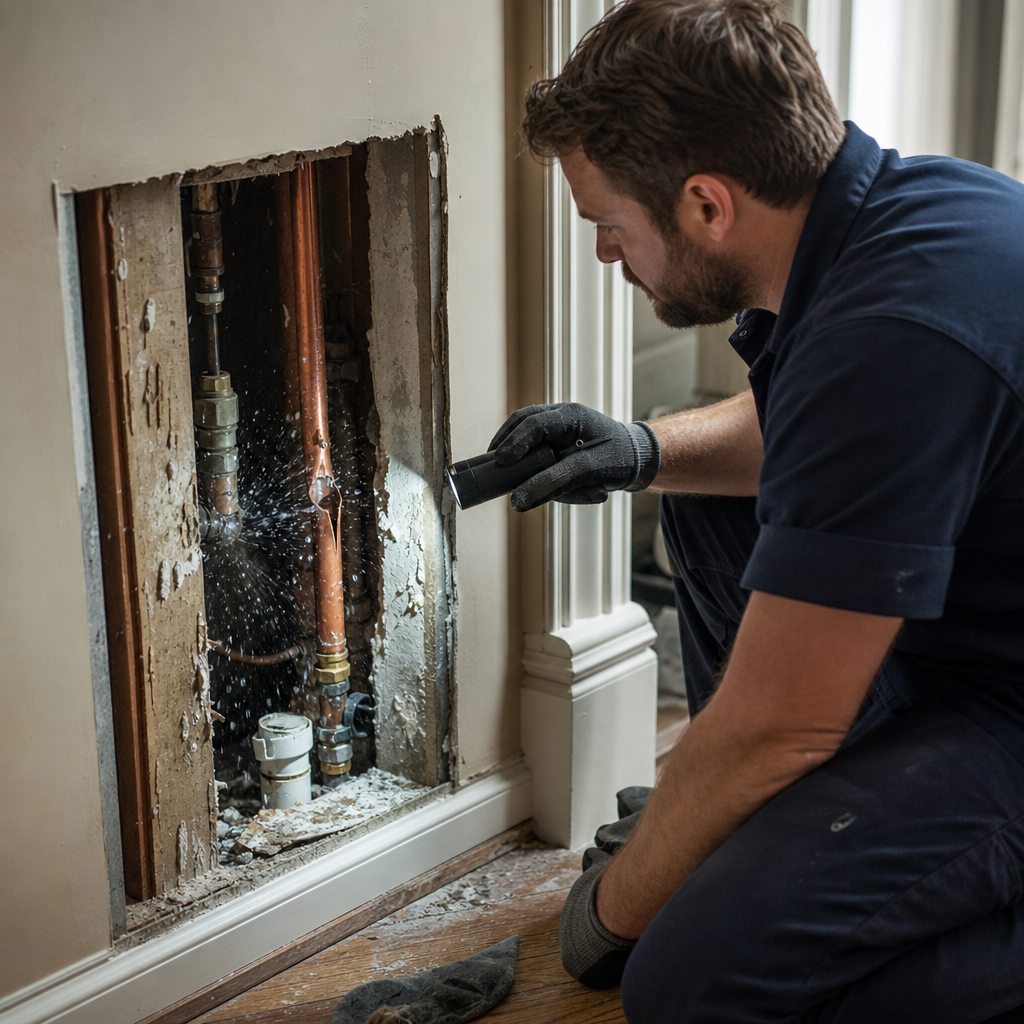
Different water loss scenarios present specific documentation and coverage considerations.
Burst and Frozen Pipes
Sudden and accidental water damage resulting from a burst or frozen pipe may be covered under standard homeowners insurance, subject to exclusions, deductibles, maintenance conditions, and policy-specific freezing provisions (such as maintaining adequate heat in the building).
Flat Roof Leaks and Exterior Parapet Seepage
If a roof leak results from a sudden, covered event such as storm damage, resulting interior water damage may be covered. If water intrudes due to long-term wear, deterioration, or neglected maintenance, the resulting damage is often excluded under standard policies.
Basement Flooding and Ground-Level Inundation
Basements are vulnerable to multiple water sources, including internal plumbing ruptures, sewer or drain backups, and outside surface runoff. Identifying the origin of the water determines whether a claim falls under standard property coverage, an optional backup endorsement, or a separate flood insurance policy.
Parts and Components Repaired and Restored
Insurance may cover reasonable restoration and repair costs when they address damage from a covered peril, subject to limits, deductibles, exclusions, and insurer procedures.
Drywall, Lath, Plaster, and Ceilings
Depending on the extent of water penetration, structural wall and ceiling assemblies such as drywall or plaster may be dried in place or partially removed to access wet framing cavities.
Hardwood, Engineered Flooring, and Subfloor Joists
Flooring materials exposed to moisture may cup or warp. Specialized drying equipment can sometimes salvage hardwood and subfloors, though severely damaged materials may require replacement.
Kitchen and Bath Cabinets, Insulation, and HVAC Ducts
Moisture trapped beneath cabinetry or within ductwork requires targeted airflow to dry hidden spaces and prevent lingering moisture issues.
Insurance Documentation: Best Practices for Property Owners
Need water damage insurance coverage?
We’re available now - call for a fast, free estimate.
Thorough documentation helps substantiate repair scopes and supports a smoother claim process.
Understanding Policy Exclusions
Because policies generally exclude continuous leaks and deferred maintenance, documenting baseline conditions, moisture measurements, and repair history helps demonstrate that damage resulted from a sudden event.
Moisture Mapping and Photo Documentation
As recommended by Wade’s Restoration, take detailed photos and video of all affected areas, standing water, and damaged belongings before making major alterations. Preserve damaged pipe fittings or components whenever possible so the adjuster can examine them during inspection.
What Does Water Damage Insurance Coverage Cost?
The total cost of water damage restoration varies depending on the water source, area affected, and drying requirements. Out-of-pocket expenses depend on the policy deductible and coverage limits.
Restoration and Documentation Comparison
| Factor | Documented Emergency Mitigation | Unmitigated / Delayed Response | Out-of-Pocket Restoration |
|---|---|---|---|
| Documentation Quality | Moisture measurements, photos, and itemized records | Sparse, delayed, or limited documentation | Invoices without moisture or timeline records |
| Coverage Assessment | Evaluated under sudden and accidental policy terms | Higher risk of disputes regarding secondary damage | Full property owner expense |
| Cost to Owner | Applicable policy deductible and non-covered items | Deductible plus potential non-covered secondary costs | 100% of all mitigation, drying, and repair expenses |
Deductibles, Policy Limits, and Out-of-Pocket Considerations
Review your policy declarations page to understand your dwelling coverage limits, personal property limits, applicable deductibles, and any specific sublimits or endorsements for mold or water backups.
Step-by-Step Water Damage Claim Process
Following a clear sequence helps protect your property and document your insurance claim effectively.
-
Step 1: Immediate Safety and Damage Prevention
Ensure safety, shut off the main water valve if necessary, and take reasonable emergency measures to prevent additional damage.
-
Step 2: Document the Condition and Preserve Evidence
Photograph and document the damaged areas, preserve receipts and repair estimates, and keep damaged pipe sections or fittings available for inspection.
-
Step 3: Prompt Notification and Adjuster Review
Notify your insurance carrier or agent promptly for claim instructions, provide your documentation and estimates, and coordinate with the adjuster during their inspection.
Local Building Considerations and Urban Coverage
Water losses in multi-family or urban structures present specific coordination challenges.
Structural Mitigation in Multi-Family and Historic Buildings
In attached or multi-unit buildings, water can travel along shared walls, ceiling plenums, and floor joists into adjacent units. Timely mitigation and moisture tracking help identify affected building assemblies and limit secondary structural deterioration.
Managing Multi-Unit and Commercial Intrusions
When water originates in one unit and affects neighboring apartments or commercial spaces, clear origin documentation helps clarify whether damages fall under individual homeowners, unit owners, commercial, or master building insurance policies.
Frequently Asked Questions About Water Damage Insurance Coverage
Here are answers to common questions regarding water damage insurance claims.
Does homeowner insurance cover water damage from a burst pipe?
Water damage resulting from a burst pipe may be covered under standard homeowners insurance when the failure is sudden and accidental, subject to policy terms, limits, deductibles, maintenance conditions, and freezing provisions.
What types of water damage are not covered by standard insurance?
Standard homeowners insurance generally does not cover continuous or gradual leaks, flood damage from groundwater, rain runoff, snowmelt, rivers, or outside flooding, or sewer, drain, and sump backups unless an endorsement or separate coverage applies.
How do I file a water damage insurance claim step by step?
First, address immediate safety and take reasonable emergency measures to prevent additional damage. Second, photograph and document the damage thoroughly and preserve receipts. Third, notify your insurer or agent promptly for claim instructions and submit supporting documentation.
Will insurance pay for professional water damage restoration?
Insurance may cover reasonable restoration and repair costs when they address damage from a covered peril, subject to limits, deductibles, exclusions, and insurer procedures.
Is water damage from a leaking roof covered by insurance?
Interior water damage from a roof leak may be covered if caused by a sudden, covered storm peril, subject to policy limits, deductibles, and exclusions regarding wear and tear or deferred maintenance.
What is the difference between flood damage and water damage for insurance?
Standard homeowners insurance generally covers sudden and accidental internal water releases or covered top-down storm damage, but generally does not cover flood damage from rising groundwater, surface runoff, or overflowing bodies of water, which generally requires separate flood insurance.
Can I choose my own restoration contractor instead of the insurer’s vendor?
Policyholders generally have the option to select their own licensed and qualified restoration contractor, such as Wade’s Restoration, subject to policy terms, reasonable cost standards, and insurer claim procedures.
What if the insurance adjuster undervalues my water damage loss?
If an initial estimate does not fully cover necessary repairs, you may submit supplemental estimates, additional photographs, and moisture documentation to the insurer for review under the policy’s claims process.
Need water damage insurance coverage?
We’re available now - call for a fast, free estimate.
Sources
- national flood insurance program – media toolkit – agents.floodsmart.gov (2025)
- What is My Flood Risk – floodsmart.gov (2024)
- flooded (a report by fema) – agents.floodsmart.gov (2023)
- Financial Institution Letter – fdic.gov (2014)
- How FEMA flood insurance works – Yahoo Finance – finance.yahoo.com (2023)
Frequently Asked Questions
How do insurance adjusters determine whether water damage is sudden or gradual?
Adjusters look for indicators such as rotted framing, rusted fasteners, and long-term staining to identify excluded continuous leaks. Wade's Restoration supports claim approval by providing detailed moisture logs, baseline readings, and photographic evidence establishing that the intrusion was sudden and accidental.
How quickly must water mitigation begin to avoid insurance claim denials for mold?
Most insurance policies require policyholders to take reasonable steps immediately, as secondary mold can begin growing within 24 to 48 hours of initial water contact. Wade's Restoration deploys rapid structural drying and maintains daily psychrometric logs to prove timely mitigation and prevent secondary damage exclusions.
Who pays for water damage repairs if a leak originates from an adjacent or upstairs unit?
Responsibility typically falls on the neighboring owner's liability coverage if negligence is involved, or between individual unit policies and the master building policy. Wade's Restoration helps navigate these complex multi-unit situations by delivering precise origin and path documentation to substantiate your claim across all involved insurance carriers.
About the author
 |
Sarah Miller Sarah Miller is a restoration specialist with over 8 years of experience in the property damage industry. She holds an Associate Degree in Construction Management from New York City College of Technology. Sarah specializes in educating homeowners and property managers on the complexities of water damage restoration and the associated costs, helping them navigate emergency situations with clarity. |
Water damage, flood, or mold emergency?
We’re available now - call for a fast, free estimate.
Call Now - Free Estimate