
Quick Summary
When severe water intrusion occurs, immediate emergency flood restoration is critical to halt rapid mold growth, subfloor degradation, and catastrophic structural damage. Wade's Restoration provides rapid water extraction, non-invasive restorative drying, and direct insurance claim advocacy to protect original building materials and prevent secondary financial loss. Readers will understand essential flood mitigation protocols and can call the 24/7 dispatch line immediately to secure a guaranteed 45-minute on-site response and a free visual inspection.
Emergency Flood Restoration: 45-Min Fast Water Extraction
When water pours across your floors, every minute matters. Our emergency flood restoration team mobilizes immediately to pump out standing water, protect your building’s framing, and stop microbial growth before it spreads. With a guaranteed 45-minute on-site arrival across Brooklyn and direct insurance billing, Wade’s Restoration connects you directly with a live specialist. We dispatch IICRC-certified crews straight to your door to secure your brownstone, apartment, or retail space before secondary damage drives up your repair costs.
Moisture seeps into subfloors, drywall, and structural joists in minutes. While national call centers leave you waiting on hold and uncertified handymen start tearing out walls without a plan, our technicians use precision extraction and targeted drying systems to save your original building materials. Through our Claim Clarity Program, we track structural moisture daily, handle reconstruction in-house, and bill your carrier directly. Call our 24/7 dispatch line right now to lock in your 45-minute response, schedule a free visual inspection, and protect your property with our 90-Day Done Right Promise. See also Water Damage Restoration Williamsburg – Call Now-10% Off – Same-Day Service – Free Estimate.
Rapid Response, Water Extraction, and Structural Drying
Emergency flood restoration involves immediate water removal, industrial structural drying, antimicrobial treatment, and complete property repair after pipe bursts, heavy storms, or sewer backups. Certified crews arrive within 45 minutes equipped with truck-mounted extraction pumps, commercial dehumidifiers, and thermal imaging cameras to remove water, protect structural framing, and stop mold growth.
Fast flood mitigation stabilizes your building through high-volume water extraction, psychrometric moisture mapping, and controlled structural drying. Instead of gutting historic architecture right away, restorative drying stabilizes floors and walls, halts rot, and keeps original trim and plaster intact.
What to Expect in the First 60 Minutes
When you contact our Brooklyn dispatch team, a crew heads to your property immediately. The first hour focuses entirely on site stabilization:
- Moisture Mapping: IICRC-certified technicians use thermal imaging cameras and non-invasive moisture meters to locate trapped water behind plaster, drywall, and baseboards without cutting into them.
- Bulk Extraction: High-powered truck-mounted units pull standing water directly from hardwood, tile, and concrete to stop saturation before it reaches the subfloor.
Immediate Actions While You Wait for Our Crew
If you are waiting for our team to arrive, take these safety measures if it is safe to do so:
- Shut off the main water valve if the flooding stems from a broken supply line or burst pipe.
- Turn off circuit breakers to flooded rooms to prevent electrical hazards. Never walk through standing water if the power is still on.
- Move small furniture, rugs, and valuables to dry areas or elevate items on aluminum foil blocks.
- Avoid using regular household vacuum cleaners to remove water, as they present a severe shock hazard.
Key Priorities During Initial Water Mitigation
Under the IICRC S500 Standard, mold and bacterial growth can take hold within 24 to 48 hours of indoor water exposure. Contractors without specialized certifications often jump straight to aggressive demolition, which inflates project costs and creates disputes with insurance adjusters. By contrast, professional emergency water damage restoration prioritizes targeted stabilization first. Our technicians log daily psychrometric readings, which are necessary when filing an insurance claim for water damage. Property owners consistently praise this data-backed approach for saving original floors and walls that other contractors wanted to tear out.
Restorative Drying vs. Immediate Demolition: Protecting Historic Urban Properties
Need emergency flood restoration?
We’re available now - call for a fast, free estimate.
Restorative drying focuses on saving original materials using high-capacity desiccant systems and controlled airflow. In Brooklyn brownstones, converted industrial lofts, and garden-level units, this approach preserves architectural character, shortens repair timelines, and keeps your insurance claim clear and defensible.
The Financial and Structural Cost of Unnecessary Gutting
Ripping out historic lath-and-plaster and antique heart pine flooring simply because it is wet causes unnecessary financial and architectural damage. This destructive approach adds weeks of repair delays and frequently leads to denied line items on insurance claims. Under the IICRC S500 Standard, dense plaster and structural timber can be dried in place if emergency flood restoration begins before mold develops. Field experience across Brooklyn shows that in-place drying saves property owners significant money and shortens insurance settlement timelines compared to full teardowns.
Targeted Cavity Drying and Hardwood Floor Preservation
Our technicians set up negative-pressure floor mats and cavity drying units to pull trapped moisture out from beneath subfloors without tearing up historic planks. Whether we are handling residential water cleanup or complex commercial flooding, non-invasive extraction protects original woodwork and keeps repair scopes realistic.
Restoration Methods Compared
| Feature | Precision Restorative Drying | Aggressive Demolition | Handyman Mitigation |
|---|---|---|---|
| Historic Material Preservation | High (Plaster and Hardwood Saved) | None (Full Tear-Out) | Low (Surface Level Only) |
| Reconstruction Downtime | Fast (Typically 3 to 5 Days) | Slow (4 to 8 Weeks) | Unpredictable |
| Insurance Claim Friction | Low (Backed by IICRC Moisture Logs) | High (Inflated Invoices) | High (Lack of Certified Data) |
Critical Structural Components: Symptoms, Mitigation, and Repair Rules
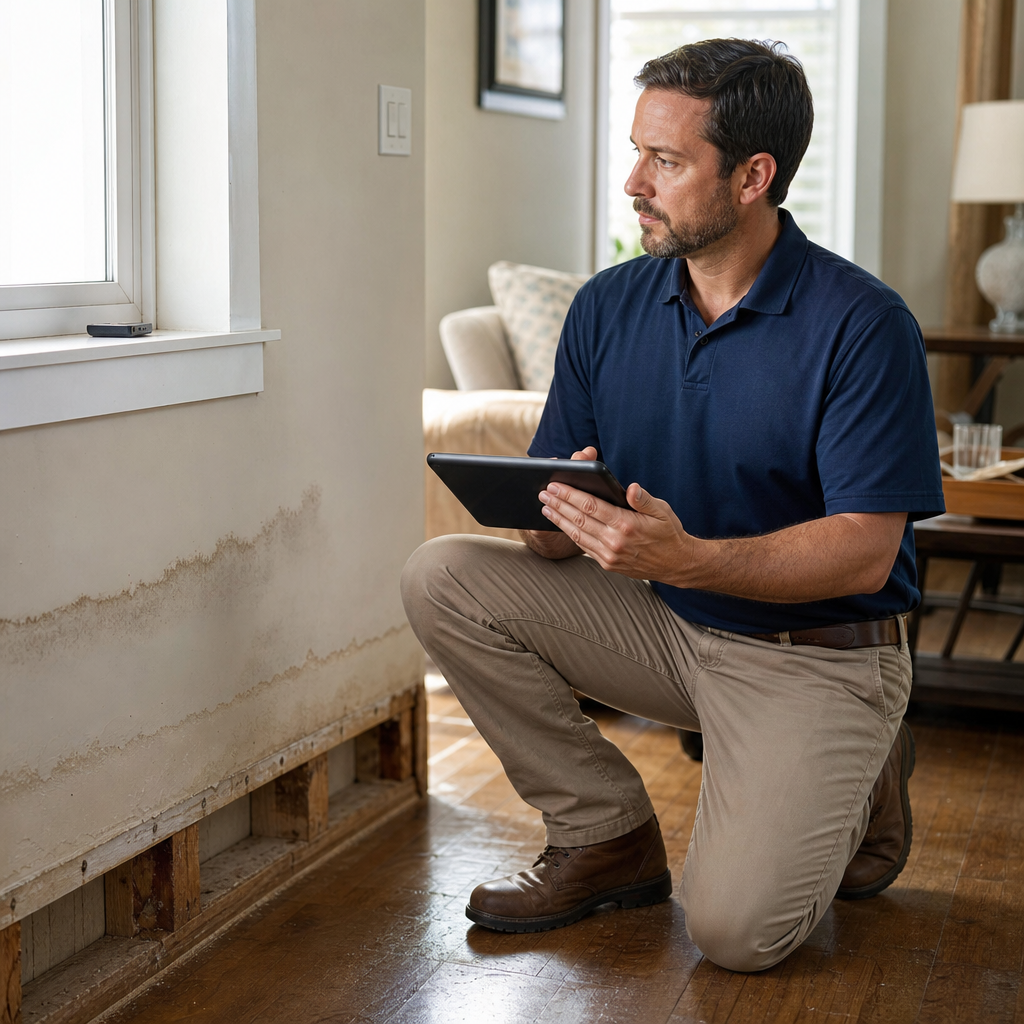
Managing structural flood damage means diagnosing how each material reacts before deciding whether to dry it in place or replace it. Tracking moisture levels inside wall assemblies and subfloors protects against rotted floor joists, sagging ceilings, and hidden mold colonies while providing clear records for your insurance adjuster.
Hardwood Floors, Subfloors, and Joists
Cupping, where board edges rise higher than the center, points to moisture underneath the floor. This can usually be corrected with high-pressure suction mats if treated early. Crowning, where the middle arches upward, indicates prolonged saturation. Structural framing must be dried to within 2 to 4 percentage points of its normal baseline moisture content to prevent permanent warping. Wade’s Restoration handles extraction, structural drying, and finish carpentry with our own in-house crews, eliminating the need to manage multiple subcontractors.
Plaster, Drywall, and Ceilings
Water trapped inside wall cavities breaks down drywall binders and rots interior studs over time. Instead of tearing down historic plaster, certified technicians vent baseboard areas with small, discreet access points to direct warm, dry air into the cavity, keeping the original walls intact.
Basement, Crawl Space, and Foundation Masonry
Storm runoff and sewer backups bring Category 3 black water into porous brick and concrete foundations. Safe mitigation requires complete extraction, hospital-grade antimicrobial sanitation, and commercial desiccant dehumidifiers to draw moisture out of masonry. Whether we are dealing with a flooded basement along Bedford Avenue or a multi-family property, local property owners rely on our start-to-finish cleanup and reconstruction support.
What Does Emergency Flood Restoration Cost?
Need emergency flood restoration?
We’re available now - call for a fast, free estimate.
Emergency flood restoration typically ranges from $1,500 to $10,000 or more, depending on the square footage affected, total water volume, and the contamination level. Starting extraction within the first 24 hours cuts overall costs substantially by stopping moisture from migrating deeper into framing and subfloors.
Breakdown of Typical Cleanup Fees
Mitigation costs rise with each hour of delay as clean water degrades into contaminated water. Wade’s Restoration avoids surprise bills by providing itemized estimates based on standard industry pricing models. Through our Claim Clarity Program, property owners receive free visual inspections, detailed moisture documentation, and direct billing support when filing an insurance claim for water damage.
Variables That Impact Total Project Pricing
- Water Contamination Category: Clean Category 1 water from supply lines requires less containment than Category 3 black water or sewage backups, which require biohazard protocols, antimicrobial treatments, and specialized disposal.
- Restorative Drying vs. Demolition: Preserving original plaster and hardwood through precision drying saves thousands of dollars compared to full-scale demolition and rebuilding.
- Secondary Hazards: Properties with trapped moisture inside multi-layer walls or beneath concrete slabs require specialized injection systems and extended drying equipment run-time.
Targeted drying prevents over-demolition, keeping out-of-pocket costs manageable and insurance claims moving forward without dispute.
Navigating Water Damage Insurance Claims Without Denials
Getting your insurance claim approved smoothly comes down to clear, objective documentation. Adjusters need measurable meter readings, thermal scans, and line-item scopes rather than vague demolition invoices. Fast payouts depend on organized drying logs that prove the building was stabilized according to industry standards.
Documentation: Moisture Logs and Thermal Scans
Insurance adjusters regularly question claims that lack measurable proof of dry baselines. Because water damage makes up a large share of property claims, carriers review mitigation invoices carefully. To prevent coverage disputes, our crews provide complete verification records:
- Initial Thermal Imaging: Infrared scans that map the exact boundary of moisture migration before work begins.
- Daily Psychrometric Logs: Daily tracking of relative humidity, ambient temperature, and grains per pound (GPP).
- Material Moisture Readings: Pin-meter readings demonstrating that framing and drywall have reached baseline dry standards.
Working Directly with Adjusters for Rapid Approval
Wade’s Restoration works directly with your insurance adjuster using standard Xactimate software. Through our Claim Clarity Program, adjusters receive the exact documentation they need to approve restorative drying over costly tear-outs. Direct carrier coordination keeps you from getting caught with unexpected out-of-pocket expenses.
Frequently Asked Questions
How quickly can an emergency flood restoration team respond?
Wade’s Restoration provides 24/7 local dispatch with a guaranteed 45-minute arrival time anywhere in Brooklyn. Getting extraction started within the first 24 to 48 hours is vital for preventing timber rot, structural settling, and microbial growth.
Does homeowners insurance cover emergency flood restoration?
Standard homeowners and commercial property policies typically cover sudden, accidental internal water damage, such as a burst pipe, water heater failure, or appliance leak. Flooding caused by outdoor weather events, rising groundwater, or storm surges generally requires a separate policy through the National Flood Insurance Program (NFIP) or a private flood carrier.
How much does emergency flood damage cleanup cost?
Costs generally range from $1,500 to $5,000 for standard extraction and drying, and can reach $10,000 or more for severe, large-scale black water or sewage events. Our itemized estimates focus on saving salvageable materials to avoid unnecessary tear-out costs.
What steps should I take immediately after a house flood while waiting for help?
First, ensure personal safety by shutting off electricity to affected rooms. Turn off the main water shutoff valve if the flooding is caused by an internal leak. Avoid walking through deep water, keep children and pets away, and take preliminary photos of standing water and affected items for your insurance record.
How long does the structural drying and restoration process take?
The active structural drying process typically takes 3 to 5 days using industrial desiccant dehumidifiers and high-velocity air movers. Complete reconstruction, if required for non-salvageable materials, can take anywhere from a few extra days to a couple of weeks depending on the scope.
How do restoration contractors prevent mold growth after flooding?
Certified specialists extract standing water rapidly, apply EPA-registered antimicrobial treatments to damp framing, and maintain industrial dehumidification to lower indoor relative humidity below 50%. This halts fungal germination within the critical 24-to-48-hour window and is supported by our 90-Day Done Right Promise.
Need emergency flood restoration?
We’re available now - call for a fast, free estimate.
Frequently Asked Questions
How does direct insurance billing work for emergency flood restoration?
Wade's Restoration manages the entire claims process through our Claim Clarity Program by submitting daily psychrometric moisture logs, thermal scans, and Xactimate estimates directly to your adjuster. This carrier coordination eliminates upfront mitigation friction and ensures your insurer approves precision restorative drying over costly, unnecessary demolition.
Can historic hardwood floors and plaster walls truly be saved after a flood?
Yes, if emergency extraction begins before mold colonizes within 24 to 48 hours, high-pressure drying mats and cavity injection systems can draw trapped moisture out without tearing down walls or ripping up flooring. Wade's Restoration specializes in non-invasive structural drying to stabilize and preserve historic materials to precise baseline standards.
What specific protocols are used if the flood involves Category 3 black water or sewage?
Category 3 water intrusions require biohazard containment, bulk extraction, hospital-grade antimicrobial sanitization, and deep masonry desiccant drying to eliminate dangerous pathogens. Wade's Restoration dispatches IICRC-certified technicians within 45 minutes to safely decontaminate the structure and complete required repairs under our 90-Day Done Right Promise.
About the author
 |
Sarah Miller Sarah Miller is a restoration specialist with over 8 years of experience in the property damage industry. She holds an Associate Degree in Construction Management from New York City College of Technology. Sarah specializes in educating homeowners and property managers on the complexities of water damage restoration and the associated costs, helping them navigate emergency situations with clarity. |
Water damage, flood, or mold emergency?
We’re available now - call for a fast, free estimate.
Call Now - Free Estimate