
Quick Summary
Water damage restoration cost typically ranges from $1,383 to $6,369 for emergency mitigation, with full insurance claims averaging $15,400 or more when structural repairs and sewage or flood contamination are involved. Total project expenses depend directly on water contamination categories and rapid moisture stabilization, where Wade's Restoration deploys advanced drying techniques within 24 to 48 hours to preserve building materials and prevent costly mold growth. Property owners will learn how to break down itemized restoration scopes, navigate insurance claims, and contact Wade's Restoration for a fast on-site visual assessment to eliminate pricing surprises.
Water Damage Restoration Cost – Save Big on Repairs
If you are facing an active leak or standing water, your water damage restoration cost will typically range between $1,383 and $6,369, with a national average hovering around $3,868.
Water Damage Restoration Cost: Average Rates and What to Expect
Water Damage Restoration Cost: Average Rates and What to Expect in brief: Basic water extraction and drying usually ranges from $1,383 to $6,369 (averaging $3,868). Costs depend heavily on the contamination level of the water: $3 to $4 per square foot for clean water (Category 1), $4 to $6.50 per square foot for gray water (Category 2), and $7 to $7.50 per square foot for black water (Category 3). Full insurance claims frequently average $15,400 or more because they account for total structural repairs, finish carpentry, and trade labor beyond initial drying.[1]
National averages provide a starting baseline, but as specialists at Wade’s Restoration note, actual out-of-pocket costs depend on the water source, contamination level, and total drying time. Basic extraction for a clean supply line leak costs significantly less than handling sewage or contaminated runoff, where safety protocols and disposal requirements drive up labor and equipment needs.
Immediate Cost Factors
Water contamination levels dictate baseline mitigation pricing:
- Category 1 (Clean Water): Supply lines, sink overflows, and rainwater ($3 to $4 per square foot).
- Category 2 (Gray Water): Washing machine overflows, dishwasher discharge, or sump pump failures containing biological contaminants ($4 to $6.50 per square foot).
- Category 3 (Black Water): Sewage backups, river flooding, and standing water that has sat for more than 48 hours ($7 to $7.50 per square foot).
Emergency Water Damage Restoration
Emergency restoration focuses on rapid extraction, containment, and immediate moisture stabilization.
Cost and Severity Factors
Restoration jobs span anywhere from $450 for minor spot-drying to $16,000 or more for multi-level structural emergencies. The total depends on three variables: how deep the water soaked into building cavities, how long the water sat, and whether vertical chases carried water down through multiple floors.
Rapid Extraction Protocol
- Moisture meters map the boundary of moisture migration.
- Extractors remove standing liquid from floors and carpets.
- Dehumidifiers and air movers pull moisture out of structural framing.
Flood Damage Restoration
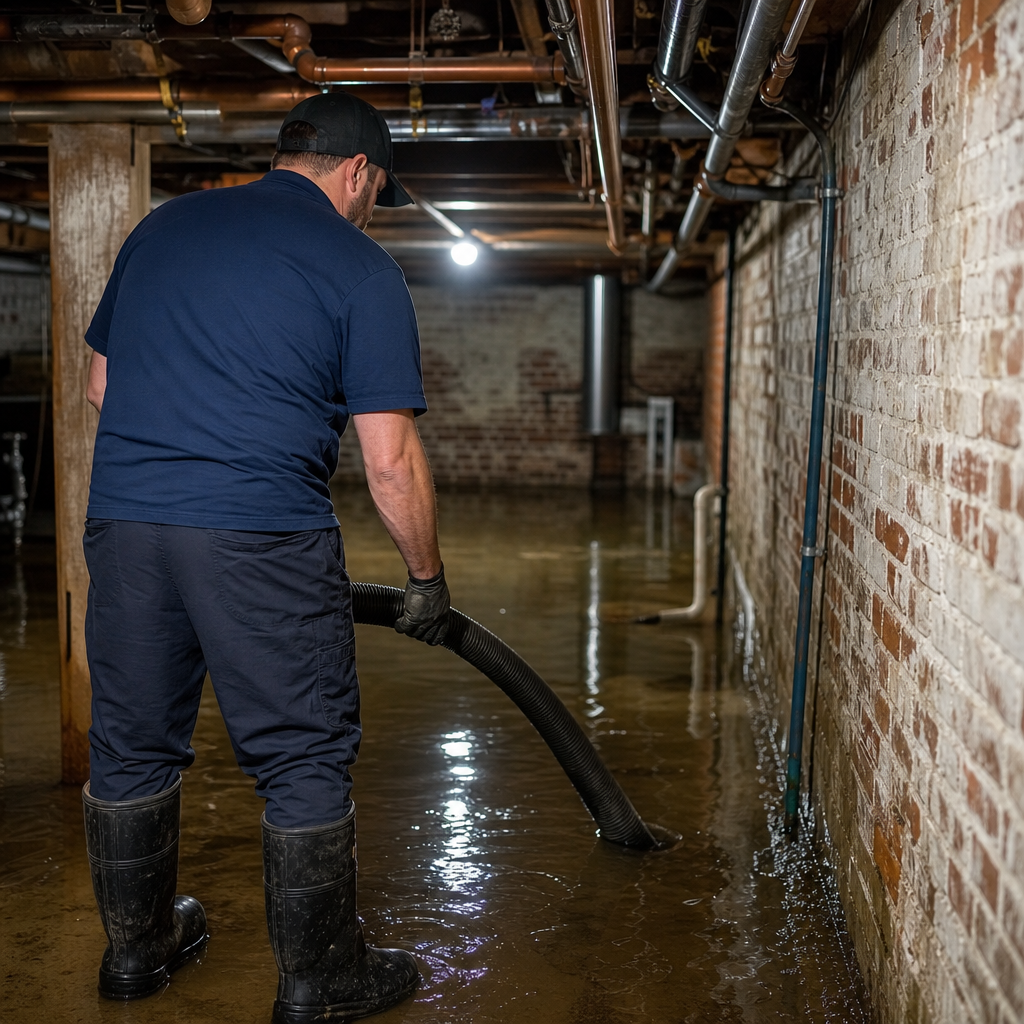
Storm surges and ground-level runoff introduce silt, mud, and contaminants into basements and ground-level spaces. Flood cleanup requires containment and sanitation alongside structural drying.
Ground-Level and Basement Inundation
Subgrade spaces are vulnerable to hydrostatic pressure and foundation leaks. Because ground runoff is classified as Category 3 water, porous items like low-density carpet padding and saturated insulation must be removed, while framing and masonry walls are sanitized and dried.
Mold Remediation
Mold begins colonizing damp drywall, paper-faced insulation, and wood substrates within 24 to 48 hours of water exposure. Controlling relative humidity immediately after a water loss helps prevent mold growth.
Containment and Air Filtration
When microbial growth is present, restoration protocols include:
- Isolating affected zones under negative air pressure.
- Running air filtration units to trap spores and particulate matter.
- Cleaning affected surfaces using antimicrobials.
Preventing Post-Water Secondary Damage
According to Wade’s Restoration, unchecked moisture trapped in hidden cavities increases total project costs. Industry claim data shows average water losses climbing from $13,954 to $15,400 when structural repairs and mold treatments are delayed.
Sewage Cleanup
Sewage backups represent a biohazard. Category 3 black water carries harmful pathogens that saturate subfloors and drywall.
Category 3 Biohazard Protocols
Raw sewage requires personal protective equipment (PPE), containment barriers, and disposal of unsalvageable porous items. Estimated costs for sewage cleanup generally range from approximately $2,000 to $10,000, depending on square footage and severity.
Decontamination and Safe Disposal
- Isolate affected areas under negative air pressure.
- Extract black water and dispose of contaminated porous materials.
- Apply biocides and sanitize non-porous assemblies.
Fire and Smoke Damage Restoration
Fire emergencies often leave behind acidic soot residue and water from firefighting efforts. Treating water damage and smoke damage simultaneously prevents structural rot and soot staining.
Combined Fire and Water Extraction
Standing water must be removed quickly before moisture reacts with acidic soot. Combined fire and water claims frequently exceed $17,000 due to the layered trades needed to restore the property.
Soot Neutralization and Odor Removal
- Extract standing water and install drying systems.
- Clean soot residue from surfaces.
- Treat wall cavities and living spaces to eliminate smoke odors.
Burst and Frozen Pipe Water Damage Repair
Need water damage restoration cost?
We’re available now - call for a fast, free estimate.
Frozen pipes can split along seams, releasing pressurized water into wall and ceiling cavities during winter freezes.
Winter Freeze Dynamics
Uninsulated plumbing chases freeze quickly during cold snaps. Once the ice thaws, supply lines can release significant volumes of water. As documented by Wade’s Restoration, property damage claims for frozen pipe bursts frequently top $10,000 due to water travelling across multiple levels.
Basement Flooding Cleanup and Water Removal
Basement flooding occurs when heavy downpours overwhelm municipal storm sewers, causing backpressure through floor drains, sump basins, or foundation walls.
Sump Pump Failures and Ground Seepage
When sump pumps fail or lose power, water can pool around electrical and mechanical equipment. Fast extraction limits damage to equipment and prevents moisture from migrating further into the structure.
Submersible Extraction
- Deploy pumps for standing water, followed by extraction units for saturated surfaces.
- Treat affected surfaces with antimicrobial agents.
- Run industrial dehumidifiers until structural wood moisture levels return to standard dry levels.
Roof Leaks and Storm Damage Mitigation
Severe wind, hail, and flat-roof ponding allow water to bypass roof membranes, saturating ceiling insulation and structural framing.
Emergency Mitigation
- Install emergency tarps to stop active roof leaks.
- Relieve water pressure in saturated ceilings, remove wet insulation, and dry framing in place.
Mold After Water Damage: Stopping Secondary Growth
Keeping indoor relative humidity below 50% during the drying process prevents dormant spores from germinating inside wall cavities or beneath flooring.
Structural Components Restoration
Drying techniques can address various structural elements depending on material and extent of saturation.
Drywall, Plaster, and Ceilings
Saturated drywall that has lost structural integrity must be removed, while certain plaster surfaces can be dried in place if addressed promptly.
Flooring and Framing
Wood flooring and framing materials require targeted moisture extraction and humidity controls before delamination or permanent warping occurs, according to Wade’s Restoration.
Cabinets and Ducts
Cabinetry and duct systems require specialized drying and sanitizing to maintain structural integrity and indoor air quality.
What Does Water Damage Restoration Cost?
While basic water extraction ranges from $1,383 to $6,369, complete reconstruction and multi-room restoration projects often reach between $3,000 and $15,000 or more when major repairs are required.
Itemized Restoration Price Ranges
Estimated price tiers for standard mitigation and restoration services include:
- Inspection & Moisture Assessment: $150 to $500
- Water Extraction & Structural Drying: $1,200 to $4,500 per affected room
- Mold Remediation: $1,500 to $6,000 depending on containment size
- Sewage Backup Decontamination: Estimated $2,000 to $10,000
- Fire & Water Combined Restoration: $3,000 to $25,000+
- Total Insurance Claim Average: $15,400 (including structural rebuilds)
Frequently Asked Questions About Restoration Costs
How much does water damage restoration cost on average?
Most residential property owners pay between $1,383 and $6,369 for emergency water extraction and drying, with an average cost of $3,868. However, full insurance claims that include structural repairs average around $15,400.
Does homeowners insurance cover water restoration costs?
Homeowners insurance generally covers sudden and accidental water damage, such as a burst pipe, water heater failure, or appliance line break. Gradual leaks, maintenance neglect, and external ground flooding require separate flood insurance policies.
What is the difference between water mitigation and full restoration?
Water mitigation focuses on stopping the source, extracting standing water, and drying the structure to prevent further loss. Restoration and reconstruction involve repairing or rebuilding damaged walls, ceilings, and flooring once the property is completely dry.
How can I avoid extra costs like mold remediation after water damage?
Starting professional structural drying within 24 to 48 hours of the incident and reducing relative humidity below 50% helps prevent mold spores from germinating, as recommended by Wade’s Restoration.
Need water damage restoration cost?
We’re available now - call for a fast, free estimate.
Sources
- Water Leak Detection and Property Insurance Statistics … – rapideyeinspections.com (2026)
Frequently Asked Questions
How does Wade's Restoration help property owners navigate insurance claims for water damage?
Wade's Restoration works directly with your insurance adjuster by providing transparent, line-item scopes and detailed moisture mapping that document every necessary repair. This claim advocacy prevents reimbursement disputes and ensures that both immediate drying and secondary structural repairs are properly covered.
Can water-damaged hardwood floors and framing be saved instead of replaced?
Yes, deploying rapid extraction within 24 to 48 hours allows specialized drying equipment to pull bound moisture from subfloors, hardwood, and wall studs before permanent warping or delamination occurs. Wade's Restoration uses advanced moisture control systems to salvage expensive building materials, significantly lowering total repair expenses.
How quickly can I get an accurate on-site water damage restoration cost estimate?
Property owners can call the 24/7 emergency dispatch line at Wade's Restoration to arrange an immediate on-site visual assessment. Technicians inspect moisture migration with thermal imaging tools to deliver a transparent, itemized scope that eliminates pricing surprises before work begins.
About the author
 |
Sarah Miller Sarah Miller is a restoration specialist with over 8 years of experience in the property damage industry. She holds an Associate Degree in Construction Management from New York City College of Technology. Sarah specializes in educating homeowners and property managers on the complexities of water damage restoration and the associated costs, helping them navigate emergency situations with clarity. |
Water damage, flood, or mold emergency?
We’re available now - call for a fast, free estimate.
Call Now - Free Estimate