
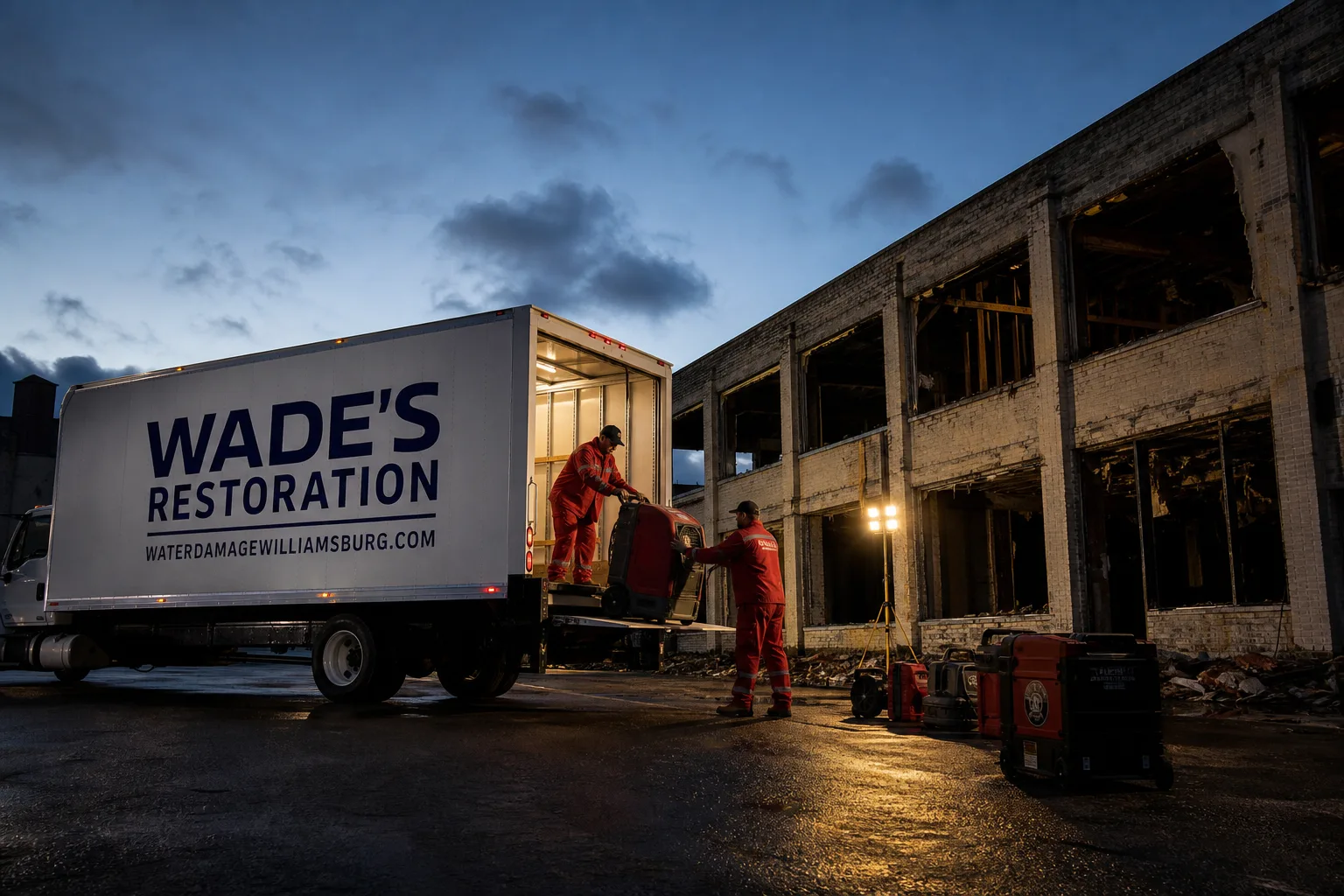
Free visual inspection and a written scope of work before any mitigation begins - photos, moisture readings, and drying logs go in your claim file
The scope we write is the scope we bill. Anything new gets shown to you, in writing, before we touch it.
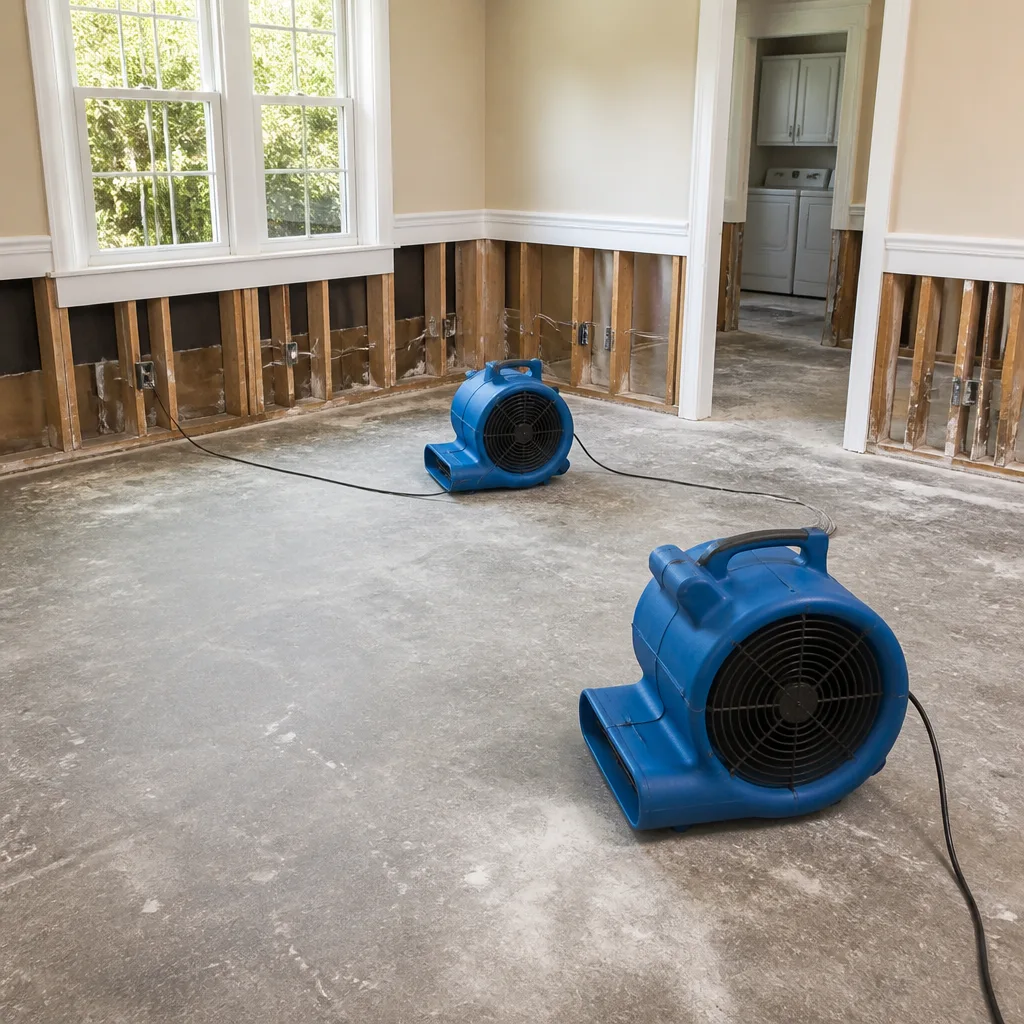
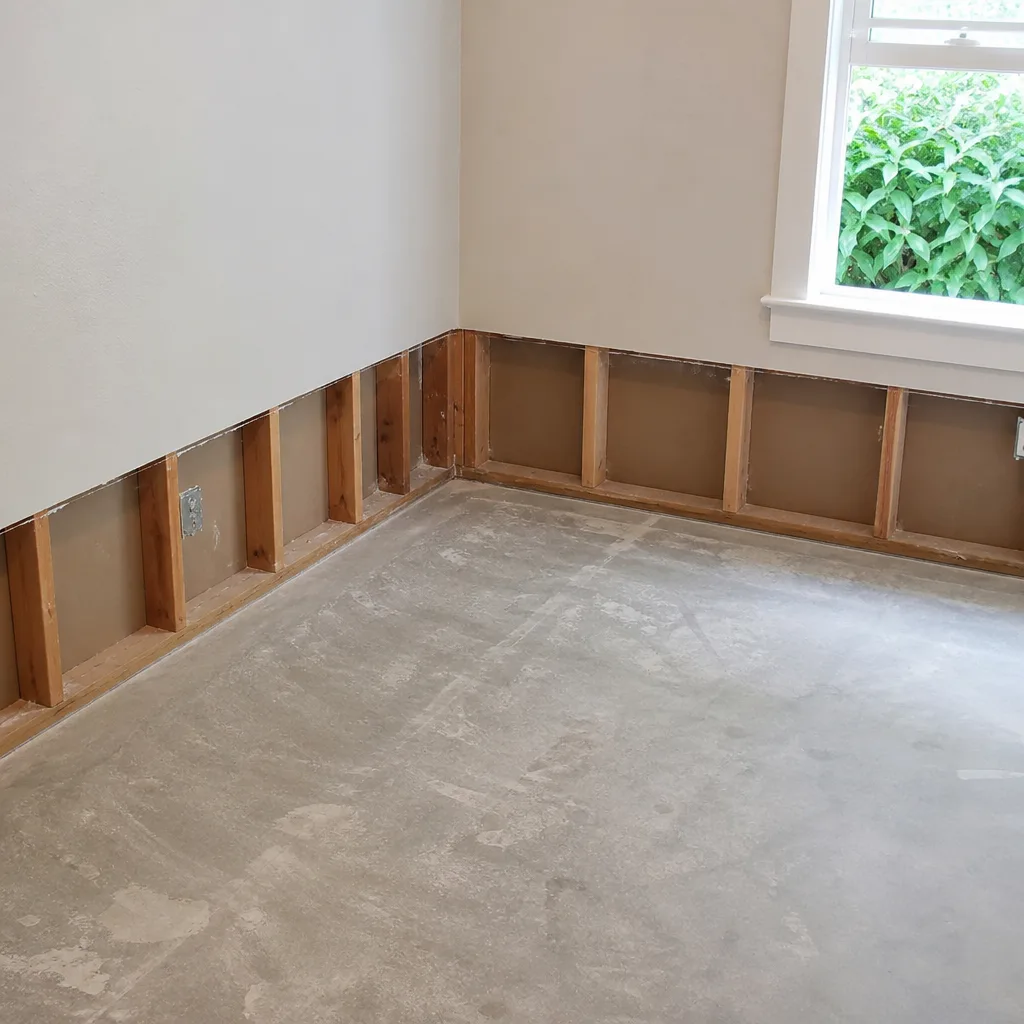
 Before
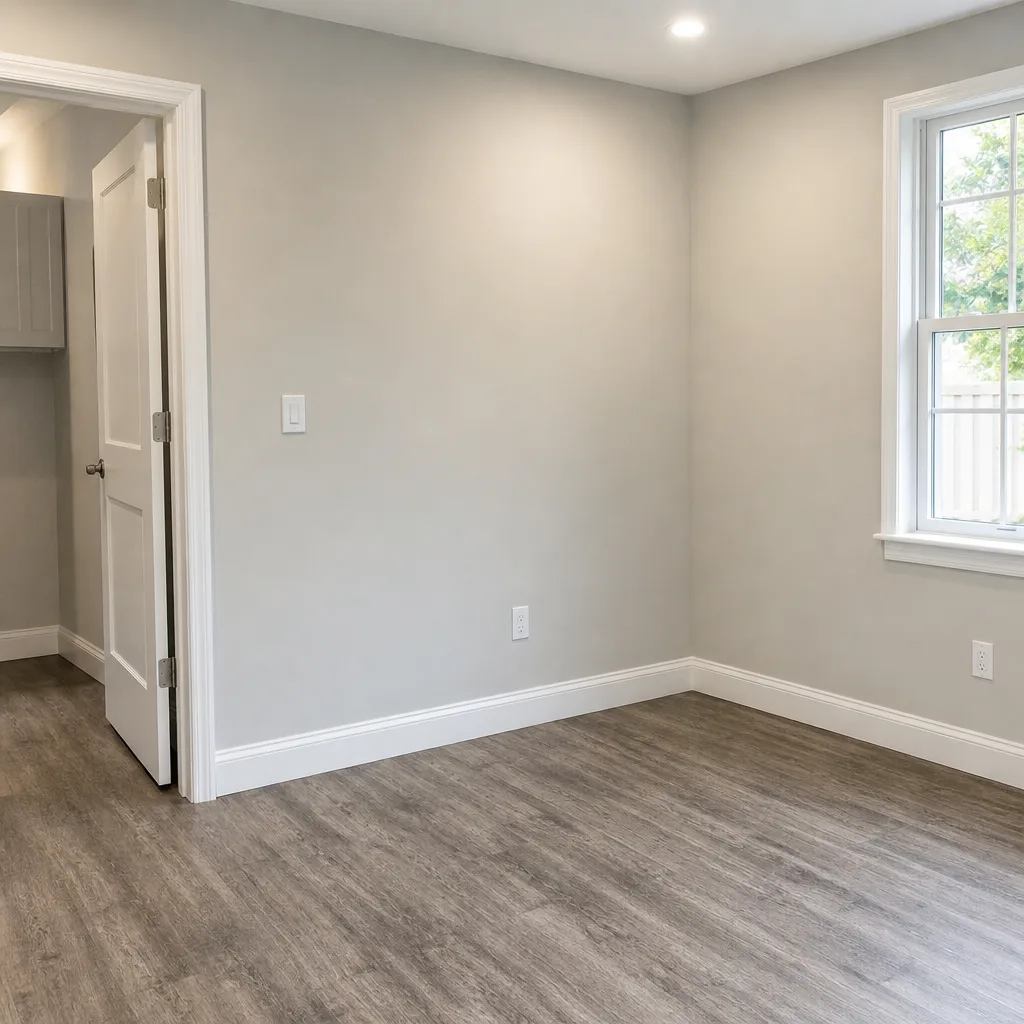 After
After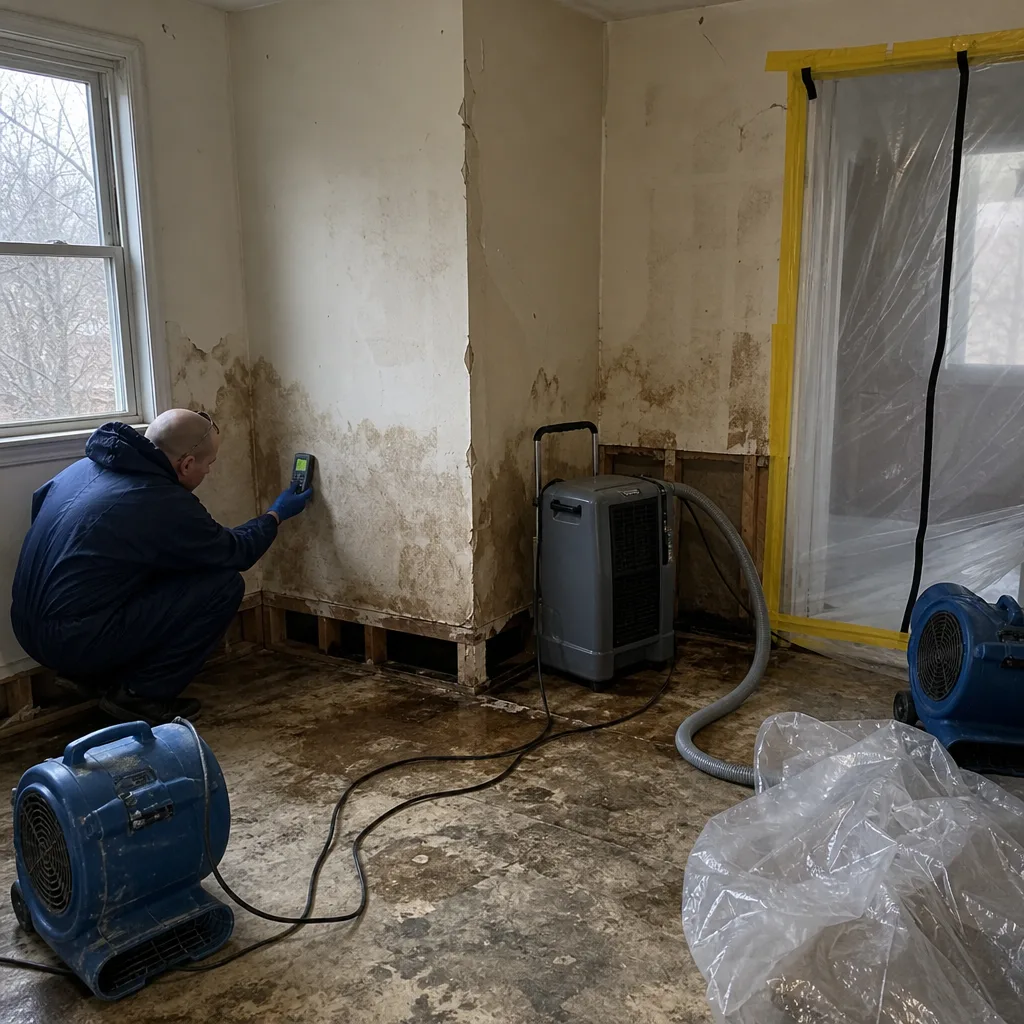 Before
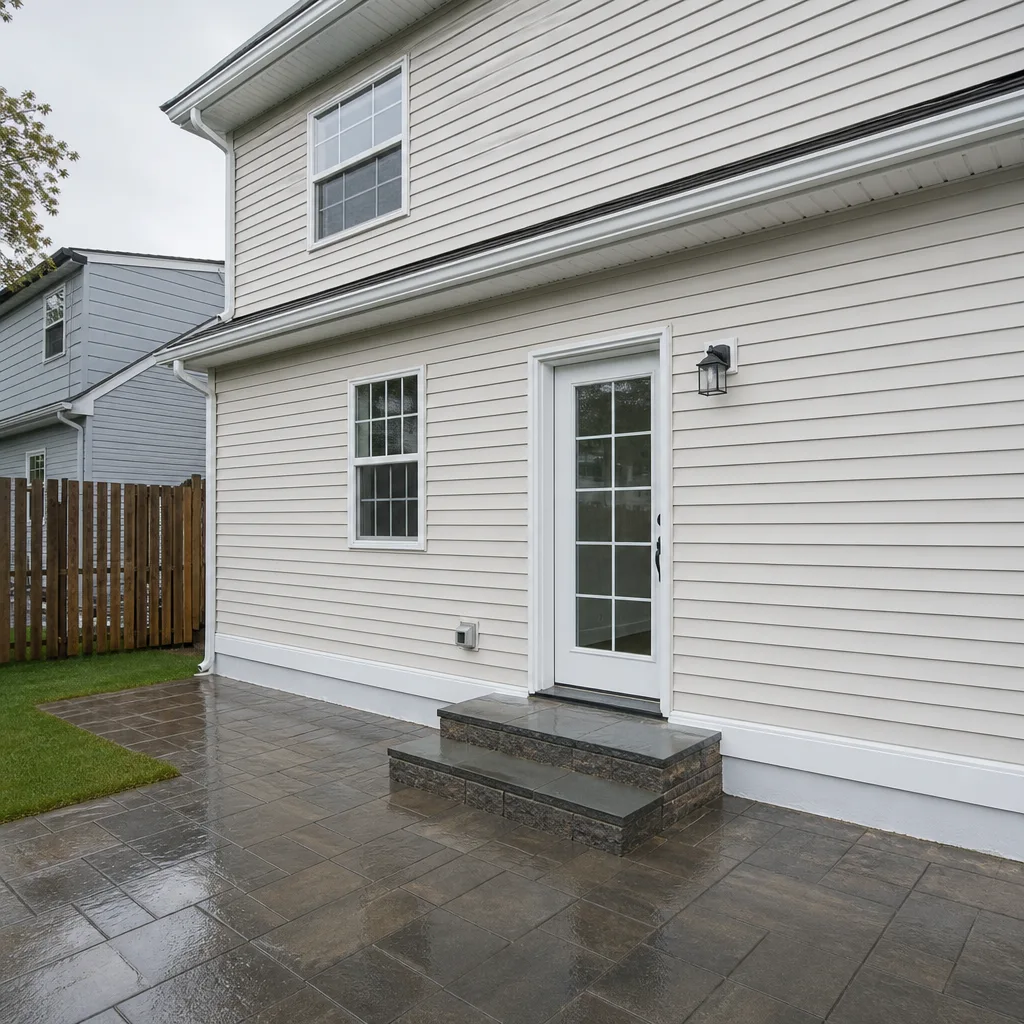 After
After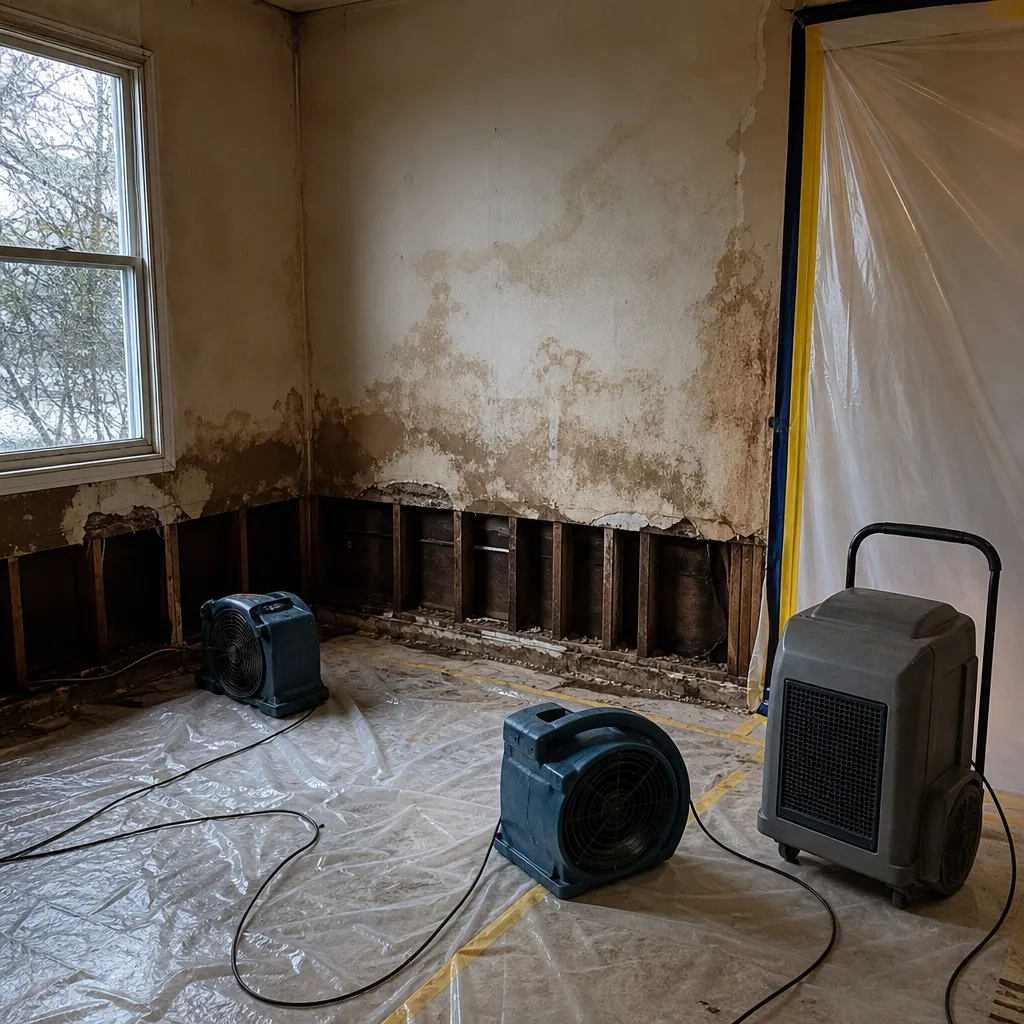 Before
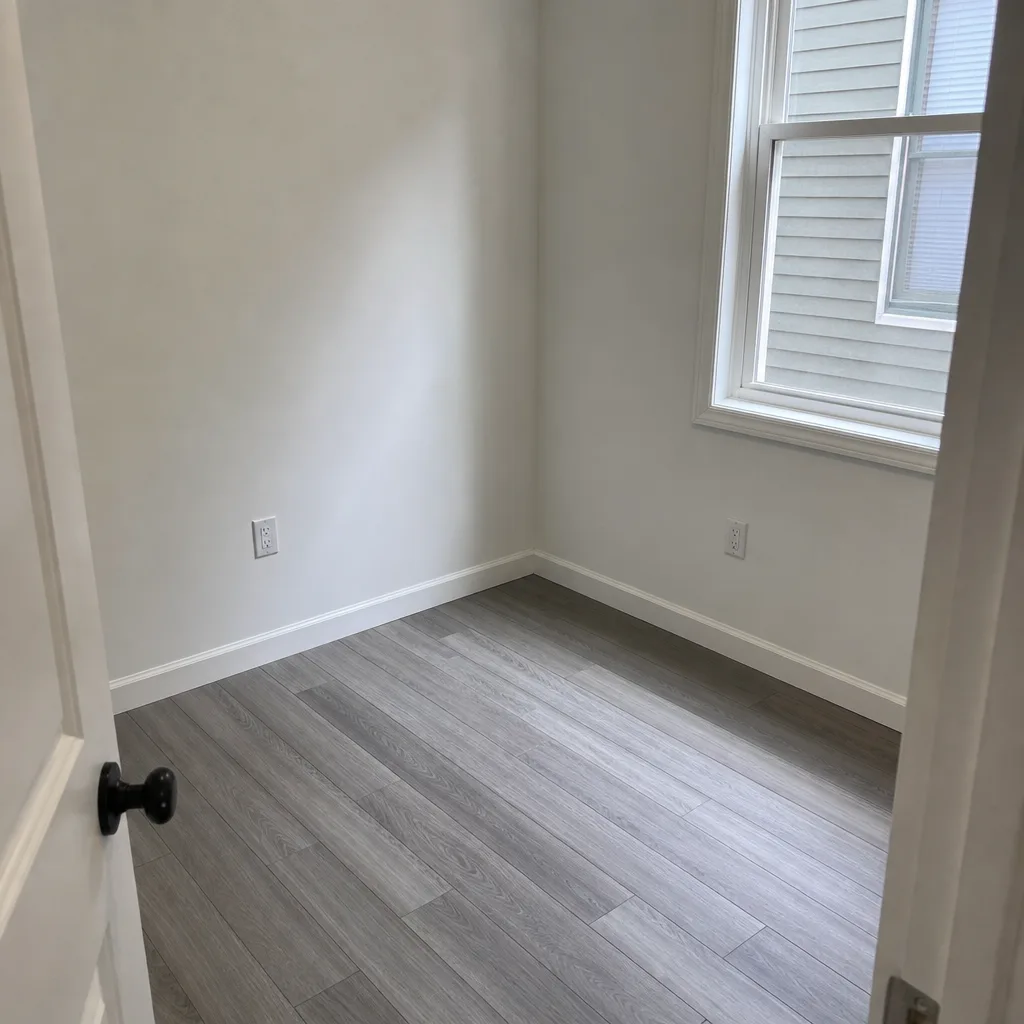 After
After24/7 Emergency Sewage Cleanup in West New York
Sewage cleanup in West New York usually runs $400-$2,800 depending on how far the waste traveled and how many units it touched. We answer live around the clock, and a crew can be on the road to your building inside 45 minutes. Call (363) 666-2319 the moment you see it. The first hour matters more with sewage than almost any other kind of water damage because Category 3 water carries bacteria, viruses, and parasites that spread through porous surfaces fast. Carpets, drywall, baseboards, and even floor assemblies soak it up and become reservoirs. We do a free visual inspection, take moisture readings, and tell you straight what needs tearing out and what can be dried. No charge for that.
Understanding Sewage Cleanup Severity in West New York Properties
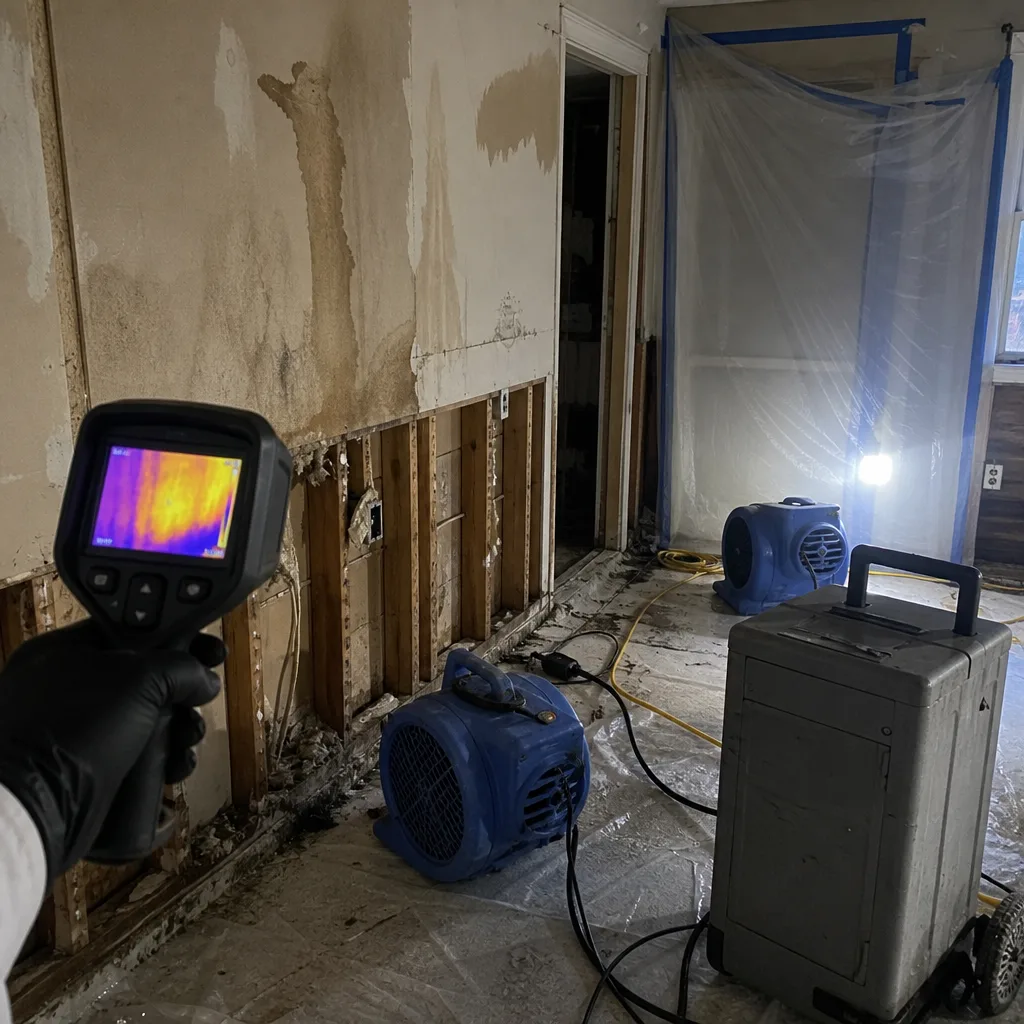
Water damage gets classified into three categories, and they matter a lot in West New York because of how this town is built. Category 1 is clean water from a supply line. Category 2 is gray water, meaning it carried soap, grease, or mild contaminants. Category 3 is black water, and that is what sewage cleanup lives in. Black water contains human waste, pathogens, and whatever else flushed down the pipes. In a pre-war walk-up on Bergenline Avenue or 60th Street, that Category 3 water does not stay in one apartment. It travels down through floor assemblies, behind plaster walls, and into unit ceilings below. The first sign a fourth-floor backup has reached the third floor is often a brown stain spreading across the ceiling, not water pooling on the floor. That is why proper containment matters before any drying starts. We use moisture mapping and thermal imaging to find hidden saturation, set up negative air pressure to stop contaminated air from moving into unaffected units, and run HEPA air scrubbers during the whole job. You cannot just mop this up and call it done. West New York’s shared wall assemblies mean that one unit’s sewage problem is half a building’s problem, and watching it happen is exactly what we do.
Why West New York Property Owners Choose Wade’s Restoration
- 45-minute response commitment. When sewage is spreading through a six-unit building, every hour adds square footage. Wade heads out as soon as you call, not after a call center triages you.
- 24/7 live answer, always a person. No answering service, no voicemail tree. Wade Ferris answers his own phone, including at two in the morning when a stack lets go on 55th Street.
- IICRC-certified crews. The crew carries WRT and ASD certifications and works under IICRC standards. That means containment, moisture mapping, and drying logs done the way insurance carriers and lawyers expect them done.
- Free visual inspection. Wade will look at the damage, take readings, and give you a straight scope before you spend a dollar. Free second opinion on any written estimate too.
- Direct insurance billing. We deal with the adjuster, not you relaying messages between two sides. Wade has been on the phone with carriers since 2007.
- One crew from extraction to reconstruction. You are not handed off to a different outfit for the rebuild. The same people who extract the sewage do the drywall and paint, which means the scope actually matches what was torn out.
Our Sewage Cleanup Process
Inspection & Assessment
We locate the source, identify the water category, and map the spread using moisture meters and thermal imaging. In West New York’s older buildings, this means checking the unit below and the shared wall cavity, not just the room where the overflow happened.
Extraction & Stabilization
Black water extraction starts immediately with truck-mounted extraction units and submersible pumps. We remove contaminated carpet, pad, drywall, and baseboard under controlled conditions so contaminants never get a chance to aerosolize through the building.
Drying & Dehumidification
After extraction, we run low-grain refrigerant dehumidifiers and hundreds of CFM of air movement through the affected spaces. Vertical drying is standard here. Water trapped between shared floor assemblies needs directed airflow and daily moisture readings, which is why we hand you the full drying log at the end.
Cleaning & Sanitization
Every affected surface gets cleaned with an EPA-registered antimicrobial, then sanitized with our Sanitization Services in West New York. In a stacked building, that includes treating wall cavities and floor penetrations on every affected floor, not just the one where the backup started.
Containment & Air Scrubbers
We set hard containment at each floor penetration and run HEPA air scrubbers to keep contaminated air from circulating through hallway common areas and neighboring units. In a Port Imperial high-rise, that means negative air pressure from day one so the building’s HVAC does not push Category 3 air into every condo on the floor. For larger properties, we also offer West New York Commercial Restoration.
Repairs & Restoration
Once everything is dry and sanitized, we rebuild with our Reconstruction & Cleanup in West New York. Drywall, insulation, flooring, paint. Because the same crew did the extraction, the rebuild scope actually matches the loss. No guessing, no surprise change orders.
Need Emergency Sewage Cleanup in West New York Now?
Crews minutes away, answering live 24 hours a day. The sooner we start, the less it costs.
Working With Your Insurance Company
Insurance claims for sewage backup in West New York are common, and they go smoother when the documentation is airtight from the first hour. We photograph every affected room before demolition starts, log moisture readings daily, and produce a line-item scope that your adjuster can actually read. Wade deals with the adjuster directly, so you are not the one faxing photos and explaining the difference between Category 2 and Category 3 water. If your policy covers backup and overflow, we bill the carrier straight. If it does not, you get a written scope before any work starts, and the Senior & Veteran 10% discount applies every time. No surprises at the door. Here is what we send your insurer:
What We Provide Your Insurer
- Thorough documentation of the loss from the first hour
- Photos of all damage, room by room and unit by unit
- Moisture readings and daily drying logs
- A detailed, line-item scope of work
- Direct coordination with your carrier’s adjuster
Sewage Cleanup Across West New York’s Neighborhoods
The kind of sewage cleanup we do changes depending on which part of West New York you live in. Along Bergenline Avenue and the numbered cross streets branching east toward the Hudson, the housing stock is 1920s-through-1960s brick tenements with original cast-iron stacks. When a line backs up there, it rarely stays in one unit. A toilet overflow on the fifth floor of a 55th Street walk-up travels through ceiling assemblies into the fourth and third floors before anyone on the second floor even smells it. We know to cut containment at every floor penetration and check adjacent units on both sides of the shared wall. Over toward 60th Street and the streets around Miller Stadium, the buildings are similar but the basements are often finished into informal apartments, which changes the math. A sewage backup into a finished basement there means removing drywall, flooring, and sometimes a kitchenette, and the tenant displacement issue becomes part of the claim. Down in the Port Imperial corridor, the high-rise condos and rental towers have below-grade parking garages and mechanical rooms that trap sewage-saturated humidity after a nor’easter pushes black water through the garage drains. That requires negative air pressure and containment inside a building where the HVAC system is trying to recirculate air twenty-four hours a day. And in the upland blocks west of Park Avenue, the slope of the Palisades means surface runoff during heavy rain storms plows downhill into older residential basements, overworking floor drains and sump pumps that are already fighting a losing battle. Each area has its own failure pattern, and we have seen all of them more times than we can count.
Specialized Sewage Cleanup Services We Offer in West New York
Sewage Backup Cleanup
Full black water mitigation for backups in kitchens, baths, laundry rooms, and building drains. In West New York’s older buildings, this often means a cracked cast-iron stack under a fourth- or sixth-floor toilet. We remove the contaminated material, sanitize the wall cavities, and coordinate with the property manager so every affected tenant knows what happened and what gets covered. We also handle Sewage Cleanup in situations where the backup is isolated to a single unit or floor.
Toilet Overflow Cleanup
A toilet overflow in a pre-war West New York building is rarely a one-apartment problem. The water goes under the tile, through the subfloor, and into the ceiling of the unit below. We extract first, then open the ceiling and wall cavity to map moisture, then dry the entire assembly. The key is catching the lower unit’s saturation before mold takes hold, which in a humid New Jersey summer takes less than 48 hours.
Septic Failure Cleanup
Fewer West New York buildings are on septic than in the rural parts of Hudson County, but the older properties near the Palisades grade that still run on private systems see pump failures and back-surges that push Category 3 water into basements and crawl spaces. We handle the extraction and sanitization, and we coordinate with your septic contractor so the remediation and the system repair happen in the right order.
Black Water Extraction
This is the core of what we do after any sewage loss in West New York. Truck-mounted extraction, submersible pumps, and then aggressive drying with low-grain refrigerant dehumidifiers and high-velocity air movers. The equipment matters, and we run Dri-Eaz and Phoenix units on these jobs. No homeowner-grade fans and dehumidifiers from a hardware store. The water category dictates the protocol, and for Category 3, we treat every surface as potentially contaminated until it is cleaned, sanitized, and tested dry.
Sanitization & Disinfection
After extraction and drying, every affected surface gets treated with an EPA-registered antimicrobial, then wiped and fogged in enclosed cavities. In a multi-unit building, that includes the shared wall assembly, the floor penetration at the pipe chase, and any common-area hallway surfaces that got wet. We do not skip the cavity treatment. That is where the bacteria hide, and that is where the smell comes back from later.
Crawl Space Sewage Removal
The older buildings along Bergenline and up toward Weehawken often have shallow crawl spaces instead of full basements, and a sewage line failure under the building turns a dark, tight space into a biohazard. We suit up, remove contaminated soil and debris, run ventilation and negative air, and treat the remaining surfaces so the building is safe to occupy. This is miserable work and most companies will not touch it. Wade’s crew will.
What happens when you call
- 1
A real person answersNo phone trees - you reach a local pro.
- 2
You get an upfront price rangeHonest numbers before anyone is dispatched.
- 3
A background-checked tech heads outLicensed & insured, dispatched right away.
- 4
You approve before work beginsNothing starts until you say go.
Sewage Cleanup Costs in West New York, NJ
A contained toilet overflow in a single West New York apartment typically runs $400-$900 if the water stayed in the bathroom and nothing structural got saturated. A black water backup that spread through a floor assembly into the unit below usually lands between $1,200 and $2,800, depending on how much drywall came out and how many units were affected. The big variable in West New York is vertical spread. When a fourth-floor stack failure sends sewage through three or four lower units, the total claim can reach $5,000-$12,000 across the building, and that is before any reconstruction of damaged ceilings and walls. Crawl space sewage removal on a pre-war building on the Palisades side often runs $1,500-$4,000 because of the access difficulty and disposal costs. The free visual inspection we do gives you a firm scope in writing before any work starts, and if you already have an estimate from another company, get a free second opinion from us. The Senior & Veteran 10% discount applies on every job for the people who qualify, and there is no trip charge inside the county.
We Also Serve Cities Near West New York
Our crews handle sewage cleanup across Hudson County and the surrounding area. We regularly work in West New York and the nearby cities of Jersey City, Hoboken, Weehawken, and Union City. If your building sits on the border, call us. Chances are we were on your block last month.
Serving West New York, NJ - Our Local Coverage Area
We’re based in the West New York area and know this community well. Use the map below to see our service coverage - if you’re nearby, we can almost certainly help.
West New York Sewage Cleanup Questions, Answered
How does a Category 3 sewage backup in a West New York four-story walk-up affect adjacent units?
A Category 3 backup in a walk-up rarely stays in one unit. The contaminated water travels through the pipe chase and floor assembly into the ceilings and walls of the units below. Within hours, tenants three floors down can see staining on their ceiling. That is why we set containment at every floor penetration and coordinate drying with the property manager across every affected unit. Call (363) 666-2319 and we will walk you through what to look for in the units around you.
Do we need to notify other tenants if a sewage backup in West New York spreads below our apartment?
Yes. New Jersey landlord-tenant law requires notice to any tenant whose unit may have been impacted by water intrusion, and the building’s insurance carrier will want documentation that notice was given. The property manager handles the legal side, but as the tenant or unit owner where the backup started, you should document everything and call us early so containment starts before the spread gets worse.
Why do older West New York buildings need vertical drying after a toilet overflow?
West New York’s pre-war buildings have shared floor assemblies between stacked units, and water moves through them vertically, not just horizontally. Drying only the bathroom floor misses the water that seeped into the ceiling cavity of the unit below. We use moisture meters in the lower unit’s ceiling and run directed airflow inside the assembly so the structure dries all the way through. Skipping this step means mold in a wall cavity that neither tenant can see until it is a much bigger problem.
Can we dry the carpet and keep the pad after a sewage backup in a Port Imperial high-rise condo?
No. Category 3 water, meaning any water that came from a sewage line, contaminates the carpet and pad beyond what cleaning can fix. Both come out. In a Port Imperial high-rise, that also means we run negative air pressure during removal so the building’s HVAC system does not spread contaminated air to neighboring units. Trying to save the pad is a false economy that leads to odor and mold you will live with for years.
How fast does mold start in a West New York basement after a sewage backup?
Mold can start in 24 to 48 hours in the humid New Jersey summer, faster if the basement is finished and the air is still. Sewage backup water carries organic material that feeds mold growth aggressively. That is why we start extraction and drying the same day we get the call, and why we do not wait for an adjuster to approve the job before putting down containment and air movement. The sooner we start, the less it costs to clean up.
How fast can you actually get to West New York?
We commit to 45 minutes or less for emergency sewage calls inside West New York. Wade Ferris answers the phone himself, day or night, and he is the one who heads out. Not a call center, not a national dispatch line. The faster extraction starts, the less material has to come out and the lower the total job cost.
Will insurance cover sewage cleanup in West New York?
Most landlord and condo policies cover sudden and accidental sewage backups if the policy includes backup of sewers and drains coverage. Standard HO-3 policies often exclude it unless the endorsement was added. We photograph everything, write the scope in carrier-friendly format, and deal with the adjuster directly. If your claim gets denied, you still get a straight written estimate and the option to do the work out of pocket with no obligation.
What should I do in the first 30 minutes after noticing a sewage backup?
Stop using every fixture in the unit. Turn off water at the nearest shut-off if you can reach it safely. Move anything porous out of the water if you can do it without tracking contamination through clean areas. Then call (363) 666-2319. Do not run fans, do not pour bleach on the water, and do not run the HVAC system. Keep people and pets out of the affected area until we can assess it.
Last month on 60th Street near Bergenline, our crew responded to a backed-up original cast-iron stack in a 1930s walk-up where a sixth-floor tub overflow sent Category 3 water through the shared wall assembly into four lower units. We set vertical containment at each floor penetration, ran moisture mapping on every shared wall, and coordinated drying logs with the property manager so all four tenants’ insurance claims reflected the same pre-loss condition. That is what Sewage Cleanup looks like in West New York. One stack fails, and four families are out of their kitchens.
If you have sewage backing up into your West New York apartment, basement, or crawl space right now, call (363) 666-2319. Wade answers his own phone, and he will tell you straight whether you need a full extraction or just a second opinion. Free visual inspection, free second opinion on any written estimate, and a real person on the line 24 hours a day.
Written by Wade Ferris, Owner at Wade’s Restoration, serving West New York since 2007.